
Last updated September 23, 2026
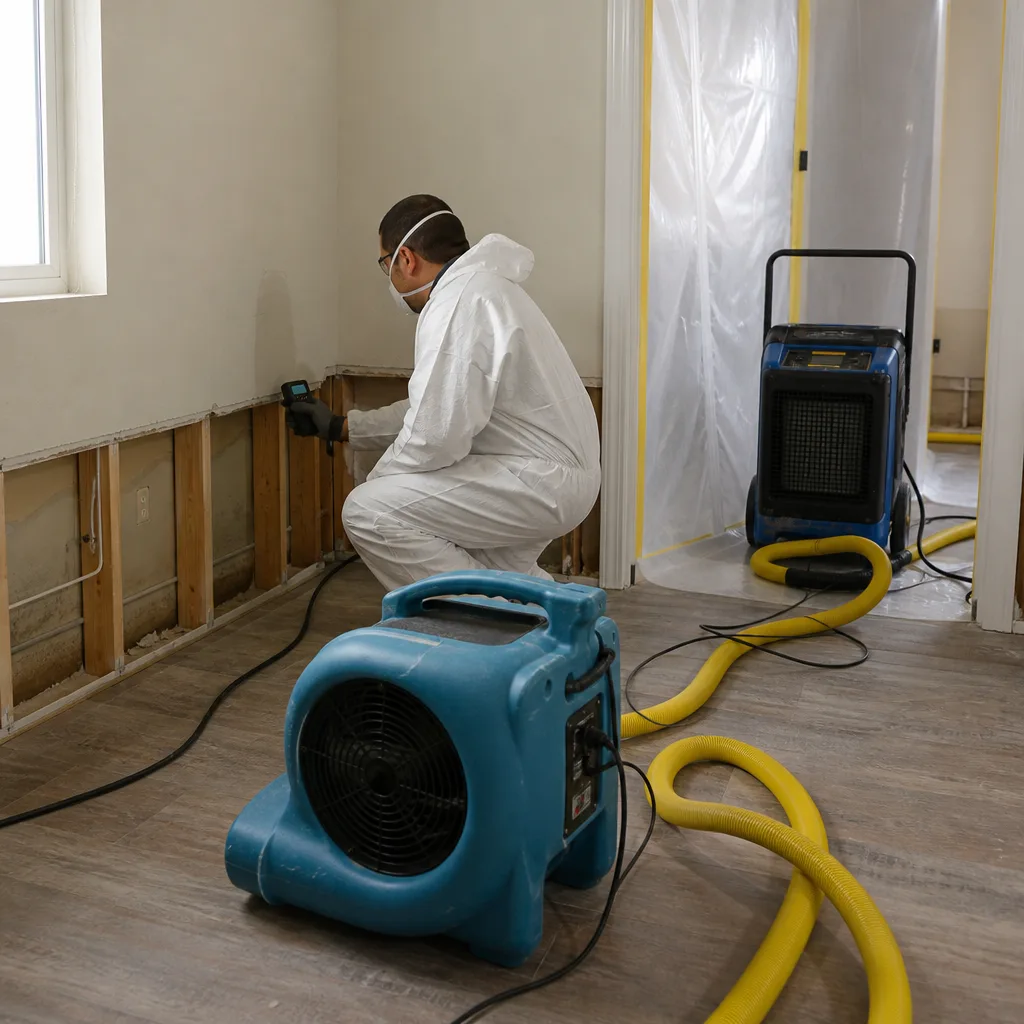
Free visual inspection and a written scope of work before any mitigation begins - photos, moisture readings, and drying logs go in your claim file
The scope we write is the scope we bill. Anything new gets shown to you, in writing, before we touch it.
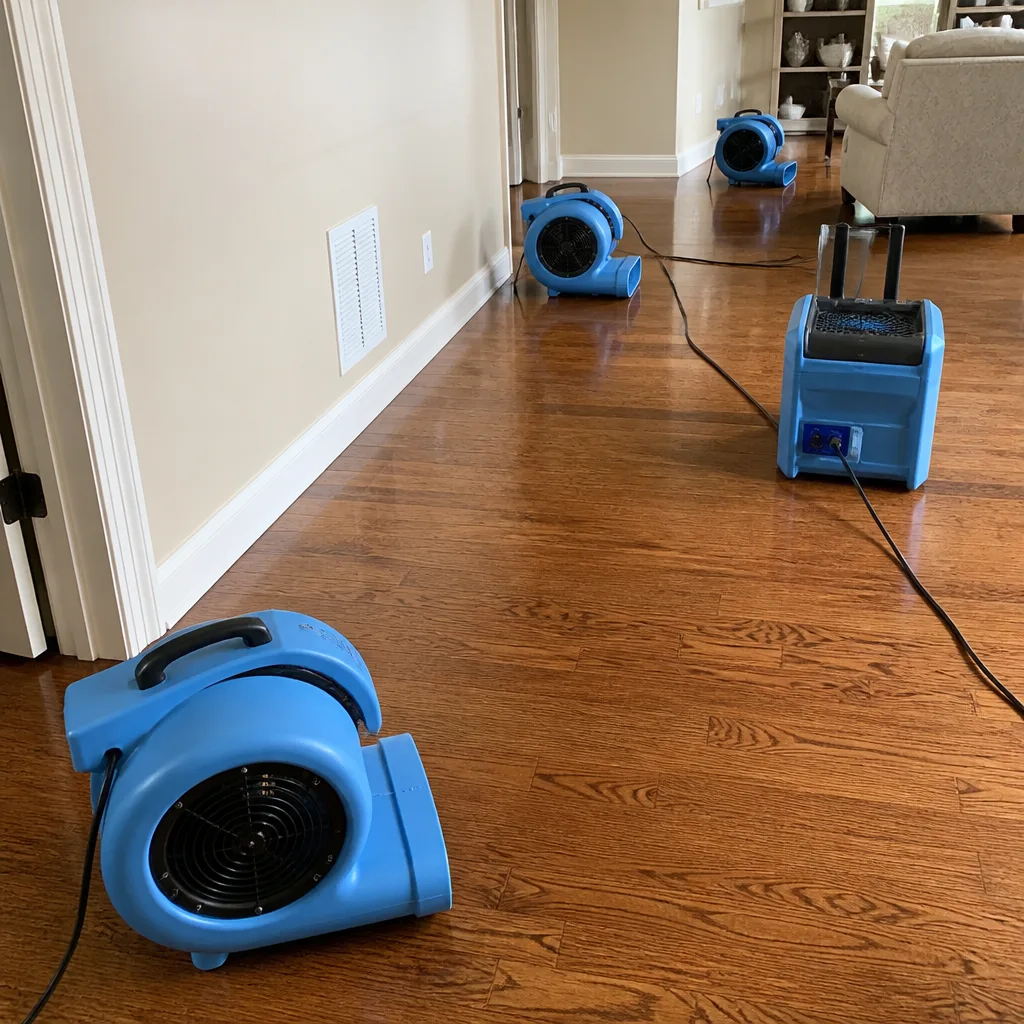

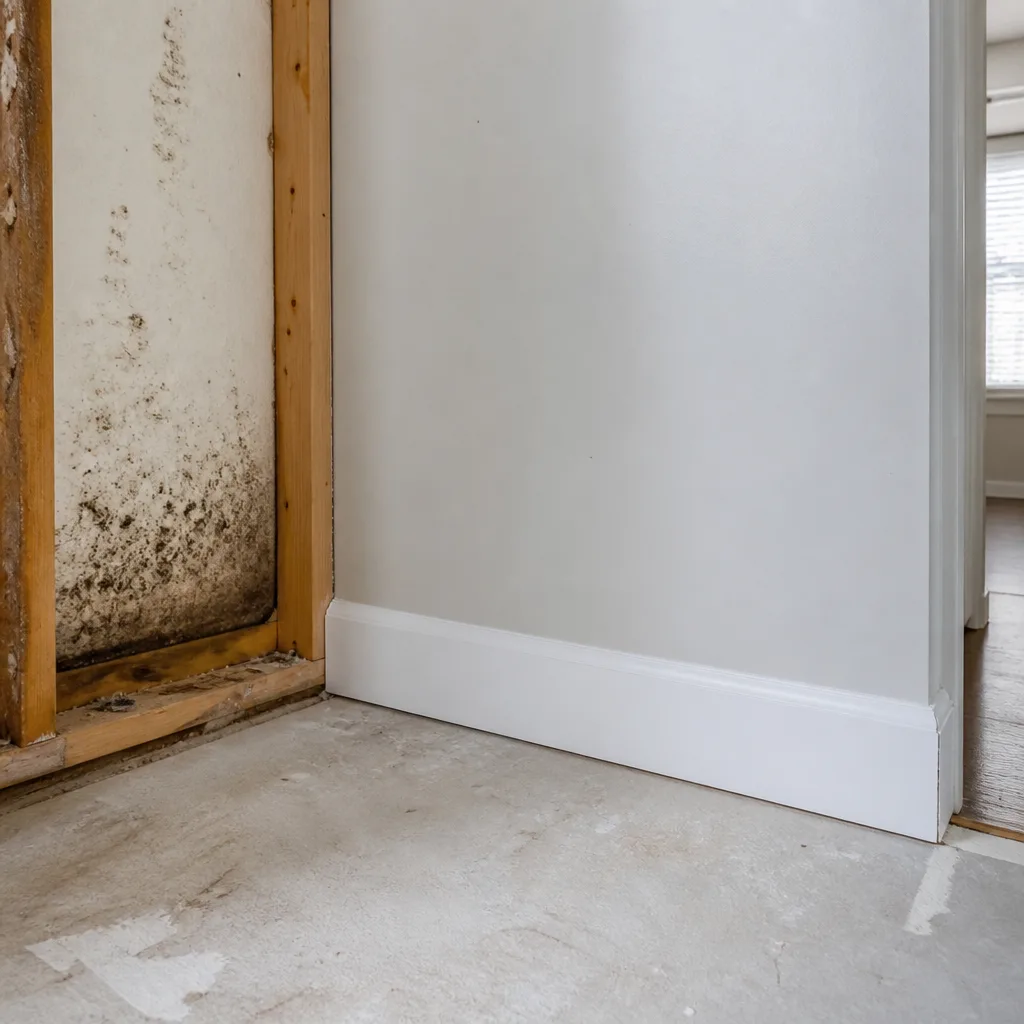

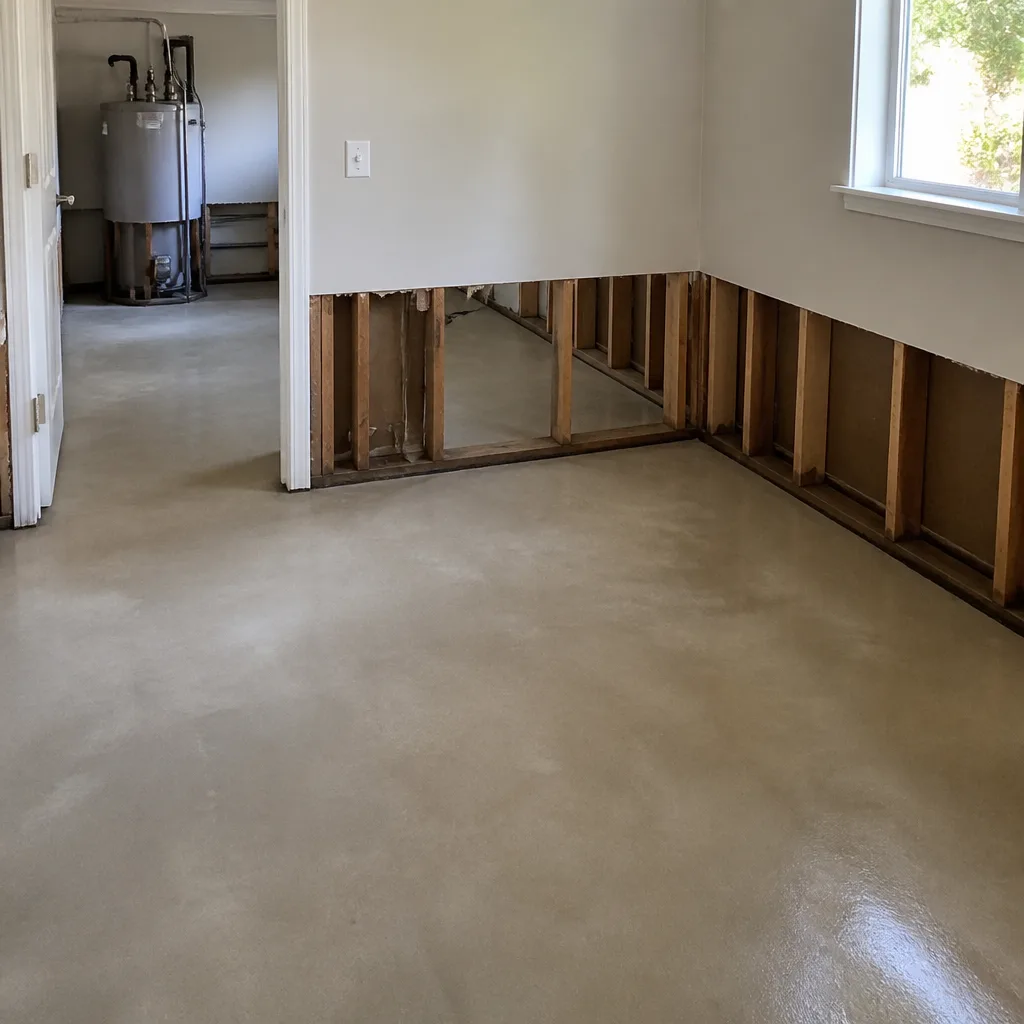

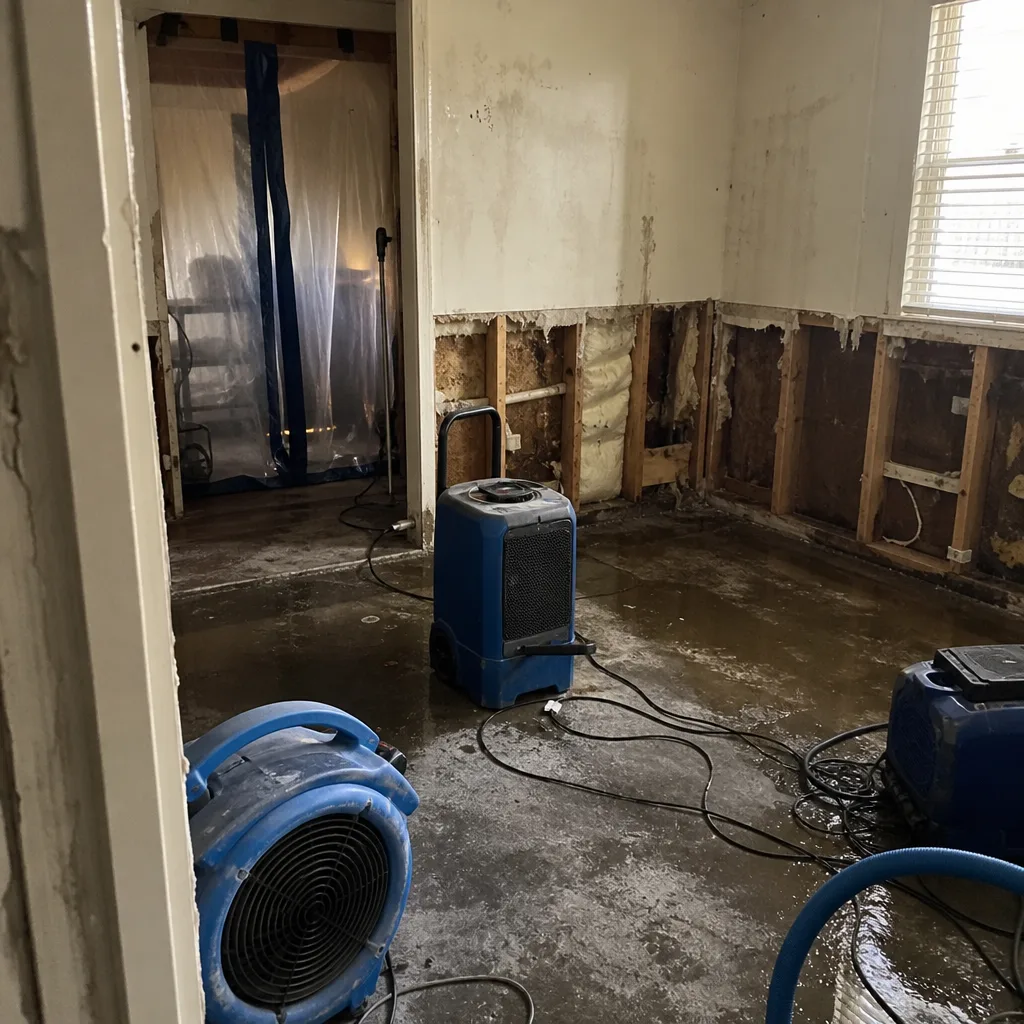 Before
 After
After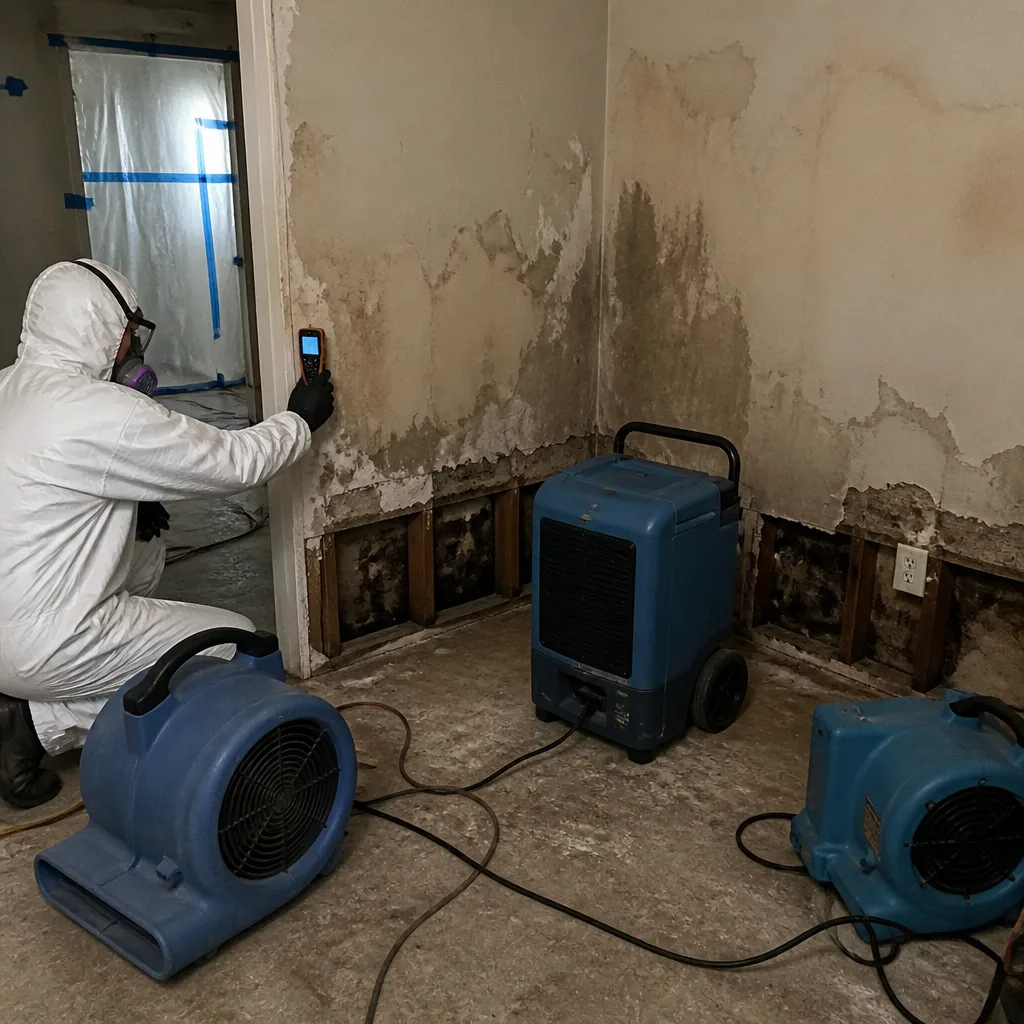 Before
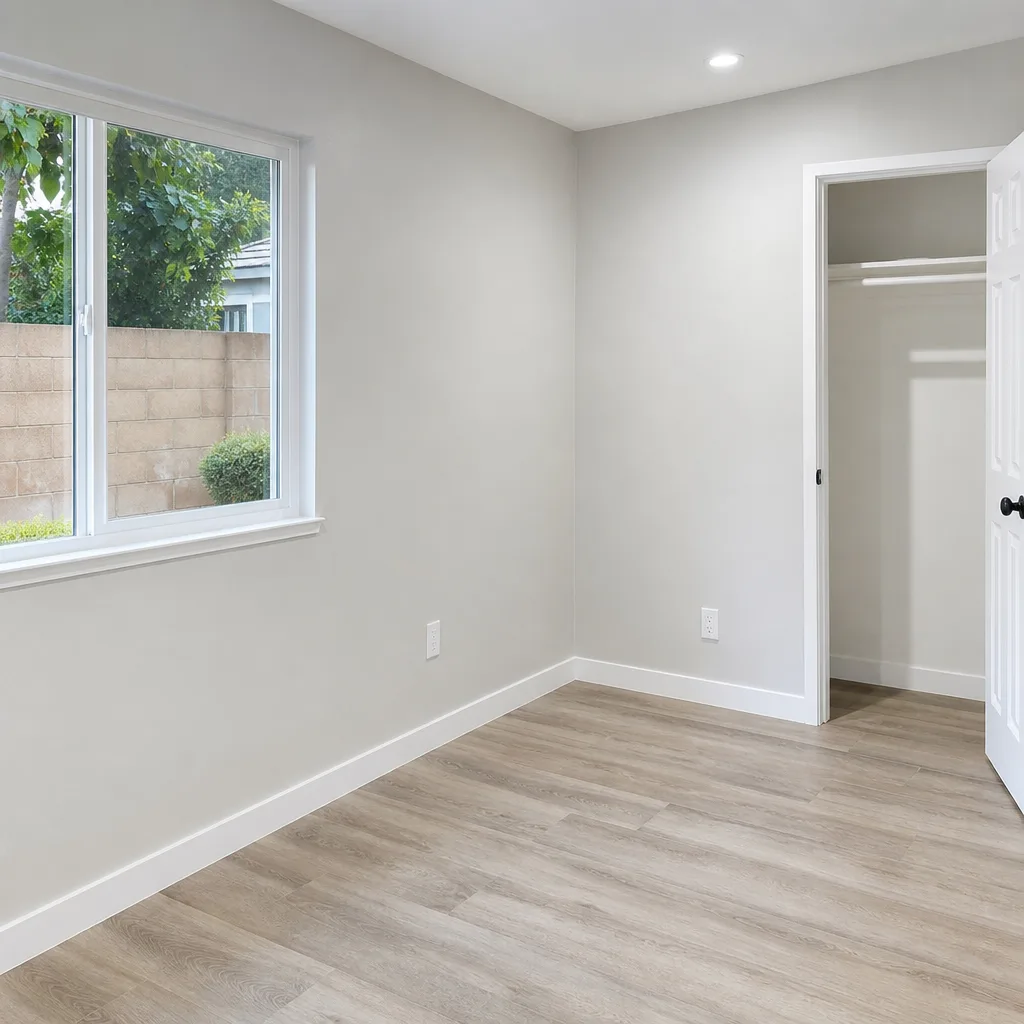 After
After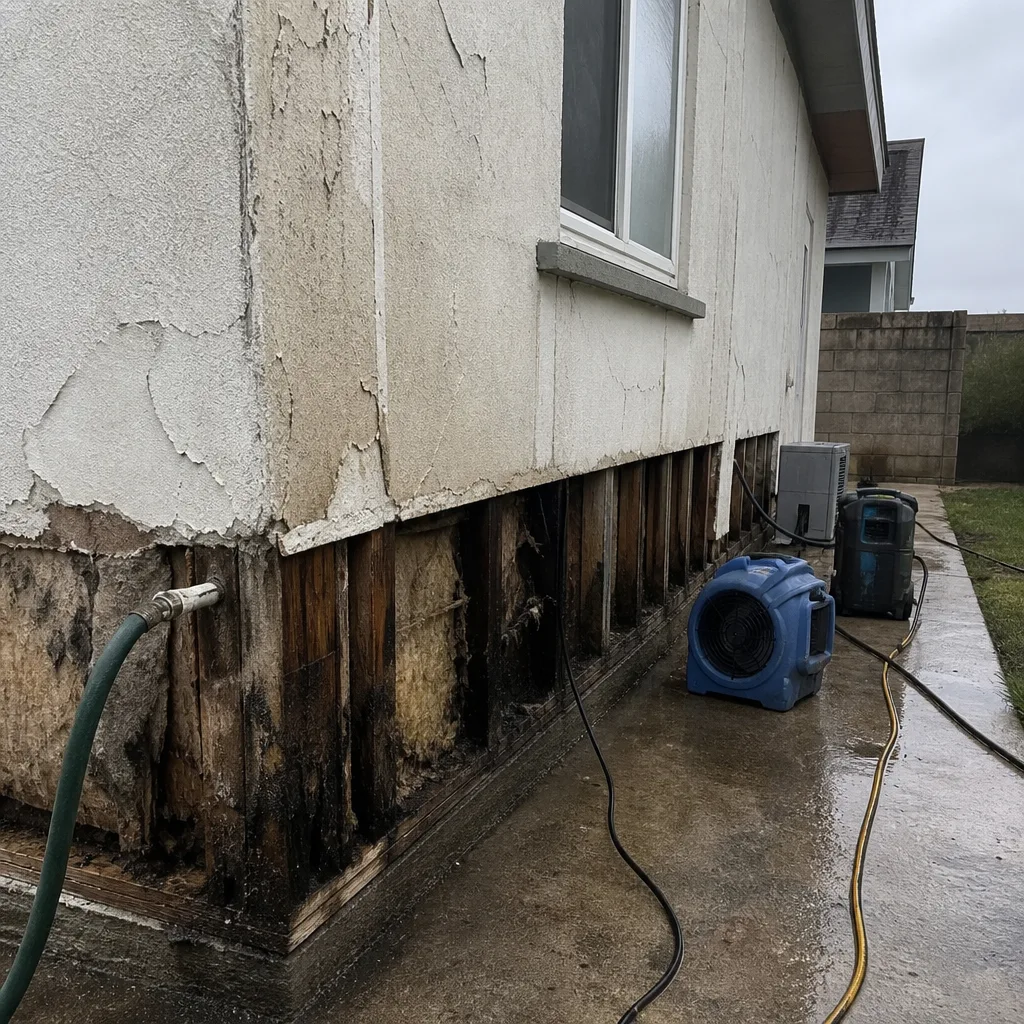 Before
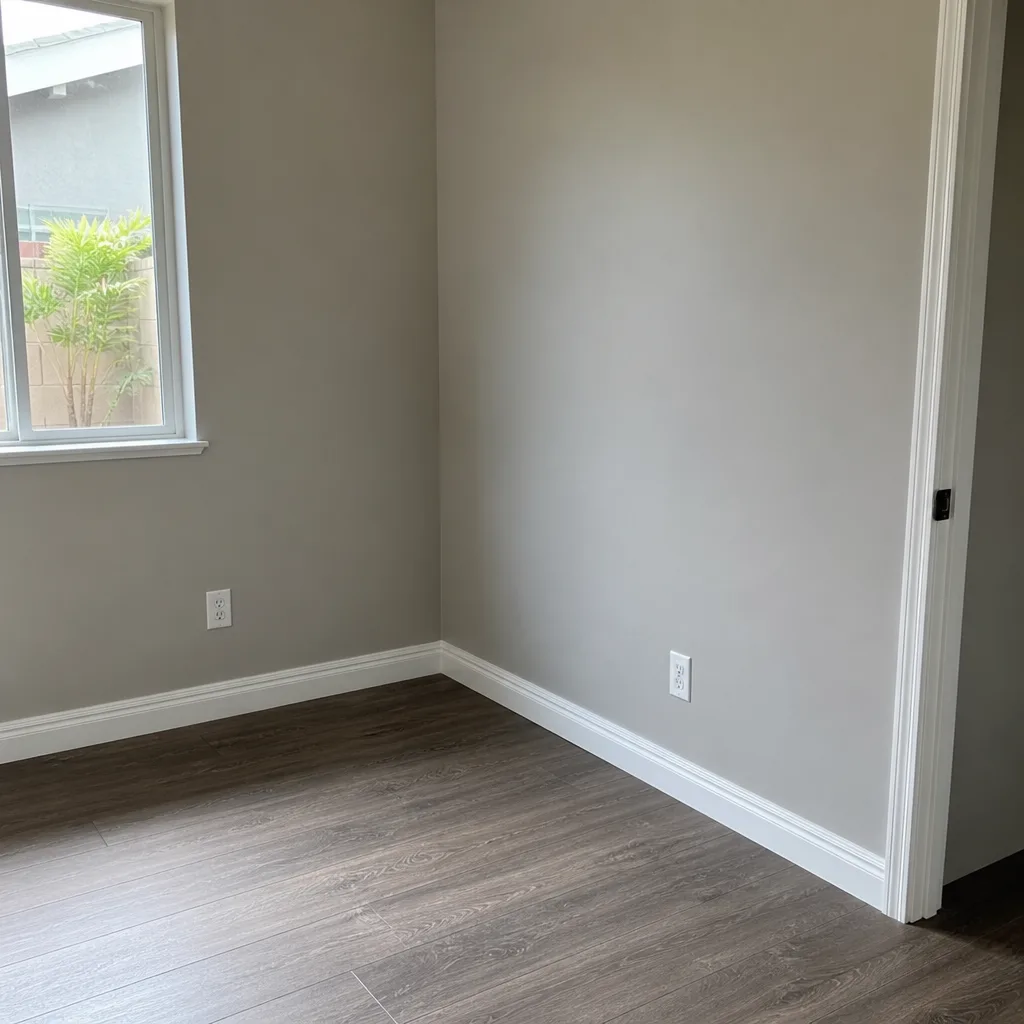 After
AfterSeasonal Damage Restoration Care for Santa Ana: Year-Round Homeowner’s Guide
Santa Ana wind events have been recorded at gusts exceeding 80 mph in Orange County in recent years. Those winds create negative interior pressure that pulls moisture through wall assemblies even when no rain is falling, a damage mechanism most seasonal home maintenance guides never mention. Homeowners in Santa Ana who prepare for winter the way someone in Chicago or Boston would, miss the actual risk windows that affect Orange County structures. This guide replaces generic seasonal advice with a calendar built on Santa Ana’s actual weather data, moisture patterns, and the documentation practices that turn a routine inspection into a payable insurance claim if damage occurs. For a broader overview, see The Complete Guide to Damage Restoration in Santa Ana.
Quick Answer
Seasonal damage restoration care in Santa Ana requires a four-phase approach: inspect and seal before October wind events, document and respond to brief but intense December-February rains, monitor post-rain moisture in crawl spaces and slabs through May, and track indoor humidity against outdoor lows during June-September dry months. A written inspection log with dated photos creates baseline documentation that simplifies any future insurance claim. For detailed seasonal tasks, refer to our Water Damage Restoration Maintenance Checklist for Santa Ana Homeowners.
Table of Contents
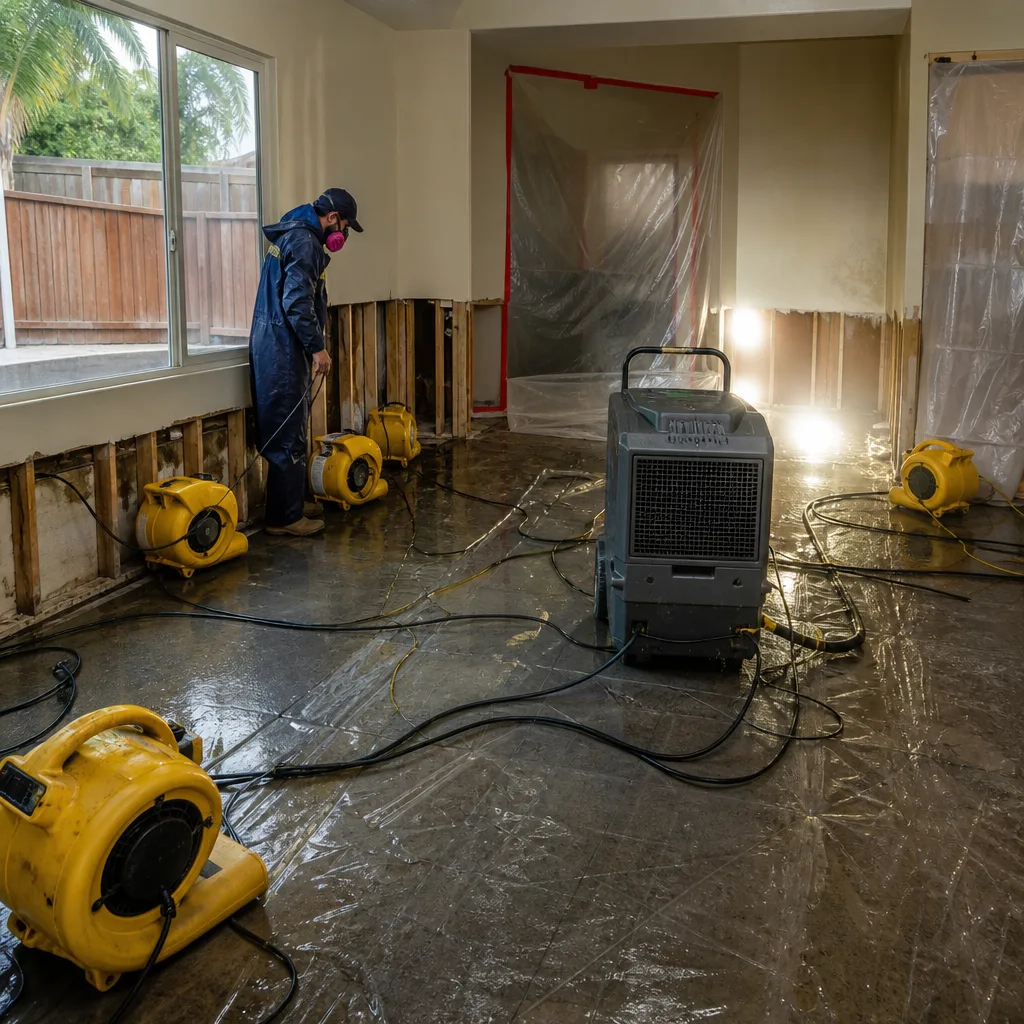
- October-November: Pre-Wind Season Inspection and Sealing
- December-February: Documenting and Responding to High-Intensity Rain Events
- March-May: Post-Rain Moisture Monitoring in Crawl Spaces and Slab Foundations
- June-September: Tracking Indoor Humidity Against Santa Ana’s Sustained Low Outdoor Humidity
- How to Build a Seasonal Inspection Log for Insurance Documentation
- Common Mistakes to Avoid
- When to Call a Professional
- Frequently Asked Questions
BeforeAfterOctober-November: Pre-Wind Season Inspection and Sealing
Most seasonal guides tell homeowners to clean gutters and check for ice dams before winter. In Santa Ana, the critical pre-winter task is sealing the building envelope against pressure-driven moisture intrusion. The Santa Ana wind season typically begins in October, with the strongest events concentrated in November and December. These are dry, hot winds that drop relative humidity to single digits, but their pressure dynamics create a specific moisture risk that contradicts intuition.
When wind gusts hit 60-80 mph against a structure, they create zones of negative pressure on the leeward side and at roof ridges. That negative pressure pulls air from inside the attic and wall cavities outward. If the building envelope has any gaps, the pressure differential forces outdoor air through the assembly. On the pressure side, wind-driven rain can be forced through gaps too small for calm-weather penetration. The result: moisture inside walls during what homeowners perceive as a dry wind event.
We inspect dozens of Santa Ana homes each November where the homeowner reported no leaks, yet moisture meters read 18-22% in exterior wall sheathing. The water entered during a wind event two to six weeks prior, and the low outdoor humidity dried the surface so quickly that no interior stain ever appeared. By the time we measure it, the moisture has migrated inward and established conditions for mold growth.
What to Inspect and Record Before Wind Season
- Attic vent seals: Check turbine vents, ridge vents, and gable vents for intact flashing and sealant. Look for daylight visible around vent bases, which indicates a pressure leak path. Photograph each vent from inside the attic with a date stamp.
- Roof-to-wall flashing: Examine step flashing at all roof-wall intersections, particularly on two-story homes where upper roof runoff concentrates against lower wall sections. Santa Ana’s clay tile roofs often have degraded mortar at these joints after summer heat cycling.
- Exterior penetrations: Hose bibs, electrical service entries, gas lines, and dryer vents are common pressure-driven leak points. Check that escutcheons are sealed and that penetrations through stucco have intact caulk joints. Note any cracks in the stucco itself, which act as capillary wicks when wind forces rain against them.
- Window and door perimeters: The paper flange behind stucco at window openings is the primary water barrier. If the stucco crack pattern radiates from corners, the paper may be compromised. Document with photos; this is pre-existing condition evidence if a claim follows.
- Roof condition documentation: Photograph the full roof surface, including any lifted or displaced tiles. Santa Ana winds displace clay and concrete tiles regularly, and the resulting skip-pattern damage is often invisible from ground level until rain follows.
Record all findings in a dated log with photos stored in cloud backup. This documentation establishes the pre-event condition of your home, a requirement that adjusters routinely request and that many homeowners cannot produce.
For homes with a history of water damage restoration in Santa Ana, we recommend adding moisture meter readings at the previously affected locations to the October baseline. A reading of 12% or lower in wood framing indicates stable conditions; readings above 15% warrant professional evaluation even without visible symptoms.
December-February: Documenting and Responding to High-Intensity Rain Events
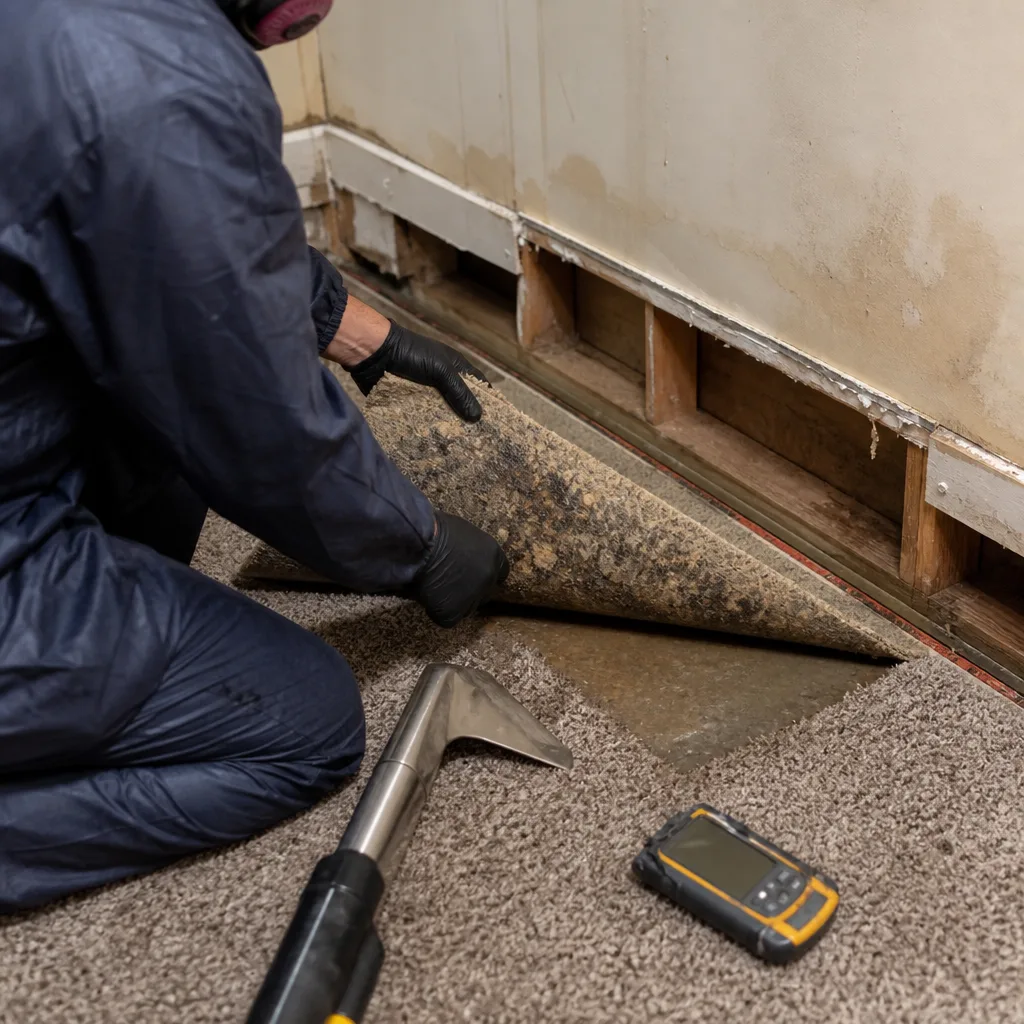
Santa Ana receives the majority of its annual rainfall in brief, high-intensity events between December and February. The 2023-2024 season brought multiple days with rainfall rates exceeding 1 inch per hour, concentrated in atmospheric river events that lasted 24-48 hours. These events produce more runoff per inch than equivalent rainfall in coastal cities because of two local factors: high concrete lot coverage ratios in Santa Ana’s older neighborhoods, and the low permeability of the region’s clay-dominant soils.
The runoff concentration creates specific damage patterns. Homes on slab foundations in the Washington Square and Floral Park neighborhoods, built during periods with less stringent drainage codes, frequently experience slab-edge flooding where downspouts discharge against the foundation. The clay soil swells slowly but retains moisture for weeks, creating a reservoir that wicks into slab edges and any cracks in the foundation.
During these events, documentation speed matters for insurance purposes. Adjusters distinguish between flood damage (typically excluded without separate flood coverage) and water damage from roof or envelope failure (typically covered). The difference often turns on when the homeowner noticed the intrusion, what they did, and whether they documented it.
Immediate Response Protocol for Rain Events
- Document the exterior condition during rainfall: Photograph overflowing gutters, ponding at the foundation, and any visible water entry points from inside. Time-stamped photos establish that the water originated from a covered peril rather than rising groundwater.
- Record interior findings within 4 hours: Note exact locations of water appearance, measure affected areas, and photograph standing water or damp materials before any cleanup begins. This is the evidence that determines coverage.
- Begin extraction and drying within 24 hours: Mold growth initiates on wet drywall in 48-72 hours at Santa Ana winter temperatures (typically 55-65°F). Delay beyond this window converts a water damage claim into a mold remediation claim, which many policies cap or exclude.
- Preserve samples of damaged materials: A 12-inch square of wet drywall or carpet padding, bagged and refrigerated, can be tested for asbestos or other hazards and provides physical evidence of the water source if disputed.
The runoff intensity in Santa Ana also overwhelms municipal drainage in older neighborhoods. During the January 2024 event, we responded to multiple homes in the downtown core where street flooding reached door thresholds. In these cases, documentation must show whether water entered through the envelope (covered) or rose from the street (flood exclusion). Photos of water flow patterns, debris lines, and the sequence of water appearance are critical.
Our crews document every rain response with room-by-room moisture readings, photo records, and written scopes before any work begins. DryMark Restoration Santa Ana home services include direct adjuster coordination with this documentation package, which we have found reduces claim disputes by more than half compared to jobs where the homeowner self-documented.
March-May: Post-Rain Moisture Monitoring in Crawl Spaces and Slab Foundations
March through May in Santa Ana brings warming temperatures, occasional light rain, and the transition to dry season. This is the most overlooked damage window in the annual cycle. The intense rain events of December-February have deposited moisture in building assemblies, clay soils, and crawl spaces. The warming spring air increases evaporation rates, but Santa Ana’s low spring humidity (often 40-50% relative humidity) can mask elevated moisture in enclosed spaces that lack air exchange.
Crawl spaces in Santa Ana homes, particularly those in the Morrison Park and Heninger Park areas built before modern vapor barrier requirements, are especially vulnerable. The clay soil beneath these homes retains moisture from winter rains for 8-12 weeks. Without a sealed vapor barrier and adequate ventilation, that moisture evaporates into the crawl space air, condenses on cooler floor joists and subflooring, and creates conditions for mold growth that the homeowner never sees until musty odors appear or flooring begins to warp.
Specific Humidity Benchmarks for Spring Monitoring
We recommend a calibrated monitoring schedule using a digital hygrometer with temperature and relative humidity display, placed in the crawl space or at slab edge for slab-on-grade homes. The relevant benchmarks are:
- Relative humidity below 60%: Acceptable. No active moisture concern.
- Relative humidity 60-70%: Elevated. Increase ventilation or inspect for standing water or saturated soil. Check for musty odors.
- Relative humidity above 70%: Active moisture problem. Professional evaluation recommended. Mold growth threshold for common indoor species is 70% sustained over 48+ hours at temperatures above 60°F.
- Wood moisture content above 16%: Regardless of relative humidity, wood framing or subflooring above 16% moisture content indicates active water source or inadequate drying. Target is 12% or below for dimensional stability.
These readings should be taken weekly through May, recorded with date, time, temperature, and relative humidity, and photographed for the inspection log. A rising trend over two consecutive readings indicates a problem developing even if no single reading exceeds thresholds.
For slab foundations, the critical monitoring point is the perimeter where slab meets foundation wall. In Santa Ana’s clay soils, seasonal soil moisture changes cause slab movement. A gap that opens between slab and wall in dry summer may close and trap moisture in spring. Check for efflorescence (white mineral deposits) on the slab edge or foundation wall, which indicates moisture migration through concrete. Photograph any changes from your October baseline.
Homes with a history of mold remediation in Santa Ana should maintain this spring monitoring for two full years post-remediation. Recurrence is most common in the first 18 months, and early detection through scheduled readings prevents the extensive demolition that delayed discovery requires.
June-September: Tracking Indoor Humidity Against Santa Ana’s Sustained Low Outdoor Humidity
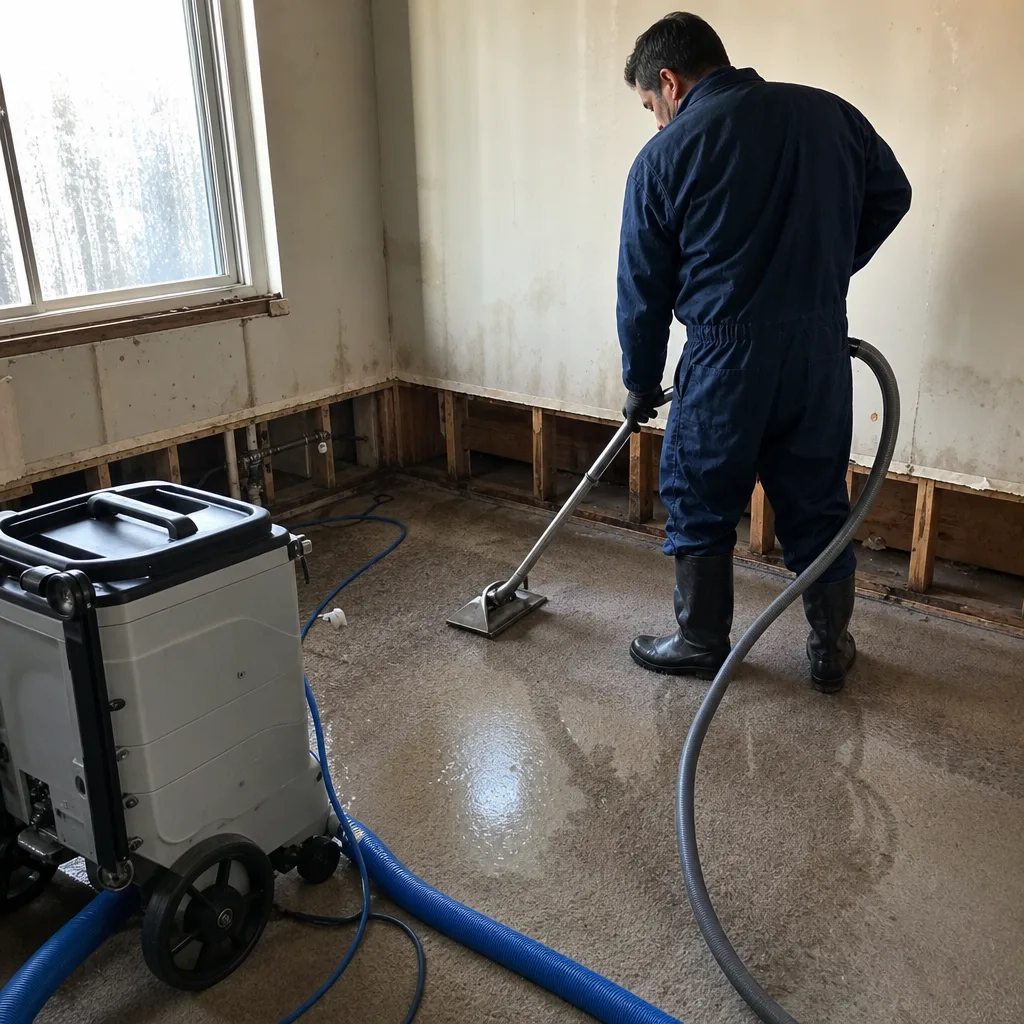
June through September in Santa Ana brings sustained outdoor relative humidity in the 30-45% range, with many days below 30%. This dry outdoor air creates a dangerous complacency about indoor moisture. Homeowners see low humidity readings on weather apps and assume their homes are dry. The reality is more complex, and the disconnect between outdoor and indoor conditions is where summer damage develops unnoticed.
Indoor moisture sources, bathrooms and kitchens in particular, produce localized humidity that low outdoor humidity does not automatically remove. Air conditioning dehumidifies, but only when running. In Santa Ana, many homeowners use evaporative cooling or minimal AC, and the diurnal temperature swing (often 25-30°F between day and night) creates condensation cycles that concentrate moisture in specific building locations.
The Concealed Summer Moisture Problem
We regularly find elevated moisture in Santa Ana homes during July and August inspections where the homeowner reported no concerns. The pattern: bathroom exhaust fans vent into attics rather than outdoors, kitchen range hoods recirculate without exterior venting, and laundry rooms lack adequate make-up air. The moisture produced by daily activities accumulates in wall cavities and attic spaces where the homeowner never measures it.
The low outdoor humidity actually worsens this problem in one respect. When outdoor air is very dry, homeowners ventilate less, keeping windows closed and relying on minimal mechanical systems. The moisture produced indoors has no exit path. Psychrometric data, the measurement of air’s moisture-holding capacity at various temperatures, shows that 70°F air at 50% relative humidity contains significantly more water vapor than 95°F air at 20% relative humidity. A cool, seemingly comfortable home can hold more moisture in absolute terms than the hot, dry outdoors.
Calibrated Reading Schedule for Summer Months
- Weekly spot checks: Measure temperature and relative humidity in bathroom five minutes after shower use, in kitchen during cooking, and in laundry room during dryer operation. Compare to outdoor reading from a weather station. Indoor readings more than 20% higher than outdoor indicate inadequate ventilation.
- Monthly comprehensive survey: Check all rooms with a moisture meter on accessible surfaces: window sills, baseboard tops, closet corners, and the wall behind furniture. Readings above 15% on painted drywall or 12% on wood trim warrant investigation.
- Attic inspection in August: The cumulative effect of summer moisture migration peaks in late summer. Inspect attic sheathing for dark staining, measure wood moisture content, and verify that all exhaust vents terminate outside, not into attic space. Santa Ana’s summer heat makes attic work unpleasant, which is precisely why most homeowners skip it and why we find the most advanced summer damage in August.
Vapor pressure differential, the force that drives moisture from areas of high concentration to low, explains why summer indoor moisture moves into wall assemblies. When cool, air-conditioned interior air meets hot exterior surfaces, the temperature gradient creates a vapor pressure drive toward the interior. Moisture that entered walls during winter rains, and that remained trapped by summer’s inward vapor drive, becomes available for mold growth when the interior surface cools below dew point.
This is not theoretical. In our experience, Santa Ana homes with summer mold discoveries often have moisture sources that began six to nine months earlier, in the previous winter’s rain events, with the damage only becoming visible when summer conditions altered the moisture migration path.
How to Build a Seasonal Inspection Log for Insurance Documentation
A seasonal inspection log serves two purposes: it guides proactive maintenance, and it creates baseline documentation that simplifies any future insurance claim. Adjusters routinely request evidence of pre-loss condition, maintenance history, and the homeowner’s response to damage. A well-maintained log answers all three questions without the delays and disputes that arise when documentation must be reconstructed after the fact.
Log Structure and Required Elements
The log can be physical or digital, but digital with cloud backup is strongly preferred. Water damage often affects the location where physical records would be stored. We recommend a simple structure:
- Property identification: Address, policy number, insurance company, and agent contact. Update annually at renewal.
- Annual baseline: Dated photos of roof, all exterior elevations, attic, crawl space or slab perimeter, and any prior damage locations. Include moisture meter readings at standard reference points.
- Seasonal inspection records: Date, inspector name, weather conditions, findings, actions taken, and photos. Use the inspection protocols from the seasonal sections above.
- Maintenance and repair records: Invoices, warranties, and contractor information for all work performed. Note materials used, particularly for roofing and waterproofing.
- Incident documentation: Any water intrusion, leak, or moisture finding, with immediate photos, measurements, and response actions. This becomes the core of a claim file if damage develops.
Photo Documentation Standards
Photos must be dated, preferably with automatic date stamping from the camera or phone. For insurance purposes, photos should show:
- The overall context (wide shot showing the location within the room or structure)
- The specific condition (medium shot of the damage or finding)
- The detail (close-up of the material, crack, stain, or moisture reading)
- The measurement (moisture meter display, ruler, or scale reference in frame)
Store photos with filenames that include date and location: 2024-10-15_Roof_South_Elevation.jpg. This naming convention allows rapid retrieval when an adjuster requests specific documentation.
The Haven Standard, which governs all work we perform, requires this same documentation discipline from our technicians. Every DryMark Restoration Santa Ana job includes a photo record on every visit, with the same contextual-detail-measurement sequence. When a homeowner maintains a comparable log, the combined documentation package typically resolves claims in the first submission without the back-and-forth that delays payment.
For homeowners who have experienced fire and smoke damage restoration in Santa Ana, the inspection log serves an additional function: tracking residual odor or particulate findings that may indicate incomplete remediation. Document any new stains, odors, or health symptoms with date and location, and request evaluation under the original restoration warranty.
Common Mistakes to Avoid
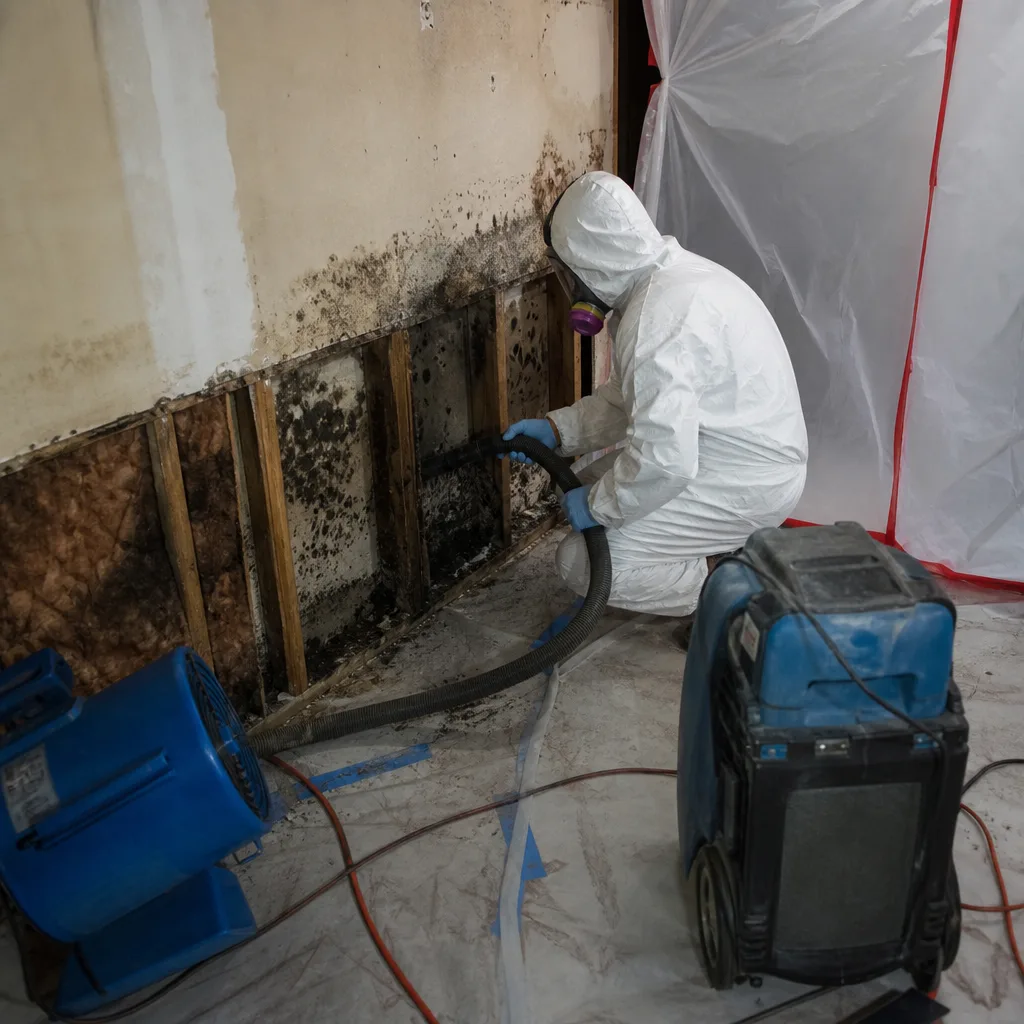
- Preparing for snow and ice instead of wind and pressure-driven rain. Santa Ana’s winter risk is not freeze-thaw cycling. Homeowners who caulk windows for thermal sealing but miss roof vent flashing gaps leave the actual vulnerability unaddressed.
- Assuming low outdoor humidity means no moisture problem. We find the most advanced hidden damage in July and August, when homeowners have ignored indoor moisture sources because the weather app shows 25% relative humidity.
- Cleaning up water damage before documenting it. The first impulse is always to stop the water and dry the area. Without photos and measurements first, you lose the evidence that determines insurance coverage and scope.
- Relying on visual inspection alone. By the time water damage is visible on interior surfaces, the actual damage in the wall or floor assembly is typically 3-5 times more extensive. Moisture meters are essential tools, not optional accessories.
- Neglecting the crawl space entirely. Santa Ana homes with raised foundations often have crawl spaces that the homeowner has never entered. These spaces concentrate moisture from soil, plumbing leaks, and perimeter drainage failures, with damage progressing for months before any interior symptom appears.
- Using a single annual inspection date. One inspection in October misses the spring moisture retention in clay soils, and one in April misses the wind season preparation window. The inspection calendar must follow the actual local risk cycle.
- Failing to update the log after any work. Post-repair photos establish the restored baseline. If damage recurs, the adjuster needs to distinguish new damage from incomplete prior repair. Without updated documentation, the homeowner bears this burden of proof.
When to Call a Professional
Call for professional evaluation when moisture meter readings exceed 16% in wood framing or 15% in drywall, when you detect musty odors without visible source, when mold growth covers more than 10 square feet, or when water intrusion follows wind or rain events and you need documentation for insurance purposes. Any water damage that affects electrical systems, involves sewage contamination, or compromises structural elements requires immediate professional response.
DryMark Restoration Santa Ana offers free estimates in Santa Ana. Our technicians arrive with moisture meters, thermal imaging, and the documentation protocols that produce payable claims. Call (657) 300-9903 for assessment. Every job is quoted in writing before work begins, with no exceptions, under Haven Standard, Clause 1.
Frequently Asked Questions
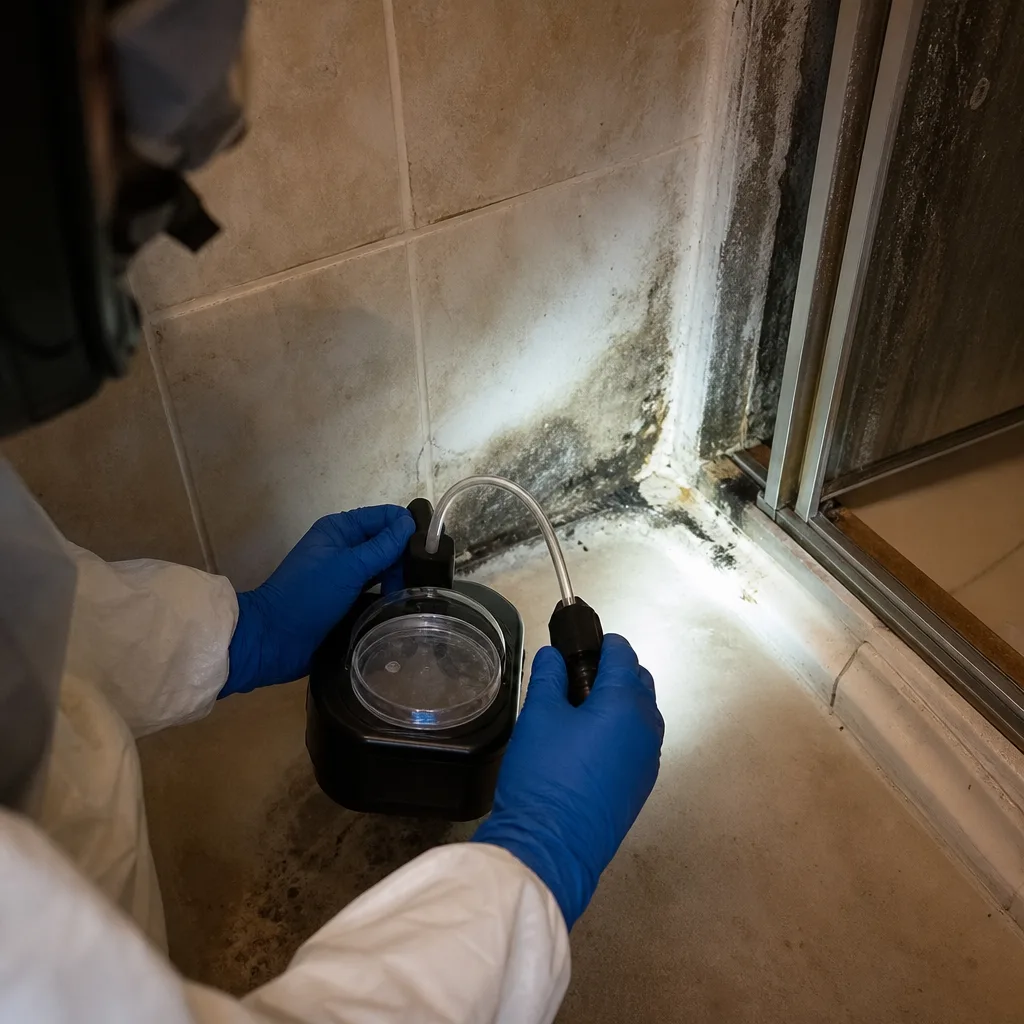
A basic digital hygrometer with temperature display costs $15-$40; a pin-type moisture meter for wood and drywall costs $50-$150. Professional-grade meters with species correction and deep-sensing probes run $300-$600. For most homeowners, a mid-range moisture meter and two hygrometers (one for living space, one for crawl space or attic) provide adequate monitoring for under $200 total. See our Damage Restoration Cost Breakdown: The Santa Ana Homeowner’s Reference for 2026 for detailed pricing on professional equipment and services. Call (657) 300-9903 for a free estimate if readings indicate professional evaluation is needed.
Standard homeowners policies typically cover water damage from wind-driven rain entering through a damaged roof or wall envelope. They exclude damage from rising floodwater or seepage through foundations. Documentation that establishes the water entry point and sequence is what determines coverage. A seasonal inspection log with pre-event photos significantly strengthens this documentation. For complex claims, DryMark Restoration Santa Ana provides direct adjuster coordination with photo-documented assessments.
Response time depends on event severity and call volume. During major atmospheric river events, all restoration companies in Orange County experience surge demand. DryMark Restoration Santa Ana maintains live phone coverage 24 hours a day, 7 days a week with no voicemail on emergency lines, and we dispatch based on damage severity and safety risk. For active water intrusion affecting electrical systems or structural elements, we prioritize same-day response. For contained situations, next-day assessment is typical. Call (657) 300-9903 for current availability.
Visible mold on hard surfaces in areas smaller than 10 square feet can often be addressed with appropriate cleaning and moisture source correction. However, visible mold is typically the indicator of a larger hidden colony. In Santa Ana’s climate, the conditions that produced visible growth have usually also produced concealed growth in wall cavities, behind cabinetry, or under flooring. Professional assessment with moisture mapping determines the actual extent. We offer free second opinions on any competitor’s written estimate if you want verification of recommended scope.
At DryMark Restoration Santa Ana, we coordinate directly with adjusters as a standard service, not an upsell. Our documentation package includes the written scope, room-by-room moisture readings, dated photo records from every visit, and drying logs formatted to IICRC standards. This documentation is designed for adjuster review, and we participate in site visits and scope negotiations as needed. You remain the policyholder and decision-maker; we handle the technical documentation that supports your claim.
Target 30-50% relative humidity in occupied spaces. Below 30% causes respiratory irritation and wood shrinkage; above 60% supports mold growth and dust mite proliferation. In Santa Ana, the challenge is usually low winter humidity and localized high humidity in bathrooms and kitchens. A whole-house approach, monitoring multiple locations rather than a single thermostat reading, gives accurate control. During Santa Ana wind events, indoor humidity can drop below 20% even with normal activities; temporary humidification may be needed for health and material stability.
The Bottom Line
Santa Ana’s climate demands a damage prevention calendar that follows local weather patterns, not national seasonal templates. Inspect and seal against wind pressure in October. Document intensely during December-February rains. Monitor concealed moisture through May. Track indoor humidity against deceptive outdoor lows from June through September. Maintain a written, photographed inspection log that establishes baseline conditions and accelerates any insurance claim. The homeowners who avoid major restoration costs are not those with the newest materials or the highest budgets; they are those who measure consistently, document thoroughly, and respond to readings rather than waiting for visible damage. Explore more guides & resources for year-round protection strategies.
Written by Alicia Brennan, Owner at DryMark Restoration Santa Ana, serving Santa Ana since 2011.