
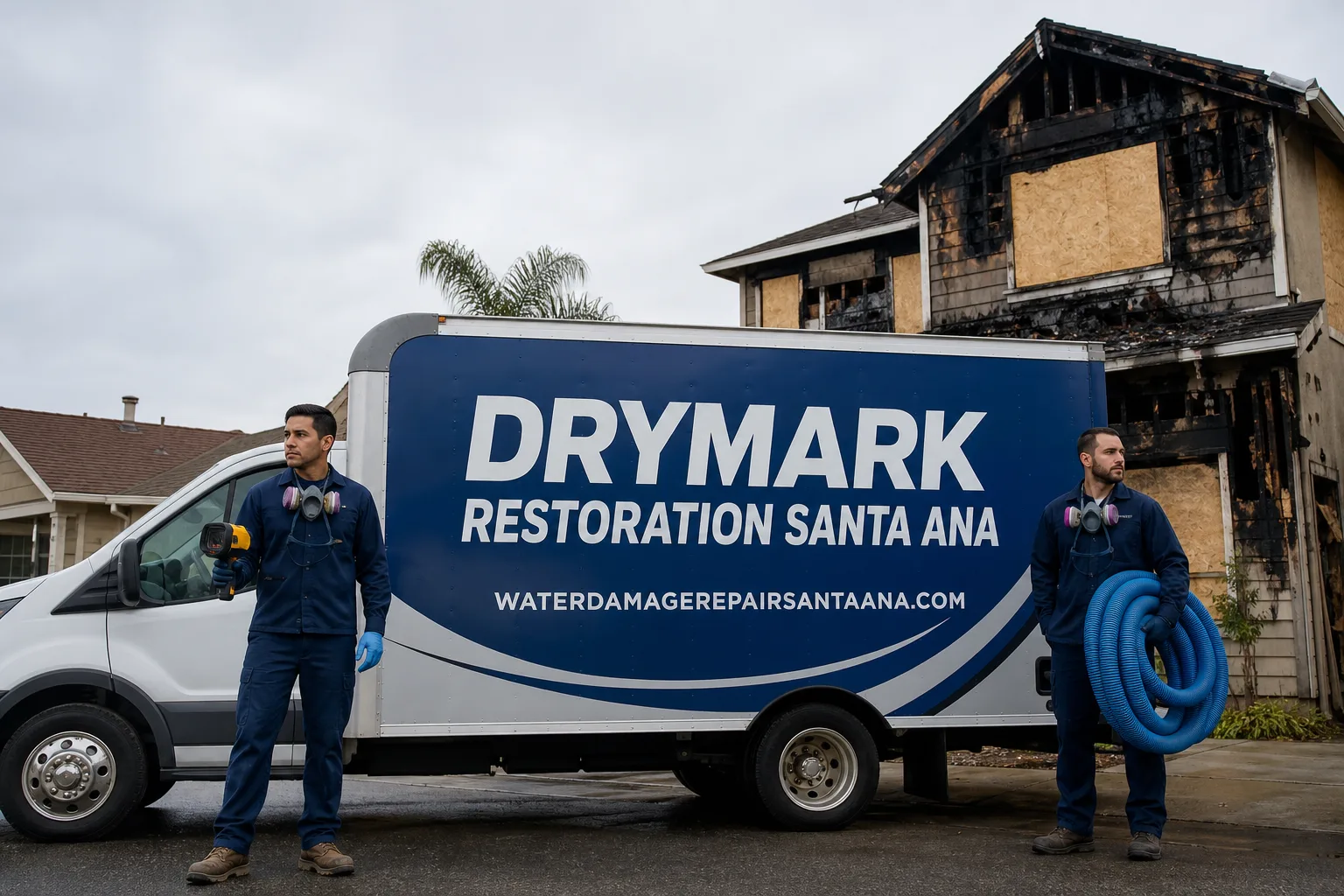
Free visual inspection and a written scope of work before any mitigation begins - photos, moisture readings, and drying logs go in your claim file
The scope we write is the scope we bill. Anything new gets shown to you, in writing, before we touch it.
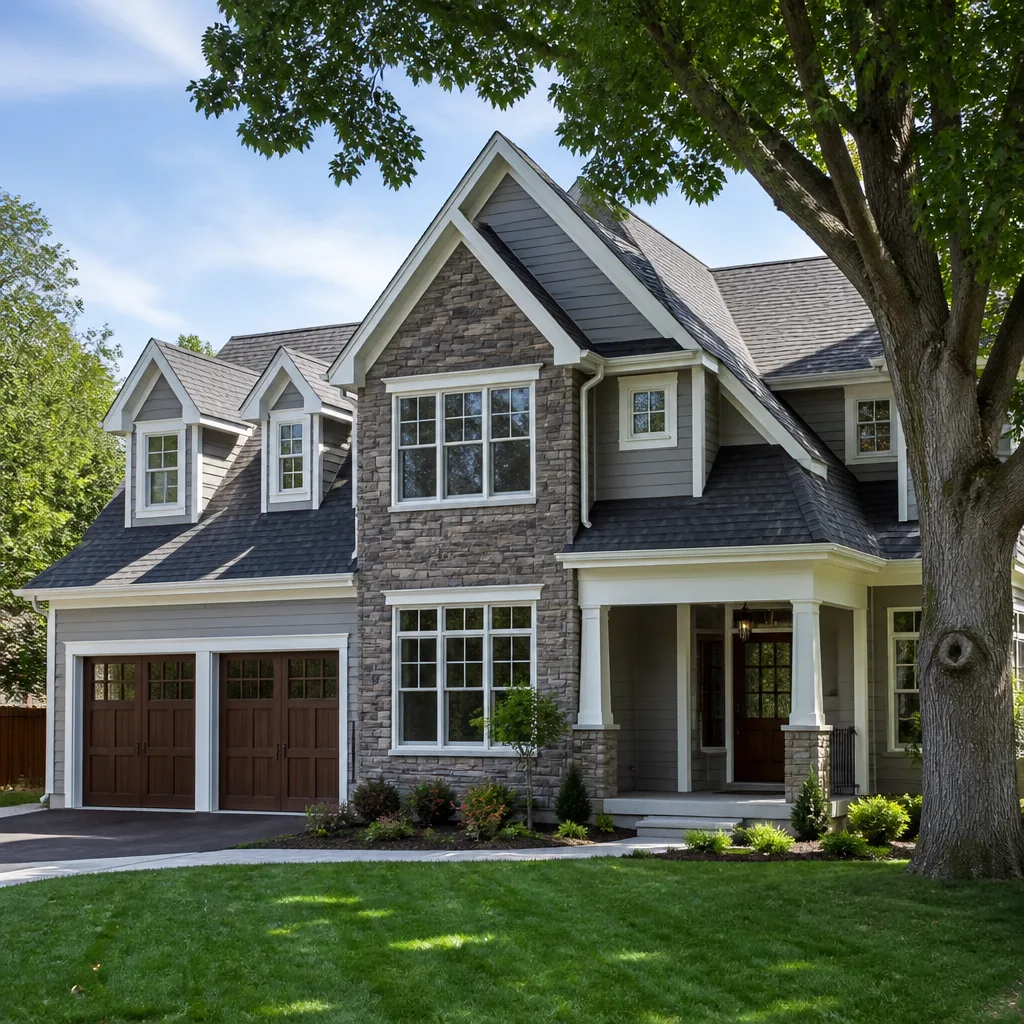
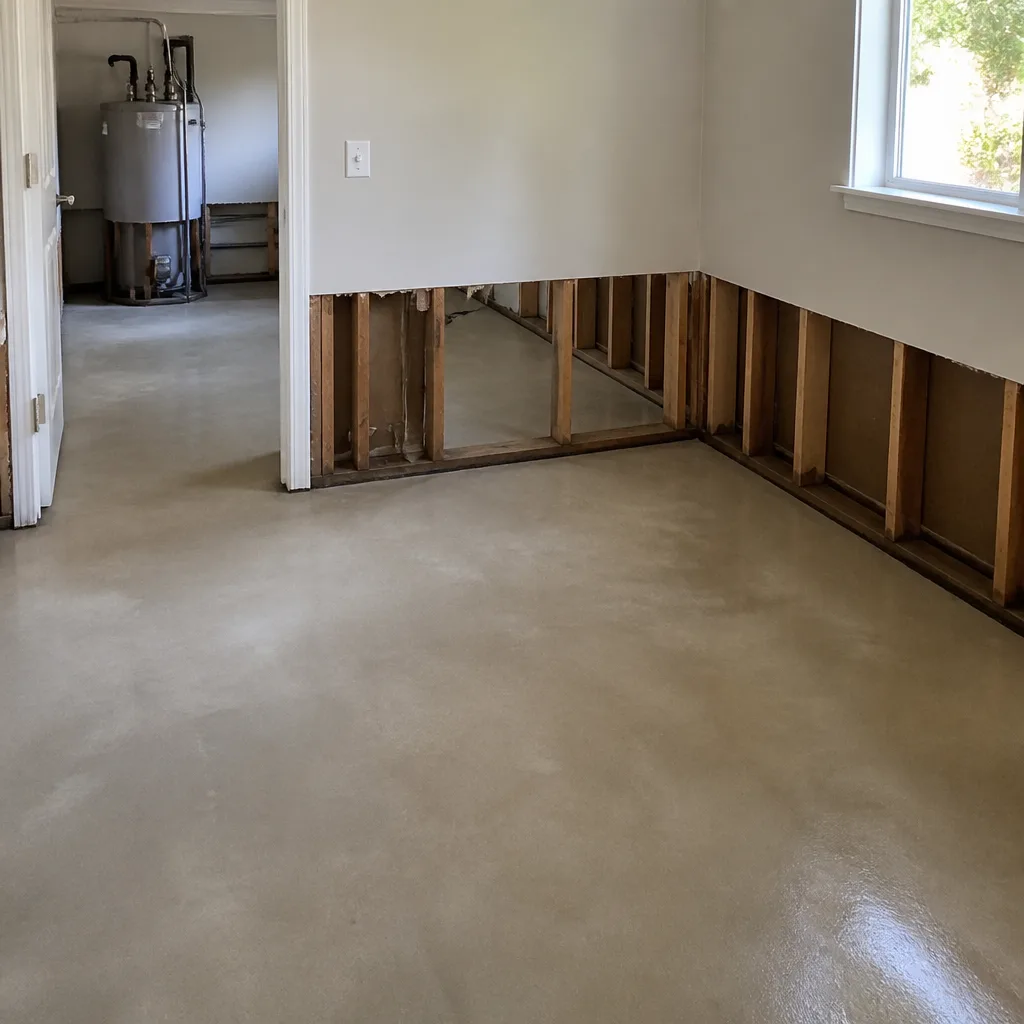
 Before
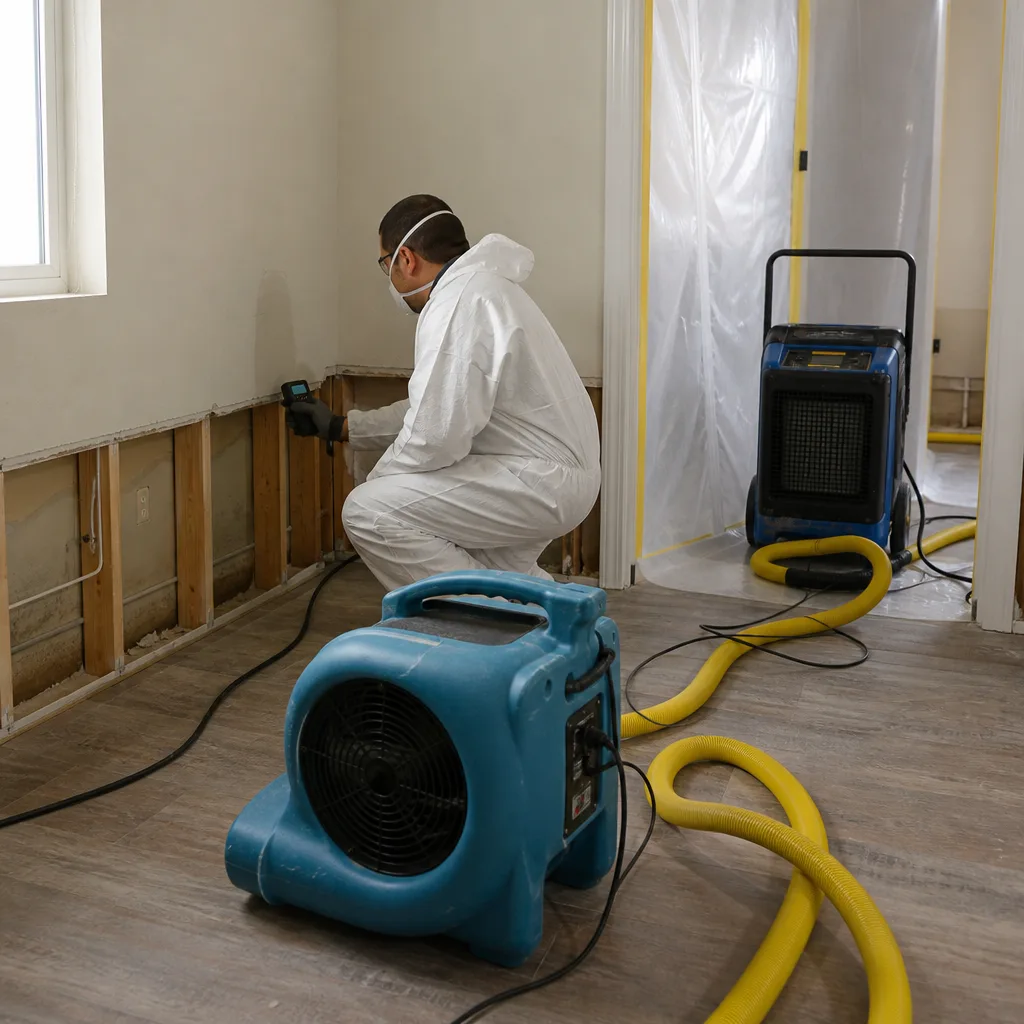 After
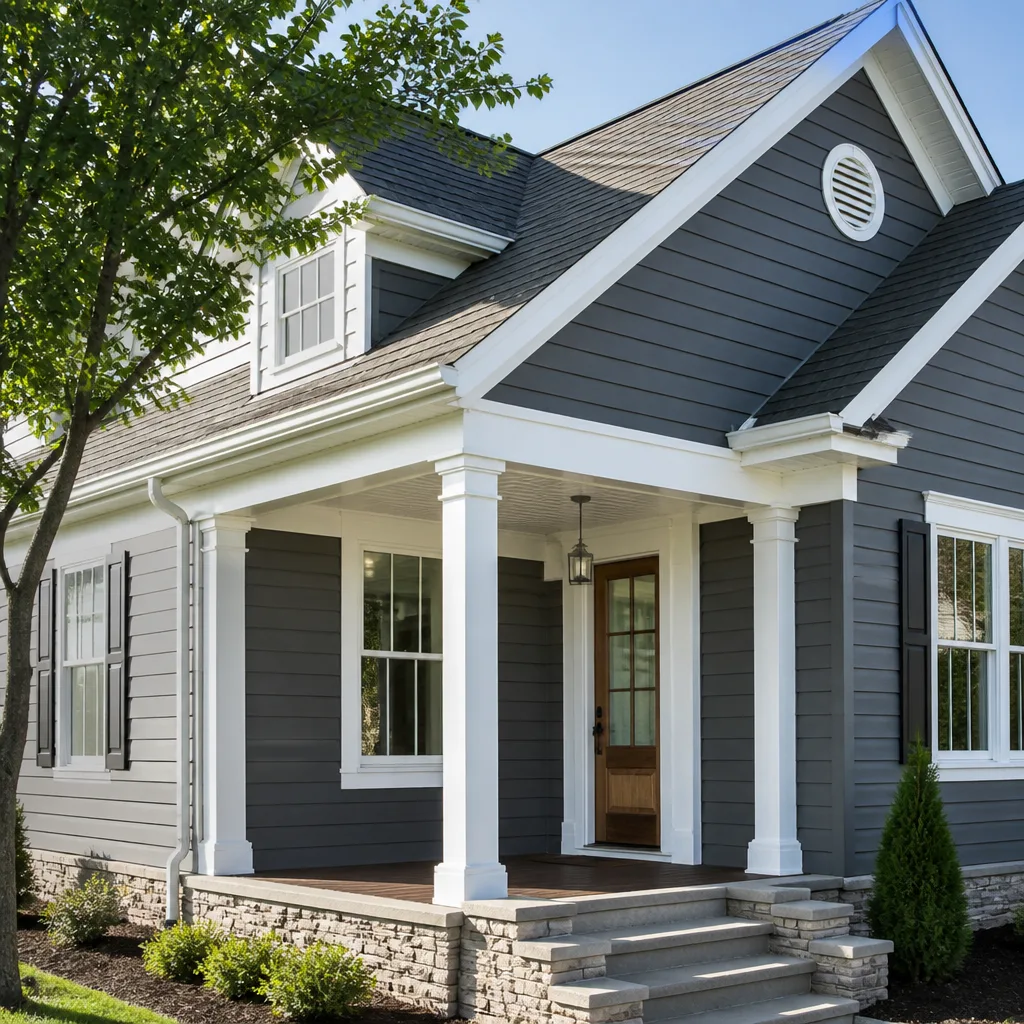
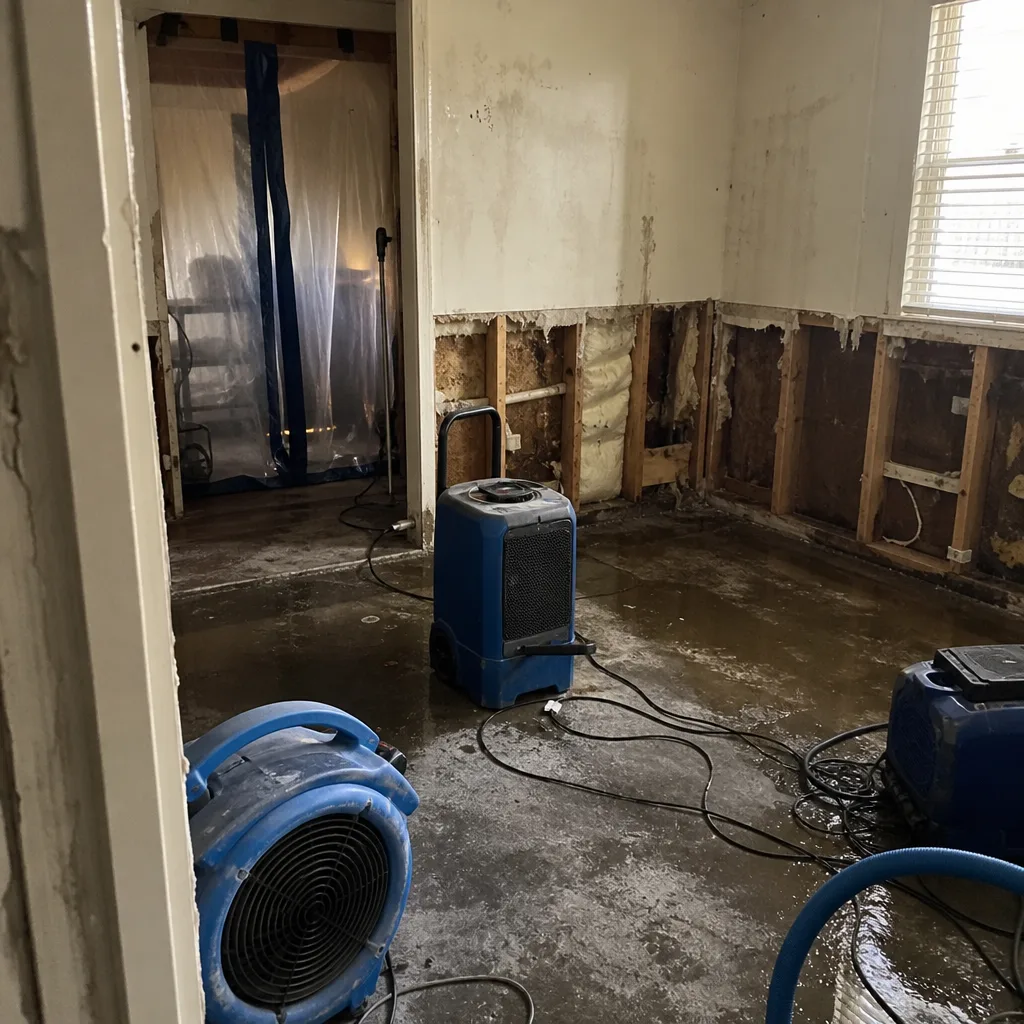
After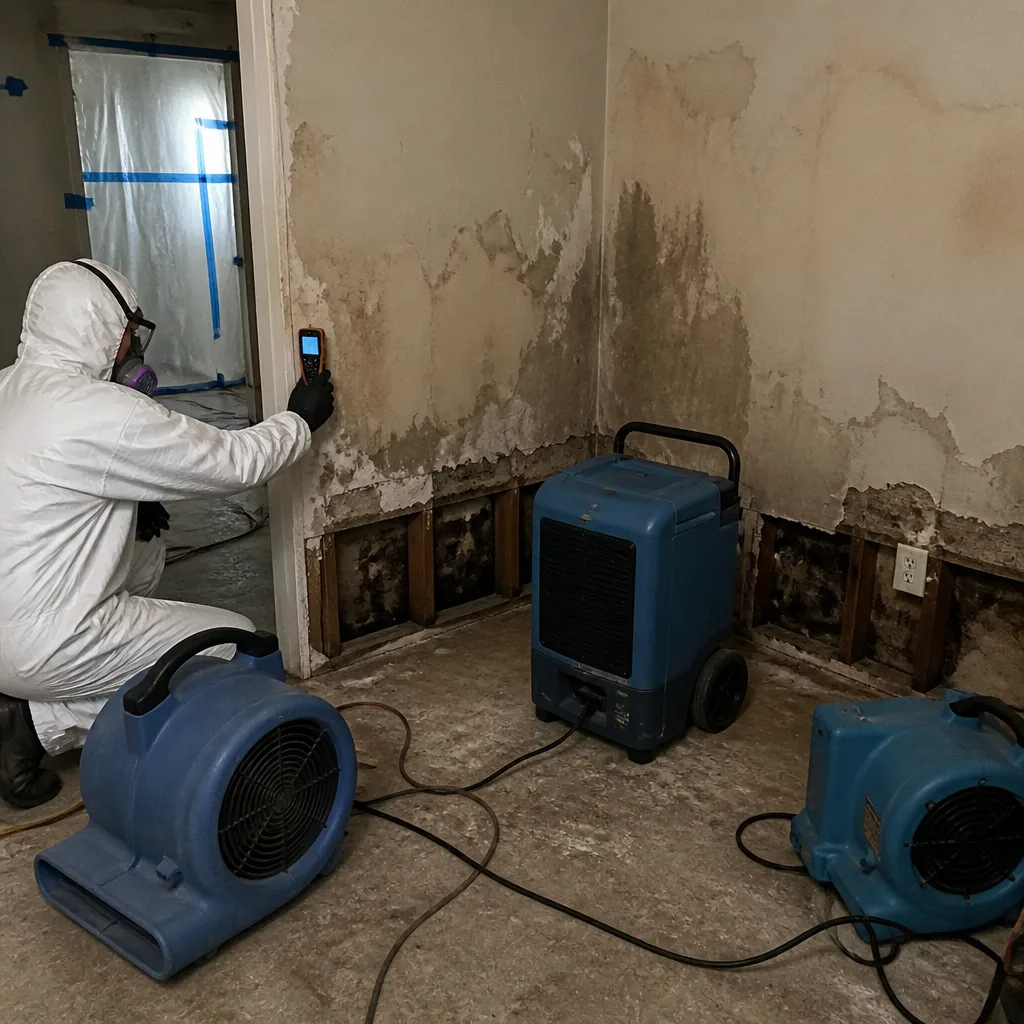 Before
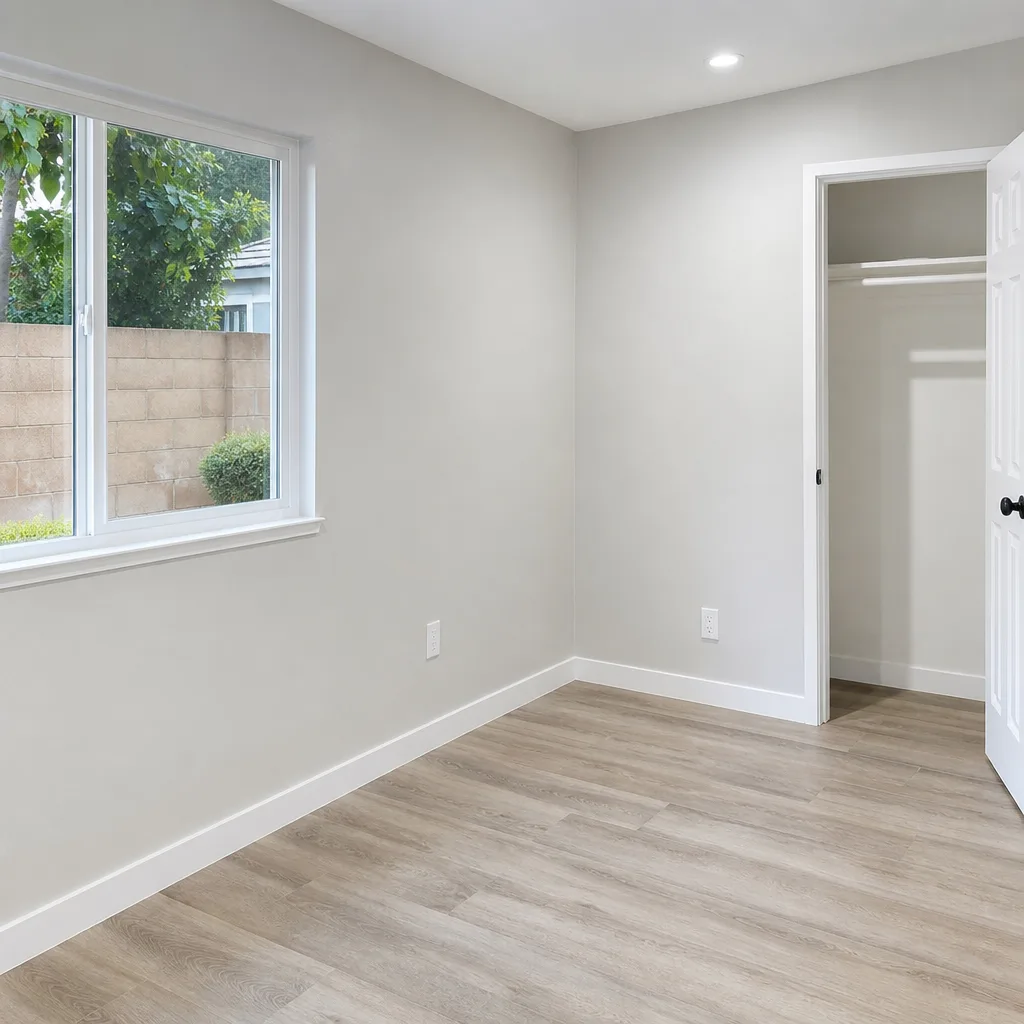 After
After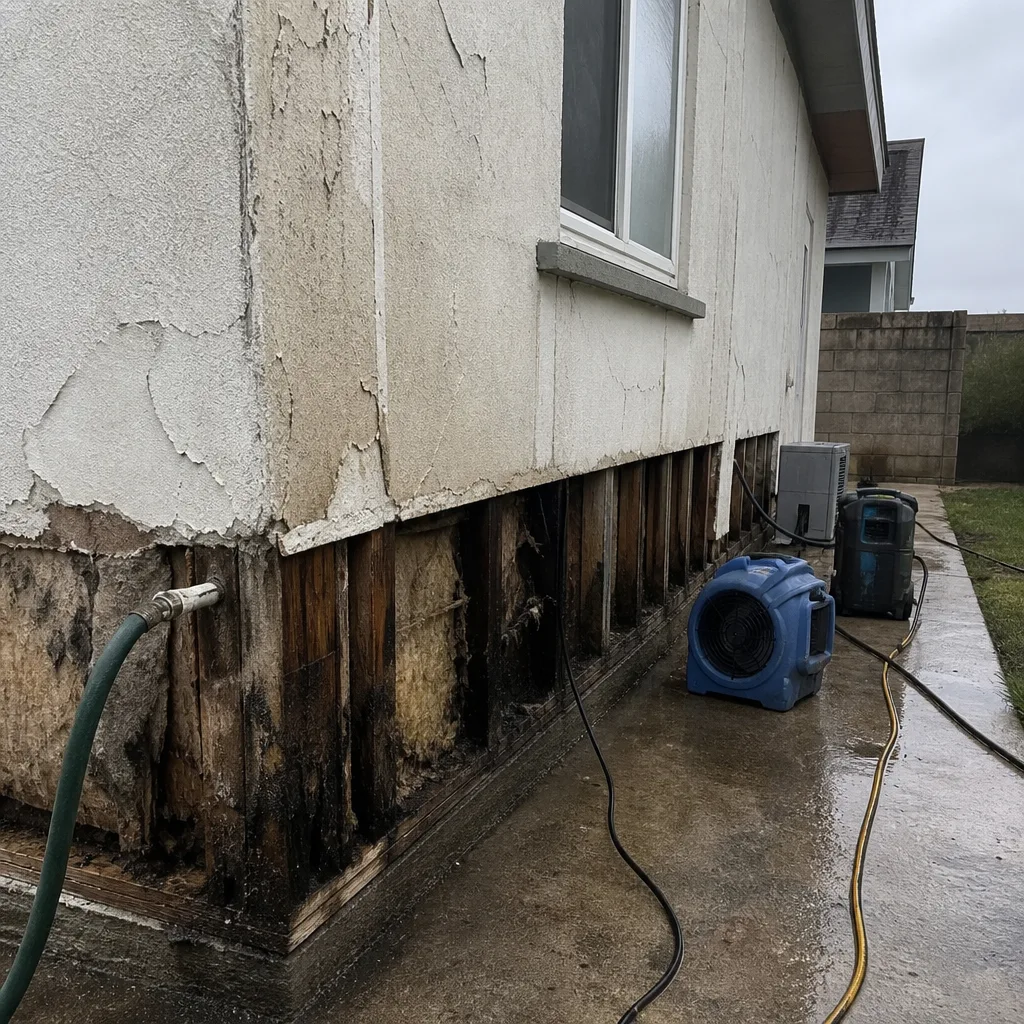 Before
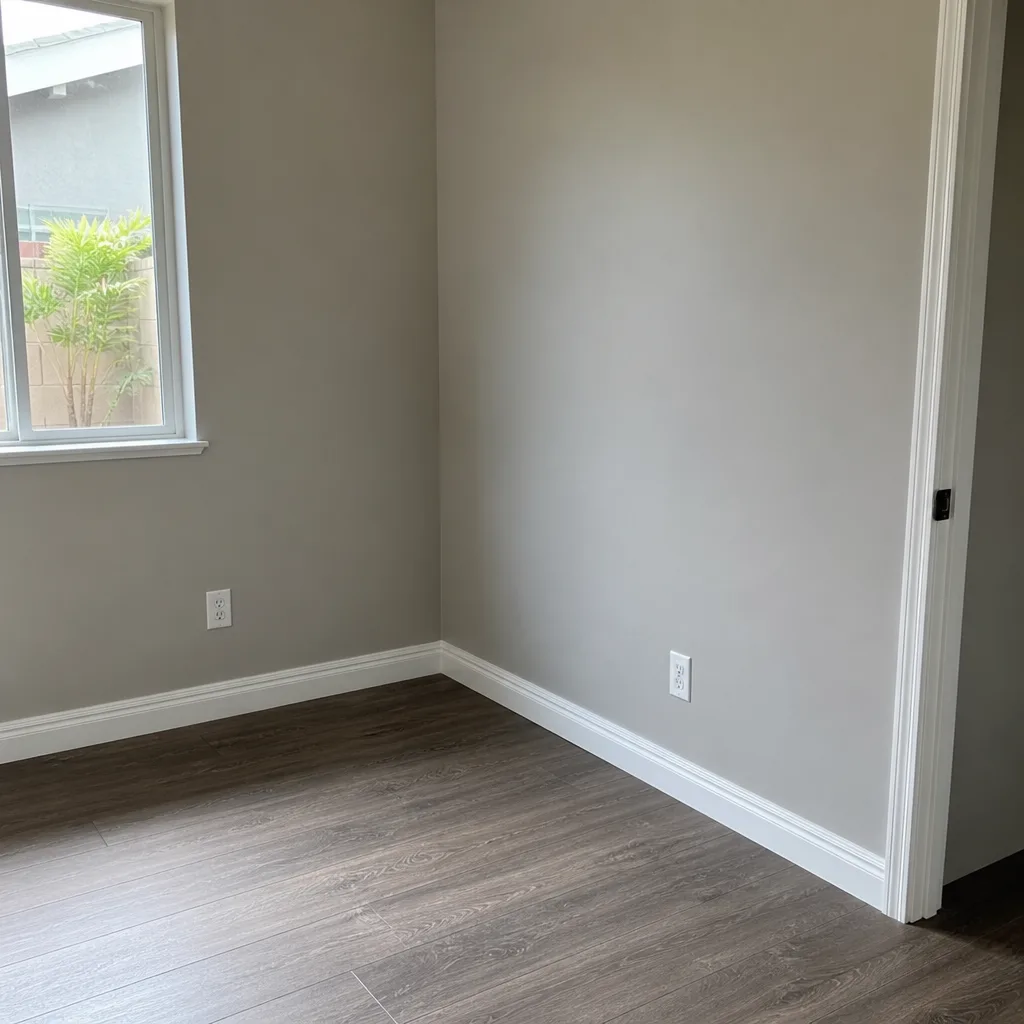 After
AfterTrusted Storm & Disaster Restoration for Santa Ana Homeowners
Storm and disaster restoration in Santa Ana typically costs $2,800-$15,000 depending on damage scope, with emergency board-up and roof tarping starting at $450-$1,200. Most Santa Ana homeowners see our crew on-site within 60-90 minutes of calling, and every job starts with a written price before any work begins. Call (657) 300-9903 for immediate dispatch.
We’ve restored more than 12,000 homes since 2011, and we’ve learned that the difference between a paid claim and a denied one isn’t the damage - it’s the documentation. Santa Ana sits in a unique position: close enough to the coast for marine layer moisture to complicate drying, but far enough inland to catch Santa Ana wind events that tear roofing and force water through compromised envelopes. In neighborhoods like Floral Park and Washington Square, we’ve seen 80-year-old clay tile roofs lose entire sections to 70-mph gusts, while newer construction in South Coast Metro often suffers from wind-driven rain through improperly sealed stucco transitions.
Back to Dry Restoration, led by Alicia Brennan, was built by a former claims adjuster who watched homeowners lose tens of thousands because their restoration company couldn’t produce moisture logs, photo sequences, or written scopes that matched the invoice. That’s why every Santa Ana job we handle includes a documented photo record on every visit, daily drying logs with psychrometric data (temperature, relative humidity, and vapor pressure differential - the measurable force that actually moves moisture out of building materials), and a written price signed before anyone starts work. Haven Standard, Clause 1: no exceptions.
What Our Storm & Disaster Restoration Service Includes
Storm Damage Cleanup
Storm damage cleanup addresses the immediate aftermath of severe weather: water intrusion, structural compromise, and contamination spread. Our Orange Storm & Disaster Restoration teams handle similar conditions throughout the region. In Santa Ana, this often means dealing with combined damage - wind-torn roofing that lets rain saturate insulation, or fallen trees that breach exterior walls and introduce debris into living spaces. We deploy Phoenix and XPOWER air movers with LGR dehumidifiers to establish containment, document pre-existing conditions with photo sequences, and produce a written scope that separates storm-caused damage from maintenance issues insurers won’t cover.
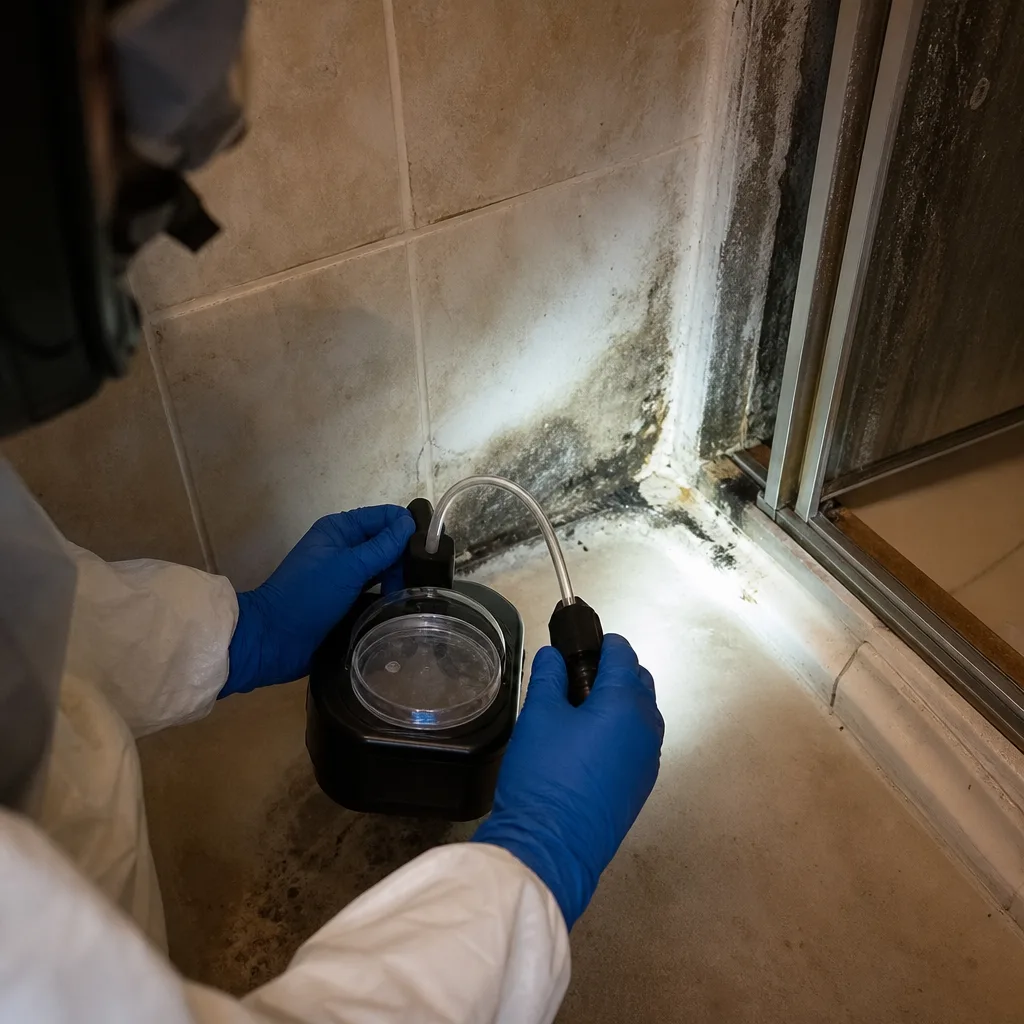
Flood Damage Restoration
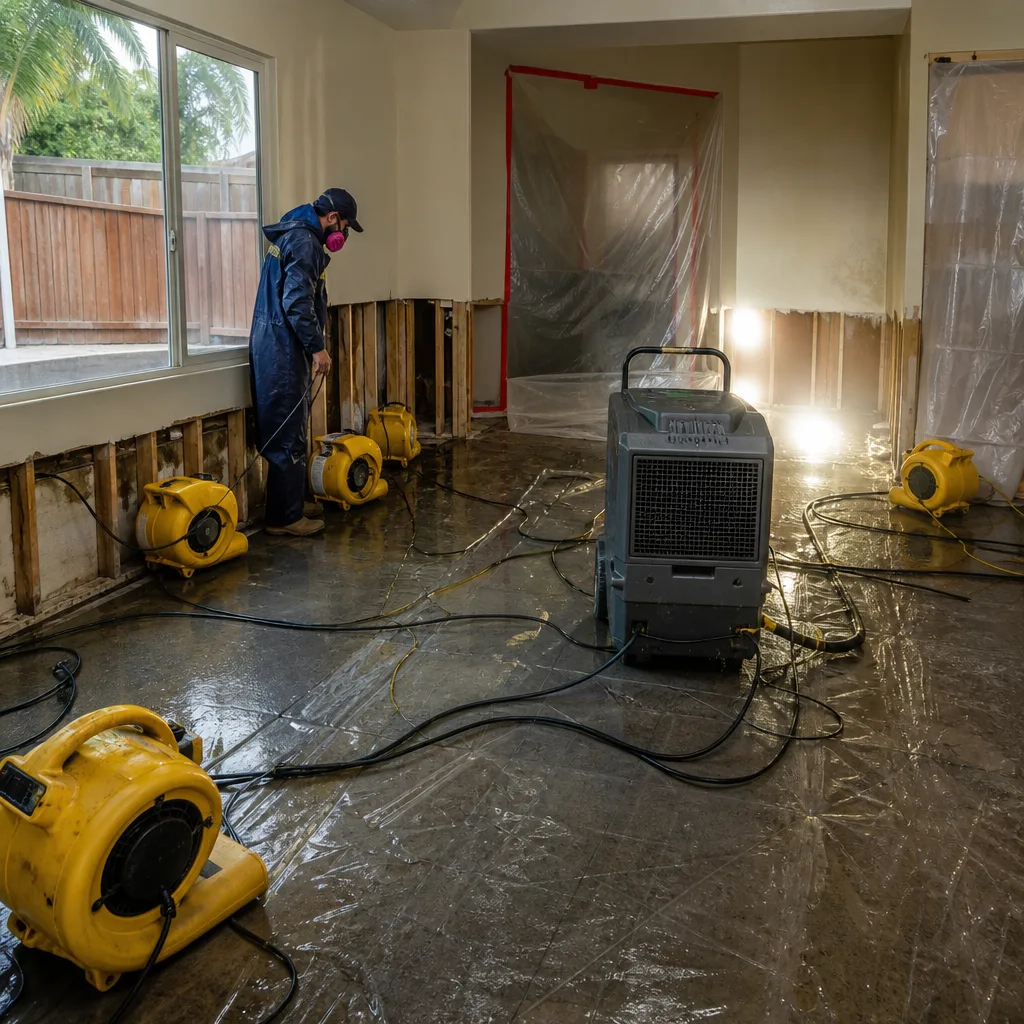
Flood damage restoration in Santa Ana requires distinguishing between Category 1 clean water, Category 2 gray water, and Category 3 black water - each with different extraction, drying, and demolition protocols under IICRC S500 standards. The Santa Ana River floodplain affects properties near Centennial Park and lower-lying sections of the city, where we’ve measured standing water in crawl spaces 48 hours after storms clear. Our crews use Injectidry systems for hardwood floor rescue and B-Air negative air machines when contamination is present, with every moisture reading logged to the tenth of a percent.
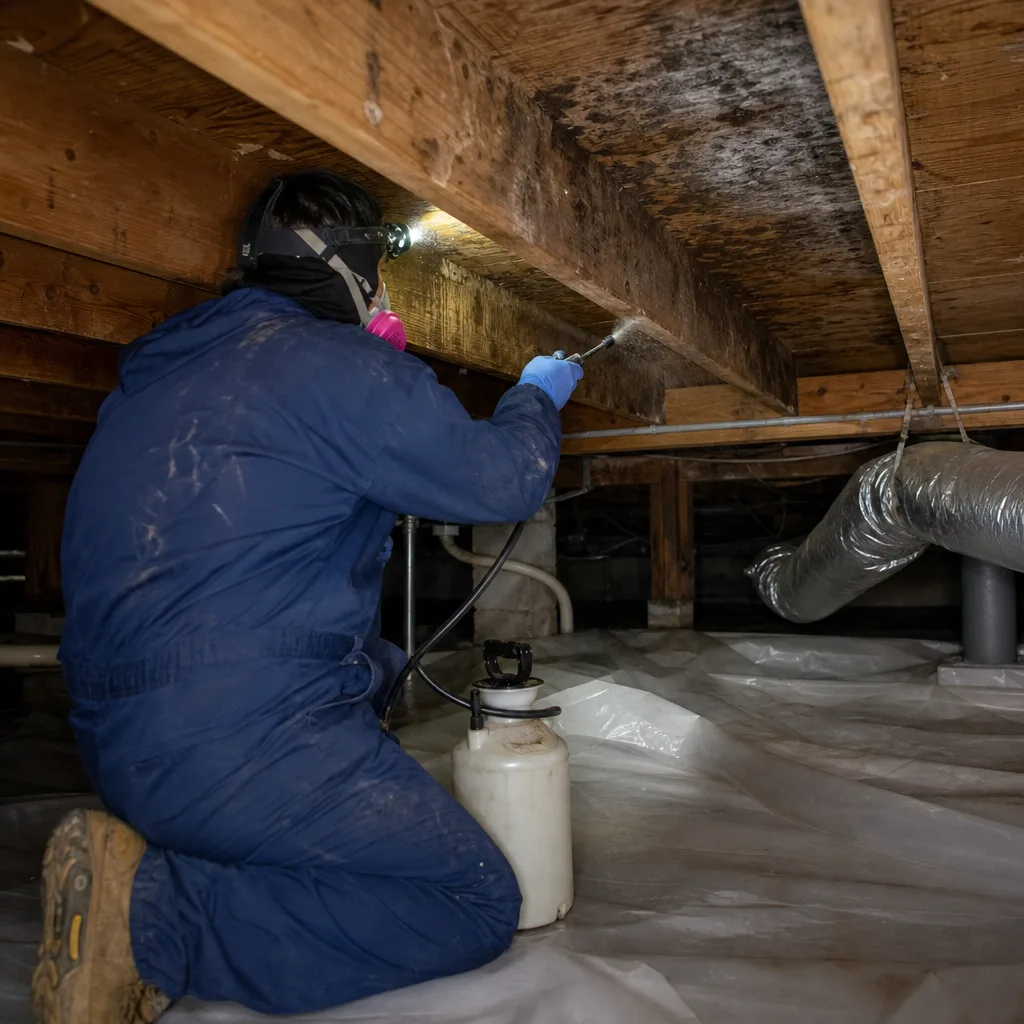
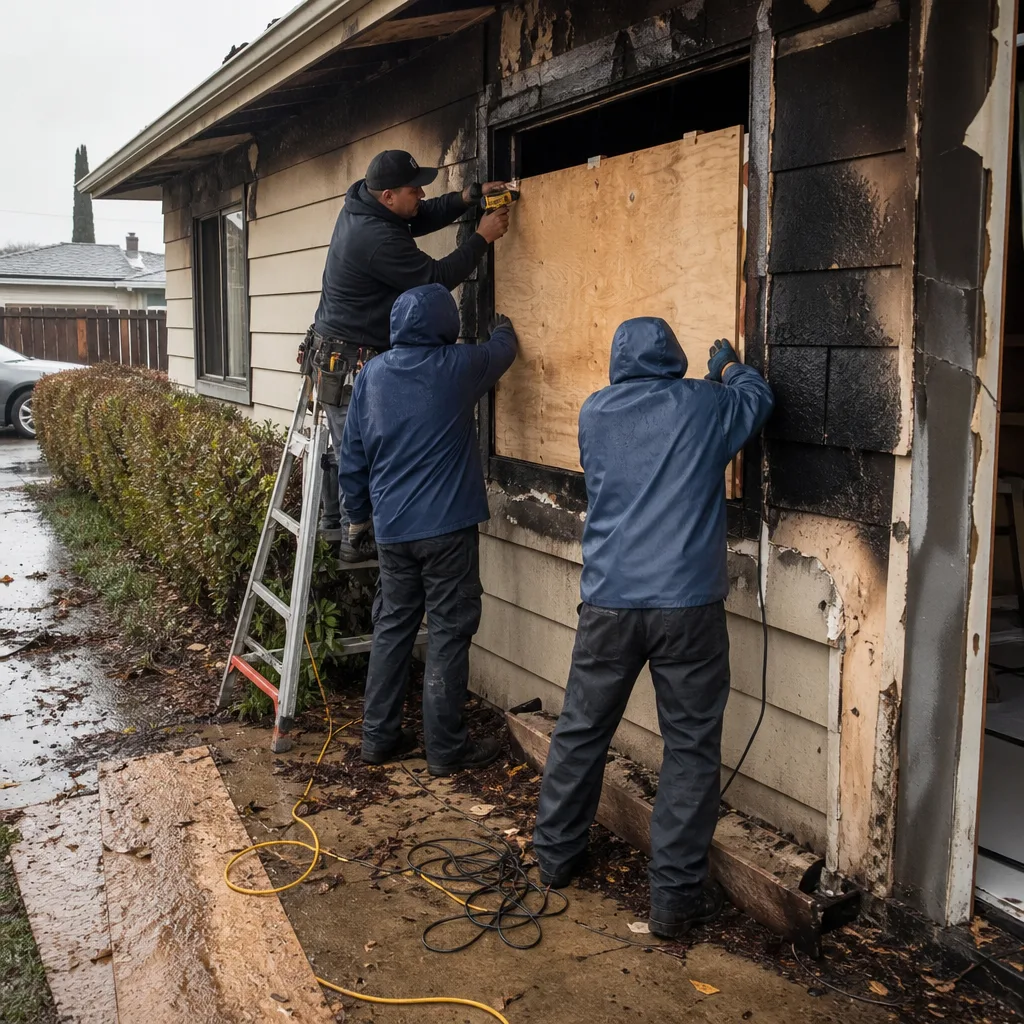
Emergency Board-Up
Emergency board-up secures compromised openings - broken windows, damaged doors, or breached walls - to prevent secondary damage, theft, and liability exposure. In Santa Ana’s historic districts, we’ve boarded up 1920s Craftsman homes with custom-cut plywood to preserve original window frames for restoration rather than replacement. Every board-up includes photo documentation of the opening condition, materials used, and installation method; this becomes evidence if an insurer questions whether temporary protection was adequate or timely.
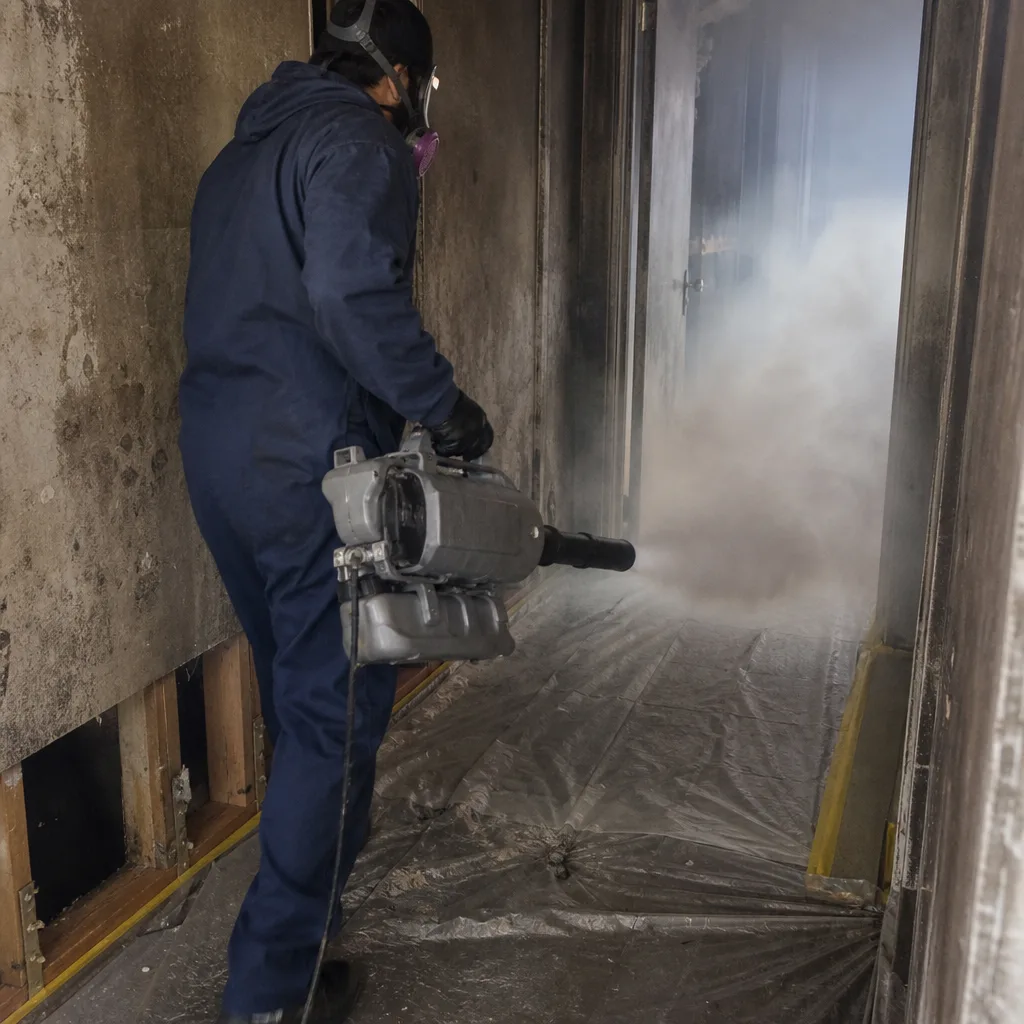
Roof Tarping
Roof tarping is a temporary weatherproofing measure applied when permanent repair can’t occur immediately, typically due to ongoing weather or material lead times. Santa Ana’s clay and concrete tile roofs require specialized anchoring - we’ve seen tarps torn loose from standard nail-down methods when Santa Ana winds hit 50+ mph. Our crews use sandbag perimeter weighting and mechanical fastening appropriate to roof pitch and material, with photos of the full installation and any underlying damage visible during application.
Debris Removal
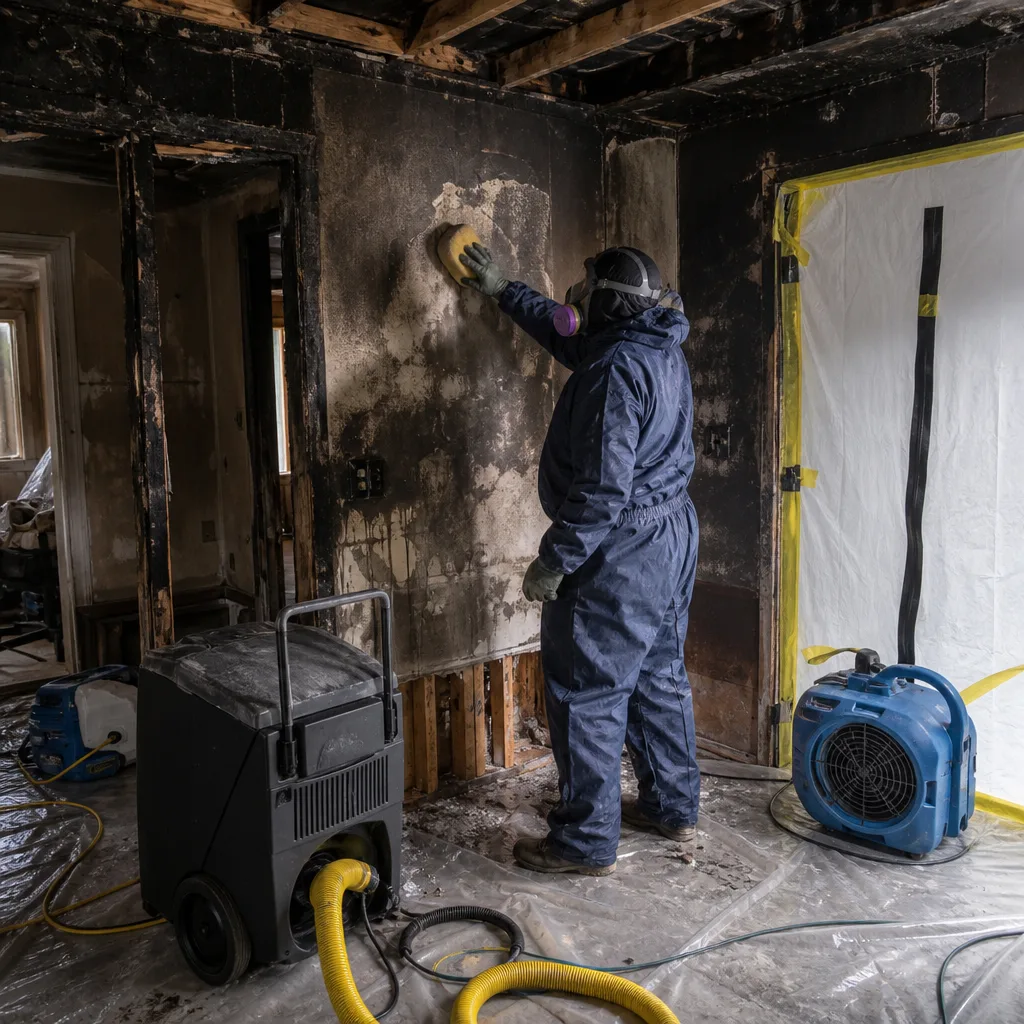
Debris removal covers the controlled extraction of storm-generated materials: tree limbs, damaged structural components, saturated drywall and insulation, and contaminated personal property. In Santa Ana, this includes navigating tight setbacks in neighborhoods like Heninger Park and dealing with mature ficus and palm debris that standard haulers won’t touch. We sort debris by material classification for proper disposal documentation - organic, construction and demolition, hazardous - because improper classification can trigger landfill rejection and delay your entire project.
Wind Damage Repair
Wind damage repair addresses structural and envelope damage caused by pressure differentials and projectile impact. Santa Ana’s eponymous winds have peeled back composition shingles we’ve documented at 12:1 pitch in the hills above Santiago Park, while flat-roofed commercial buildings along Bristol Street have suffered membrane uplift requiring full perimeter re-anchoring. Our repair scopes specify material by manufacturer and grade, with written prices that don’t change once work starts - Haven Standard, Clause 1.
What happens when you call
- 1
A real person answersNo phone trees - you reach a local pro.
- 2
You get an upfront price rangeHonest numbers before anyone is dispatched.
- 3
A background-checked tech heads outLicensed & insured, dispatched right away.
- 4
You approve before work beginsNothing starts until you say go.
Brands We Service for Storm & Disaster Restoration
We’ve deployed Phoenix restoration dehumidifiers on hundreds of Santa Ana jobs, from single-room drying in condo complexes near MainPlace Mall to full-structure recovery in the Artists Village. Phoenix units produce the psychrometric data - grain depression and specific humidity readings - that adjusters expect to see in daily drying logs, and our technicians calibrate each unit before deployment with documentation you can request at any time.
XPOWER and B-Air air movers see constant use in our Santa Ana fleet, particularly in tight-access scenarios common in pre-1980s construction where clearance between walls and fixtures measures 18 inches or less. We’ve also installed Injectidry mat systems for hardwood rescue in the historic homes of West Floral Park, saving original oak and maple floors that replacement would have cost $15,000-$25,000 to replicate. Whether your equipment needs involve these brands or any other make, we can assess, deploy, and document to IICRC, RIA, and IFA standards.
BeforeAfterSigns You Need Storm & Disaster Restoration Right Now
- Visible water staining or active dripping from ceilings, walls, or light fixtures indicates breached roofing or compromised plumbing from structural shift. In Santa Ana’s older homes, we’ve traced ceiling stains back to wind-lifted tile that created a channel for water to run 20 feet along rafters before finding an exit point - the visible damage is rarely the full damage.
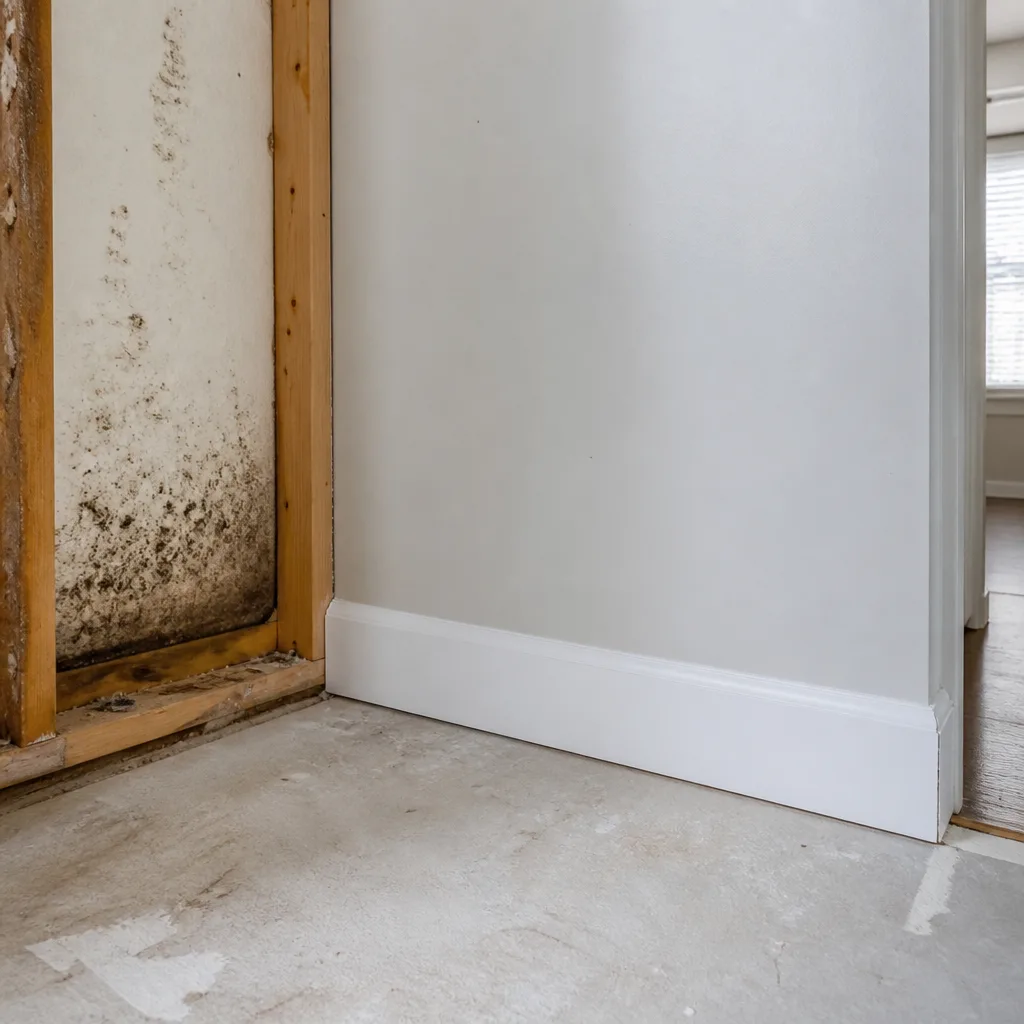
- Musty or sharp odors after a storm suggest hidden moisture in wall cavities, subflooring, or HVAC systems. Mold colonization begins in 48-72 hours in Santa Ana’s climate; if you smell it, we need moisture readings, not air fresheners.
- Doors or windows that stick or won’t latch after high winds may indicate frame racking or foundation shift. We’ve measured 3/8-inch lateral displacement in Santa Ana homes after sustained 60-mph winds that homeowners initially attributed to humidity swelling.
- Granule accumulation in gutters or at downspout exits signals composition shingle degradation that compromises waterproofing. After Santa Ana wind events, we’ve photographed gutter lines with 1/4-inch granule deposits that corresponded to bare substrate patches visible on roof inspection.
- Sagging or separated soffits and fascia expose roof edge vulnerability and create entry points for pests and additional water. In Santa Ana’s palm-heavy neighborhoods, falling fronds strike these components with surprising force; we’ve documented fascia separation that allowed full attic saturation before interior signs appeared.
Our Storm & Disaster Restoration Process - Step by Step
- 1
Emergency response and site securement. We arrive with background-checked, uniformed technicians - named, licensed, and insured, with license numbers available on request. The first action is hazard assessment: electrical exposure, structural instability, gas line integrity. We board up or tarp as needed, document everything with photos, and provide a written emergency services scope with pricing before any work proceeds.
- 2
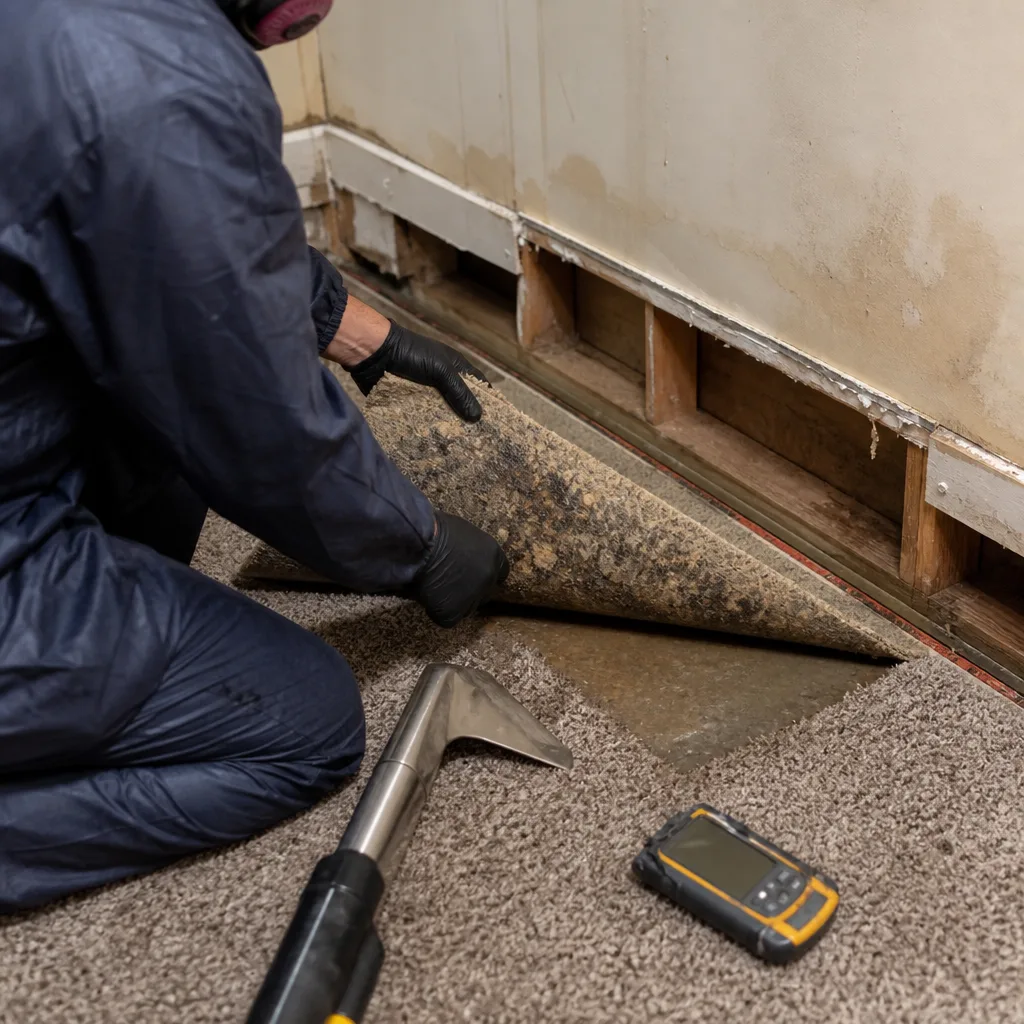
Damage assessment and moisture mapping. Using thermal imaging, non-penetrating moisture meters, and penetrating probes at structural points, we map the full extent of water migration. In Santa Ana’s multi-story homes, we’ve traced water from a second-story roof breach to first-floor wall cavities through interior wall chases that visual inspection would miss. Every reading goes into the drying log.
- 3
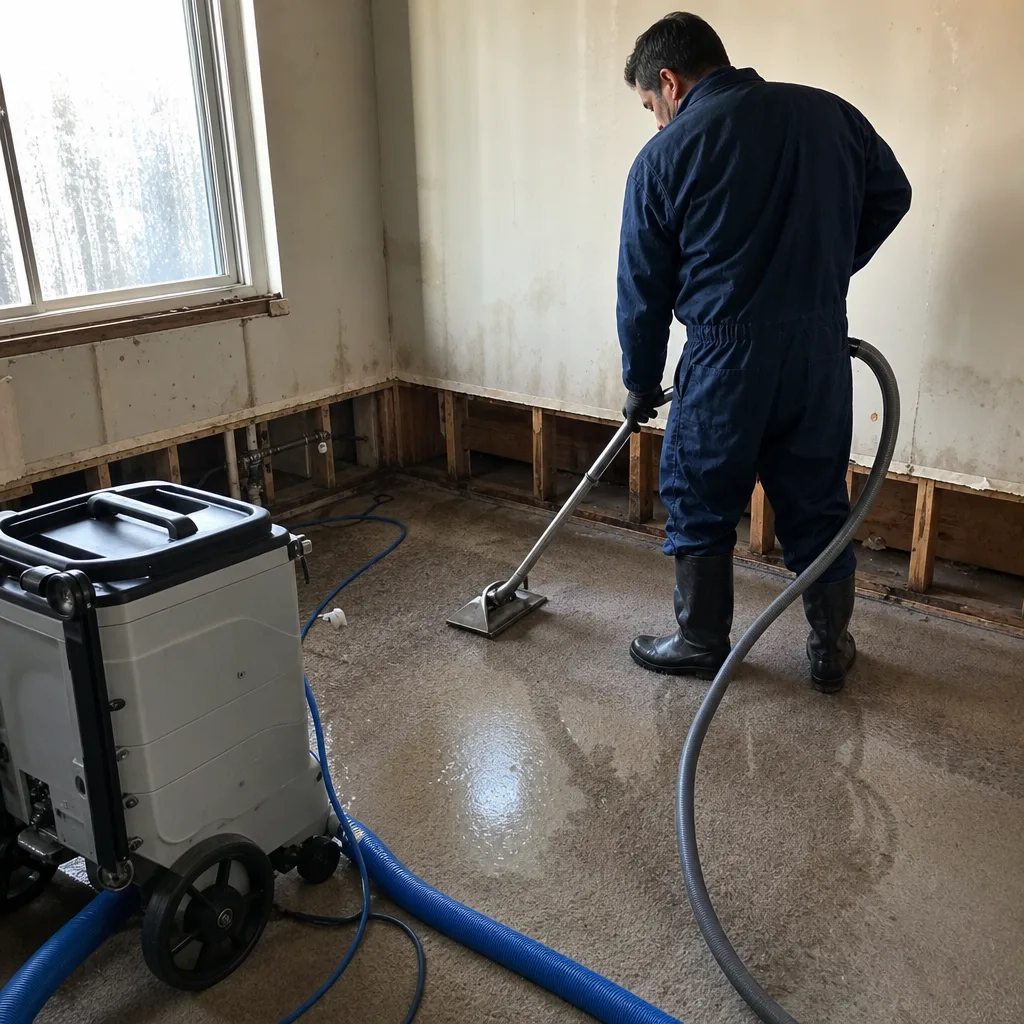
Water extraction and controlled demolition. Standing water extracts first; then we remove unsalvageable materials by classification, documenting each square foot. We specify removal depth - 12 inches above visible water line for drywall, full insulation extraction when Category 2 or 3 contamination exists - and photograph before, during, and after.
- 4
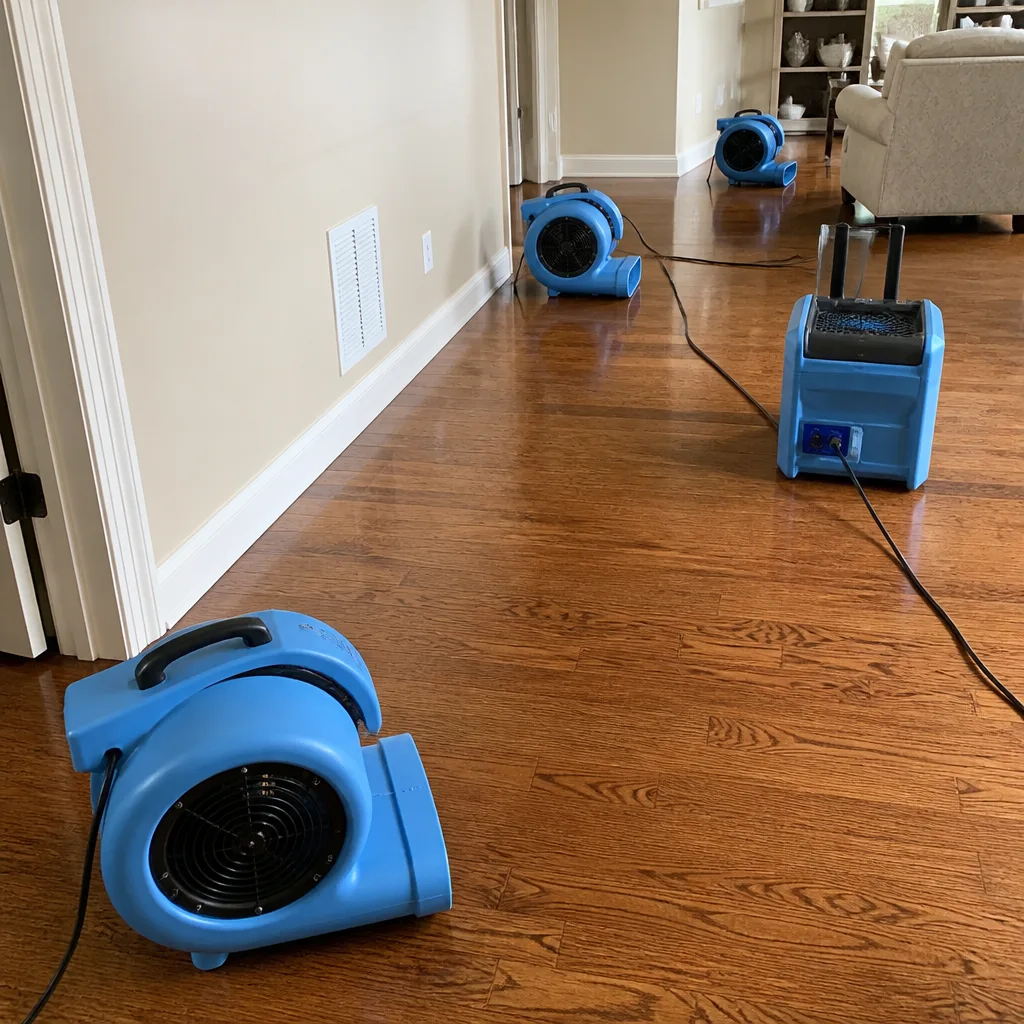
Structural drying with documented psychrometric control. We position Phoenix dehumidifiers and XPOWER or B-Air air movers based on room volume, material permeance, and target drying goals. Daily readings track progress; we don’t guess when drying is complete. The vapor pressure differential - the measurable force driving moisture from wet materials into the air - must reach equilibrium before equipment comes down.
- 5
Restoration, reconstruction, and final documentation. Salvageable materials return to pre-loss condition; unsalvageable components rebuild to code with written specifications. You receive the complete photo record, drying logs, material invoices, and our 365-Day Done Right Promise under The Haven Standard. If it’s not done right, we make it right - signed, not verbal.
How Much Does Storm & Disaster Restoration Cost in Santa Ana?
A typical emergency board-up or roof tarping in Santa Ana runs $450-$1,200 depending on access height, opening count, and material requirements. For more details, see our Storm & Disaster Restoration cost guide. Storm damage cleanup with water extraction and initial drying ranges $2,800-$6,500 for residential properties under 2,500 square feet. Full flood damage restoration with controlled demolition, structural drying, and reconstruction commonly reaches $8,000-$15,000+ when multiple rooms, flooring systems, or HVAC contamination are involved.
Several factors move these ranges. Roof pitch and height affect tarping labor; clay tile roofs require walk boards and specialized anchoring that composition shingles don’t. Water category matters - Category 3 black water from sewage intrusion or coastal flooding requires PPE, negative air containment, and antimicrobial treatment that Category 1 doesn’t. Material age and availability affect reconstruction pricing; Santa Ana’s historic districts often require custom-milled trim or imported tile that extends timelines and budgets.
The most reliable way to avoid overpaying is demanding a written scope before work starts - Haven Standard, Clause 1 - and comparing it against the final invoice line by line. We also offer a Free Second Opinion on any competitor’s written estimate: bring their scope and we’ll review it at no charge, flagging items that don’t match IICRC standards or seem inflated for the documented damage. Every estimate we provide is free, detailed, and binding once signed.
Storm & Disaster Restoration Near Santa Ana - Our Service Area
We maintain 60-90-minute response times across Santa Ana and surrounding communities, with crews staged for Storm & Disaster Restoration in Tustin and Storm & Disaster Restoration in Fountain Valley during active weather events. Our standard service radius includes Costa Mesa, Garden Grove, Orange, Midway City, Westminster, Villa Park, Irvine, Stanton, and Huntington Beach - the full corridor where Santa Ana wind events and coastal storm systems create overlapping damage patterns. Properties near the Santa Ana River channel or in lower-elevation neighborhoods typically see us fastest; hillside locations in Orange Park Acres or North Tustin may add 15-20 minutes for safe equipment transport.
Serving Santa Ana, CA - Our Local Coverage Area
We’re based in the Santa Ana area and know this community well, providing our Storm & Disaster Restoration in Santa Ana. Use the map below to see our service coverage - if you’re nearby, we can almost certainly help.
Frequently Asked Questions - Storm & Disaster Restoration in Santa Ana
Storm and disaster restoration is the professional process of returning a property to pre-loss condition after weather-related damage, including water extraction, structural drying, debris removal, temporary protection, and reconstruction. We also provide Storm & Disaster Restoration in Tustin for nearby communities. It differs from simple cleanup by requiring documented moisture control, material classification, and adherence to IICRC standards that insurers recognize for claim payment. At Back to Dry, every restoration includes the photo record and drying logs that turn invoices into payable claims.
Emergency board-up and roof tarping typically complete in 2-4 hours; structural drying requires 3-5 days for standard residential losses, with reconstruction adding 1-3 weeks depending on material lead times and permit requirements. In Santa Ana, we’ve completed full kitchen reconstructions in 10 days when cabinets were standard stock, and seen custom tile orders extend bathroom rebuilds to 4 weeks. Your written scope includes a timeline we update daily - no guessing, no surprises.
Most Santa Ana homeowners pay $2,800-$6,500 for storm damage cleanup with drying, or $8,000-$15,000+ for full restoration with reconstruction. Emergency services like board-up and tarping start at $450-$1,200. The final price depends on damage extent, water category, material type, and accessibility - all documented in your written scope before work begins. Call (657) 300-9903 for a free estimate with exact pricing for your situation.
Yes - we deploy Phoenix dehumidifiers, XPOWER and B-Air air movers, and Injectidry mat and wall-cavity drying systems on Santa Ana jobs regularly. Our technicians are trained on each manufacturer’s specifications and maintenance protocols, and we document equipment deployment by serial number in your drying log. If your loss requires brands we don’t stock, we source and document equivalent-capacity units to the same IICRC standard.
Yes - a live person answers every call, 24 hours a day, 7 days a week, with no voicemail trees or next-business-day callbacks while water is still moving. Our emergency dispatch routes the nearest available crew to your Santa Ana location, typically arriving within 60-90 minutes. The written price for emergency services is provided before any work starts, even at 2 a.m.
Every job is covered by our 365-Day Done Right Promise under The Haven Standard: if it’s not done right, we make it right. This is a signed guarantee, not a marketing line, and it applies to workmanship, materials, and documentation accuracy. We’ve honored this promise on Santa Ana jobs where secondary moisture was detected 8 months post-completion - we returned, re-dried, and reconstructed at no charge because our documentation supported the finding.
Ensure safe access to the damaged area, turn off electrical breakers to affected zones if safely possible, and gather your insurance policy number and adjuster contact if available. Don’t enter structurally compromised spaces or handle contaminated materials without proper protection - our crew assesses hazards on arrival and documents pre-existing conditions so you’re not responsible for prior damage. The most important preparation is calling early; every hour of delayed response increases secondary damage scope and restoration cost.
Schedule Your Storm & Disaster Restoration Service in Santa Ana Today
Storm damage doesn’t wait, and neither do we. Call (657) 300-9903 now for a live dispatcher, 24 hours a day, 7 days a week. We’ll provide a written price before any work begins - Haven Standard, Clause 1 - with a documented photo record on every visit and the 365-Day Done Right Promise backing everything we do. Your estimate is free, your scope is binding, and your claim documentation starts the moment we arrive.
Written by Alicia Brennan, Owner at Back to Dry Restoration, serving Santa Ana since 2011.