
Last updated September 23, 2026
Free visual inspection and a written scope of work before any mitigation begins - photos, moisture readings, and drying logs go in your claim file
The scope we write is the scope we bill. Anything new gets shown to you, in writing, before we touch it.
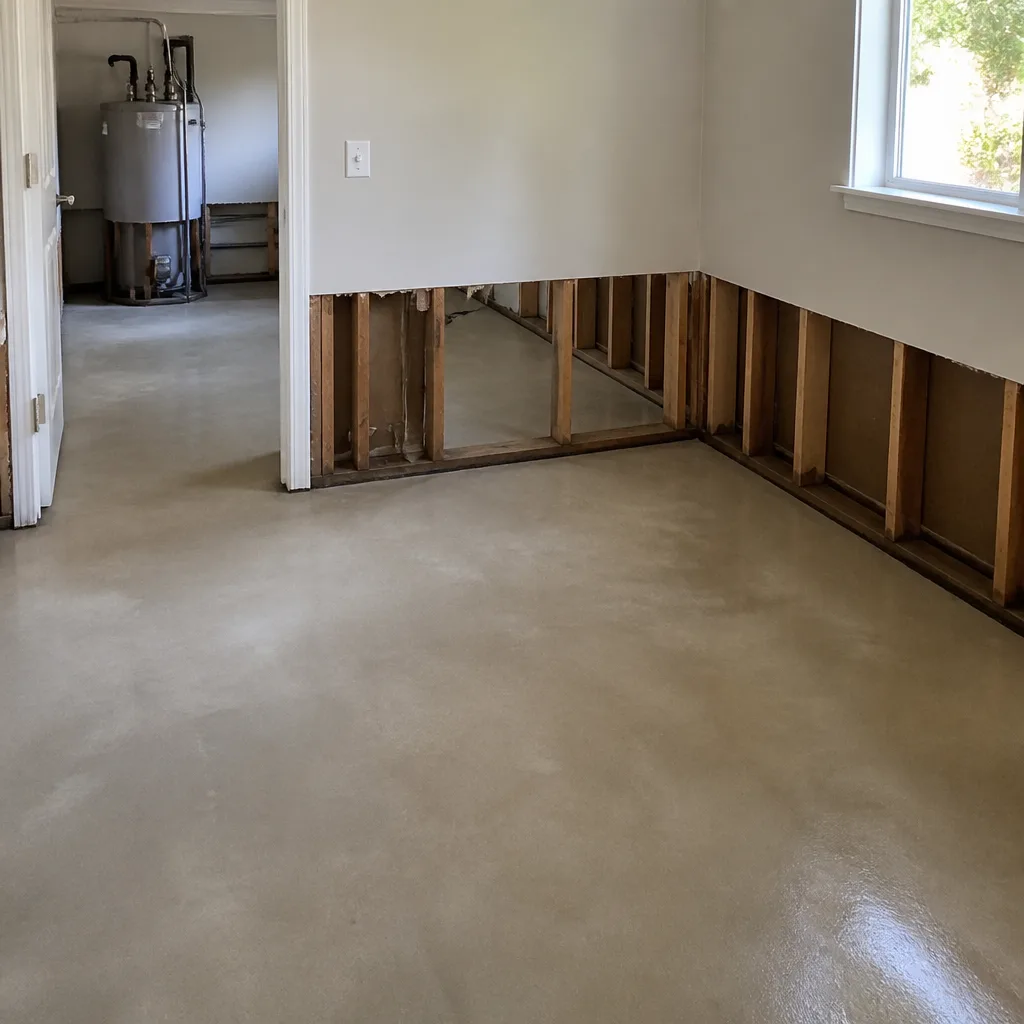
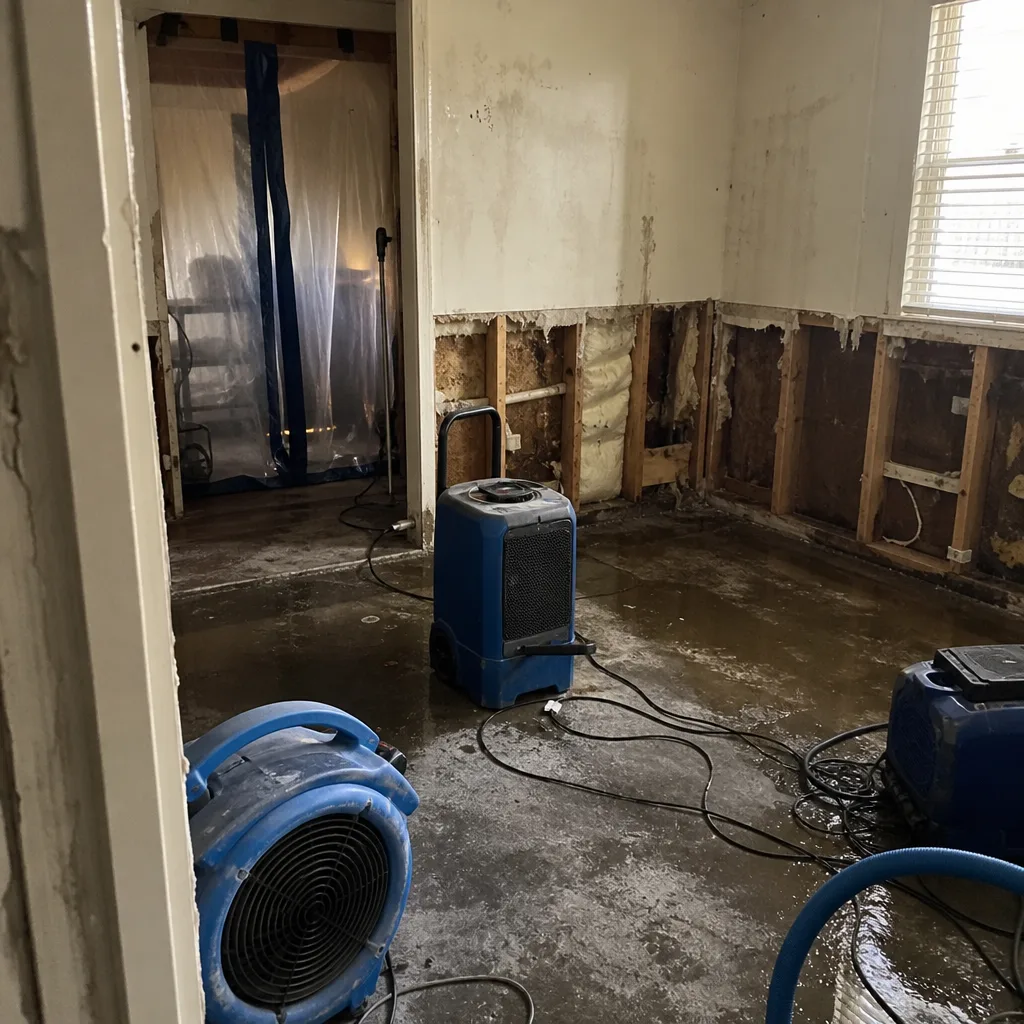 Before
 After
After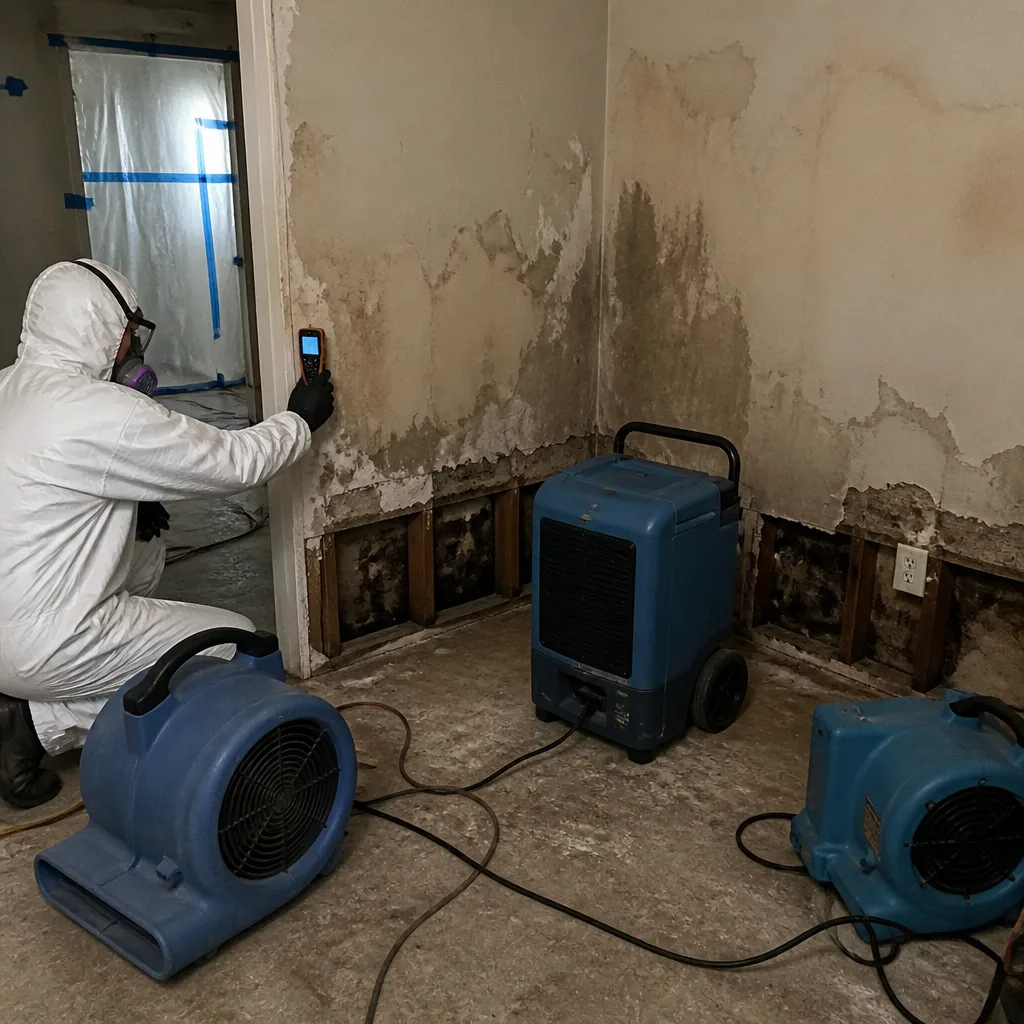 Before
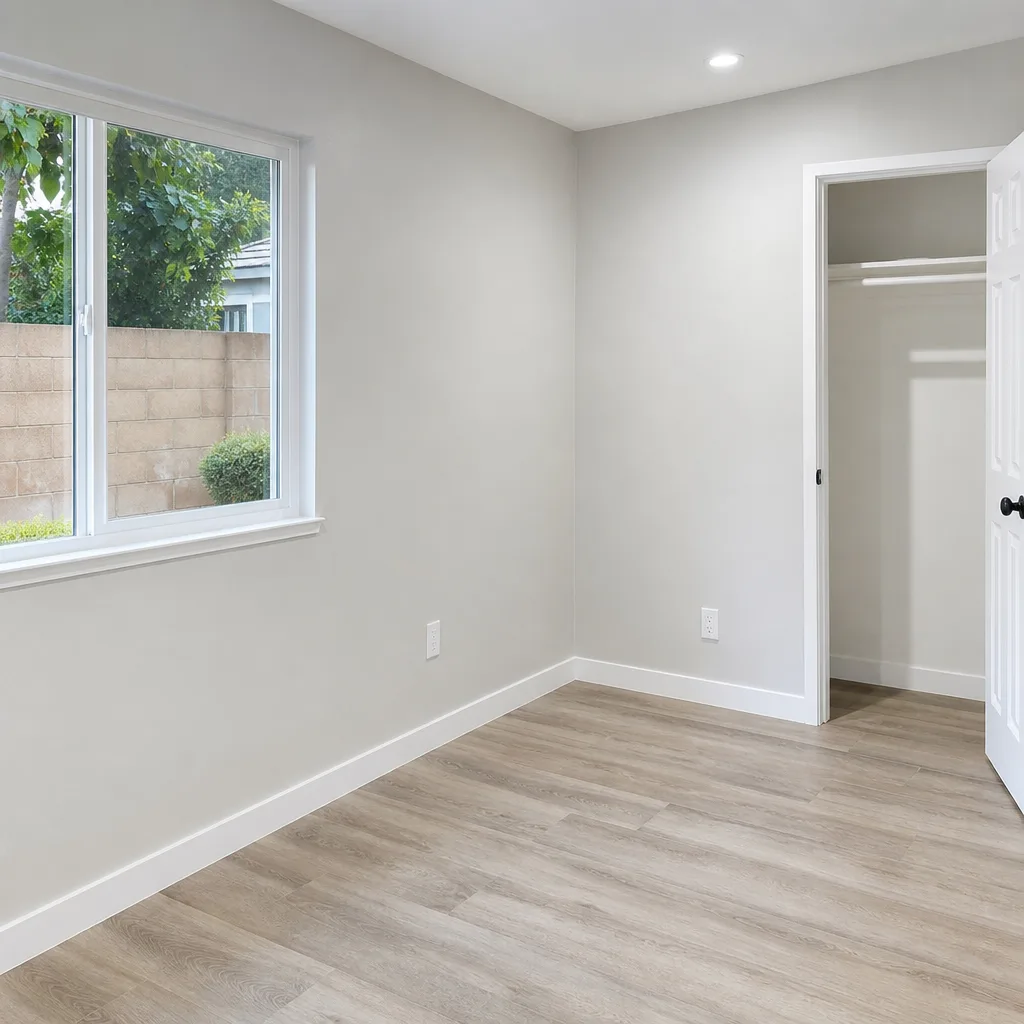 After
After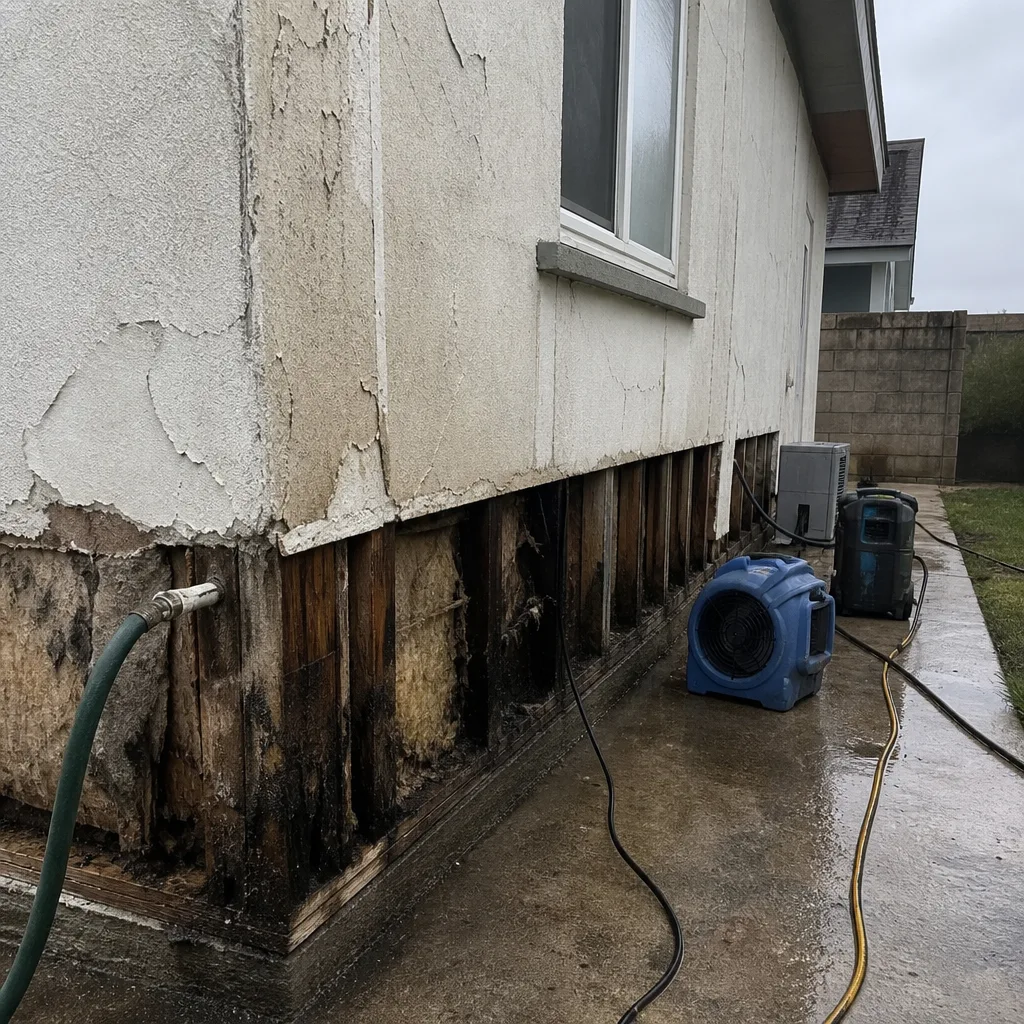 Before
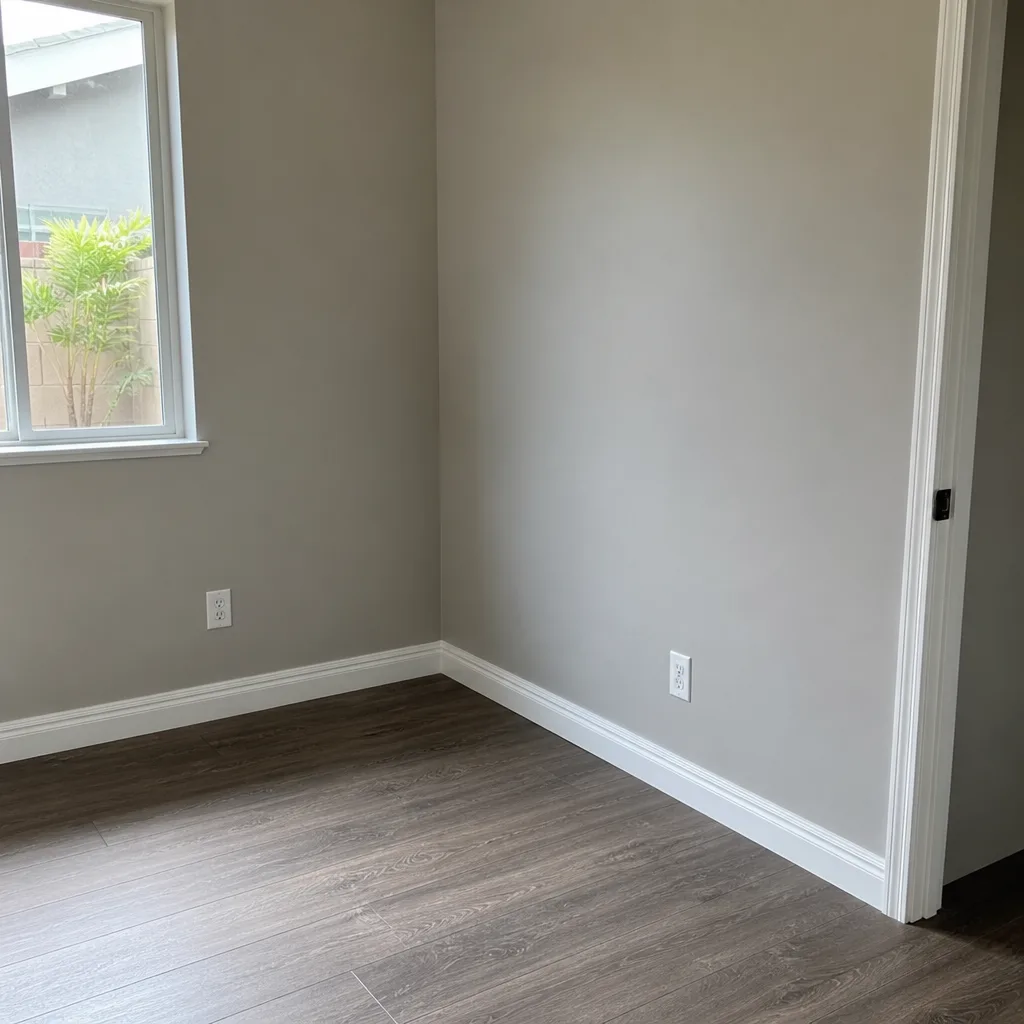 After
AfterThe Complete Guide to Damage Restoration in Santa Ana
Insurance adjusters deny or underpay an estimated 1 in 4 residential water damage claims in Orange County - not because the damage didn’t happen, but because the contractor’s documentation didn’t prove it happened room by room, reading by reading. In Santa Ana, where Mediterranean-dry air hides moisture inside walls faster than coastal humidity would, this documentation gap costs homeowners thousands in out-of-pocket rebuilds. This guide - alongside our more guides & resources - maps every phase of restoration through the lens of what an adjuster actually needs to approve a full payout: the written scope, the daily drying log, the photo record, and the measurable benchmarks that prove a job is finished.
Quick Answer
Damage restoration in Santa Ana follows a documentation-first sequence: a written scope and price before any work begins, daily psychrometric drying logs with moisture readings, photo documentation on every visit, and a Certificate of Completion with measurable benchmarks. When this sequence is followed, insurance claims pay out at full value. When it’s skipped or reversed, adjusters have grounds to deny or underpay.
Table of Contents
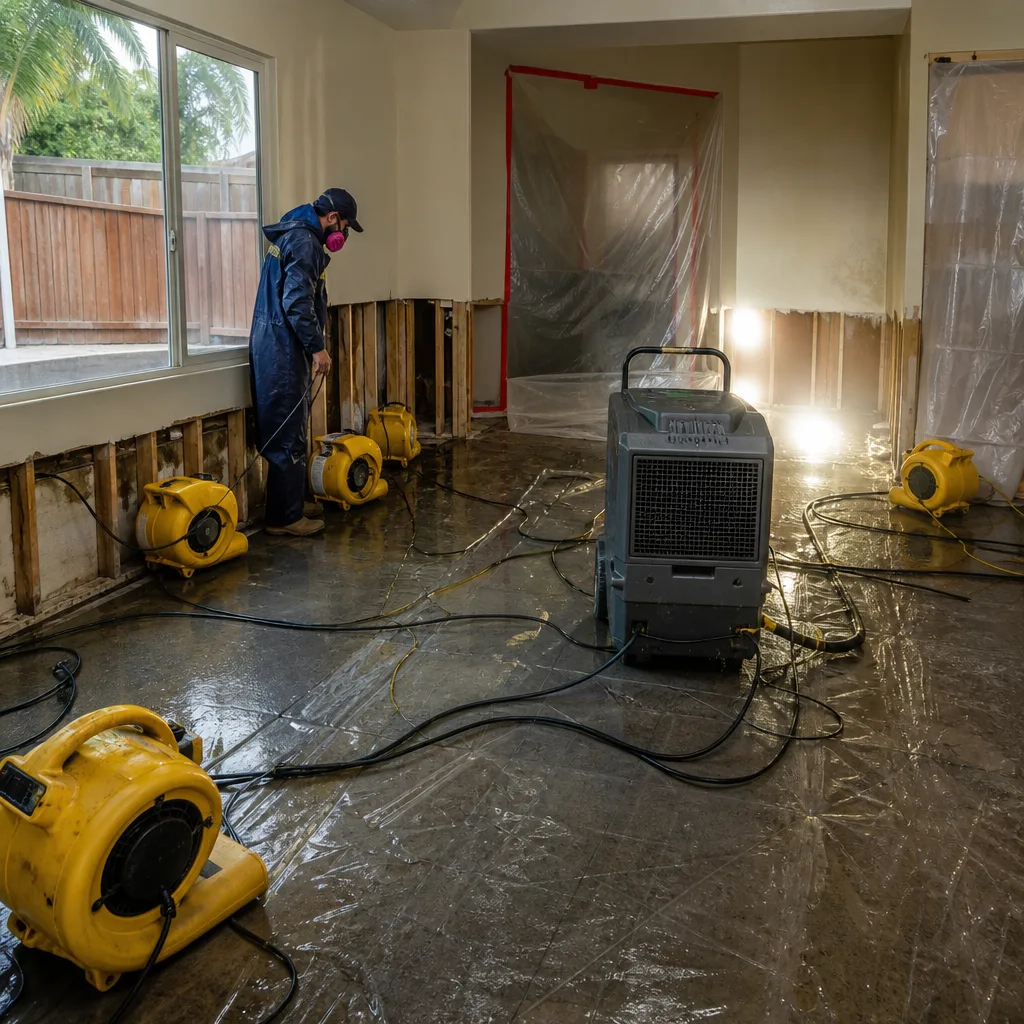
- Why Documentation Determines Your Payout
- The Haven Standard Sequence: Written Scope, Then Work
- Santa Ana’s Climate and the Hidden Moisture Problem
- What a Compliant Drying Log Looks Like
- Permits, Codes, and Insurance Payouts in Orange County
- Reading Your Certificate of Completion
- Equipment and Standards That Adjusters Recognize
- Common Mistakes to Avoid
- When to Call a Professional
- Frequently Asked Questions
- The Bottom Line
BeforeAfterWhy Documentation Determines Your Payout
We’ve restored over 12,000 homes since 2011, and the pattern is consistent: the homeowner who receives a full payout is rarely the one with the worst damage. They’re the one whose contractor produced a file an adjuster could read like a timeline.
Adjusters work from evidence, not sympathy. When a claim lands on their desk, they need to trace the damage from discovery through completion. Did moisture exist? Prove it with a calibrated meter reading. Was it dried properly? Show daily psychrometric data - temperature, relative humidity, and vapor pressure differential, which is the measurable force that actually pulls moisture out of building materials. Was the work necessary? Provide a written scope signed before demolition began, not after.
Here’s what happens when documentation is thin:
- The adjuster notes “pre-existing damage” and reduces the payout
- Secondary mold growth, undocumented, becomes the homeowner’s responsibility
- Reconstruction costs get separated from mitigation and assigned to a different deductible
- The invoice gets sent to review, delaying payment 30-90 days
Back to Dry Restoration was founded by a former claims adjuster who built the company around this exact gap. The Haven Standard exists because sloppy documentation costs homeowners their claims. Every job we take in Santa Ana starts with the same deliverable: a written price before work begins, documented to IICRC standards, with a photo record on every visit.
The Haven Standard Sequence: Written Scope, Then Work
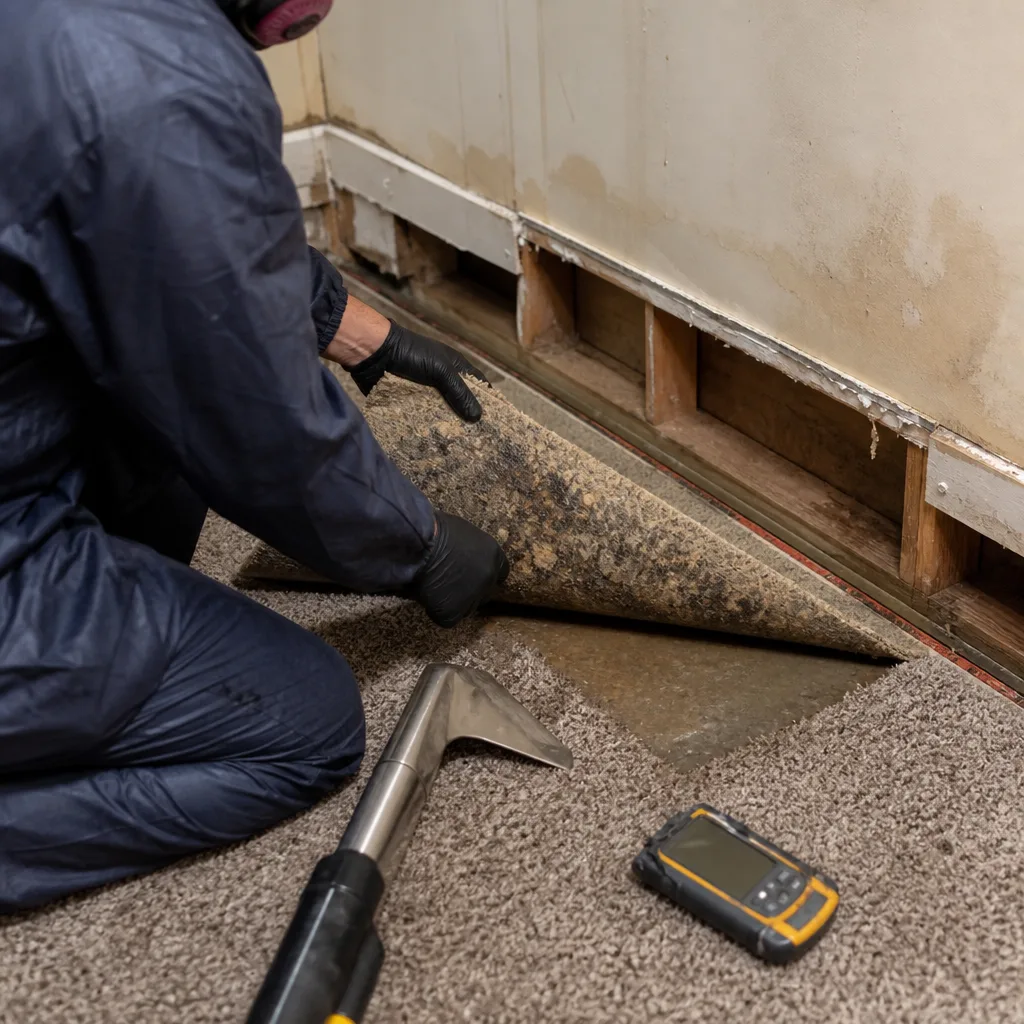
Haven Standard, Clause 1: a written price is delivered before anyone starts work, every time, with no scope-creep additions once the crew is inside. This clause exists because the most expensive moment in restoration is when a homeowner signs a blank authorization and trusts the final number to “work itself out.”
The correct sequence is non-negotiable. Here’s how it runs:
- Initial assessment. A technician arrives with a calibrated moisture meter, thermal imaging camera, and hygrometer. They map affected materials by classification: Category 1 (clean water), Category 2 (gray water), or Category 3 (black water). Each classification determines the drying protocol, the equipment type, and the documentation standard.
- Written scope and price. Before any equipment runs or any demolition starts, the homeowner receives a written scope listing each affected room, the square footage, the material types, the equipment count, and the line-item price. This document is signed by both parties. In our experience across Santa Ana, from the Floral Park historic district to the newer construction in South Coast Metro, this single step prevents more disputes than any other.
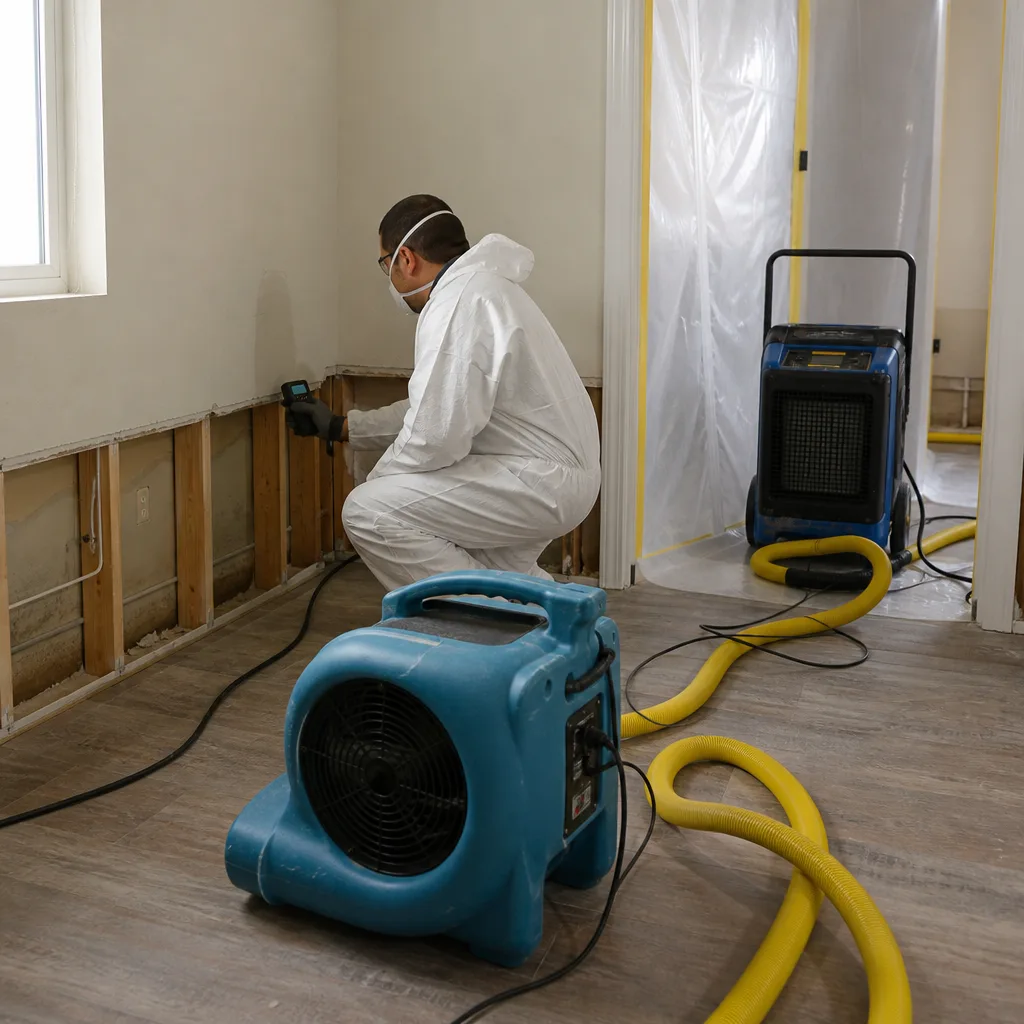
- Photo documentation on every visit. Each daily check produces dated, geotagged photos of equipment placement, moisture readings, and material conditions. These are included as a standard deliverable, never an upsell. When an adjuster questions whether a wall was actually wet, the photo record answers before the homeowner has to.
- Daily drying logs. Psychrometric data recorded at the same time each day: temperature in degrees Fahrenheit, relative humidity as a percentage, and specific humidity in grains per pound. The goal is to establish a drying curve that proves the environment was controlled and the materials were returning to dry standard.
- Final verification. Moisture readings at or below the dry standard for that material type - typically 12-16% for wood framing, 4% or less for drywall, verified with a penetrating meter. No “feels dry.” No visual inspection. Numbers only.
- Certificate of Completion. A signed document listing the start date, completion date, final moisture readings, equipment serial numbers, and the 365-Day Done Right Promise. This is the document that closes the claim file.
Reverse this sequence - start work, then write the scope, then take photos - and the adjuster has grounds to treat every charge as unverified. We’ve reviewed competitor estimates in Santa Ana where the “scope” was written after equipment was already running. Under Haven Standard, Clause 1, that job doesn’t start.
Santa Ana’s Climate and the Hidden Moisture Problem
Santa Ana sits in a Mediterranean climate zone with hot, dry summers and mild, wet winters. The average July humidity drops below 60%, and Santa Ana wind events can push relative humidity into the teens. This matters for restoration because dry air at the surface masks wet conditions inside wall cavities.
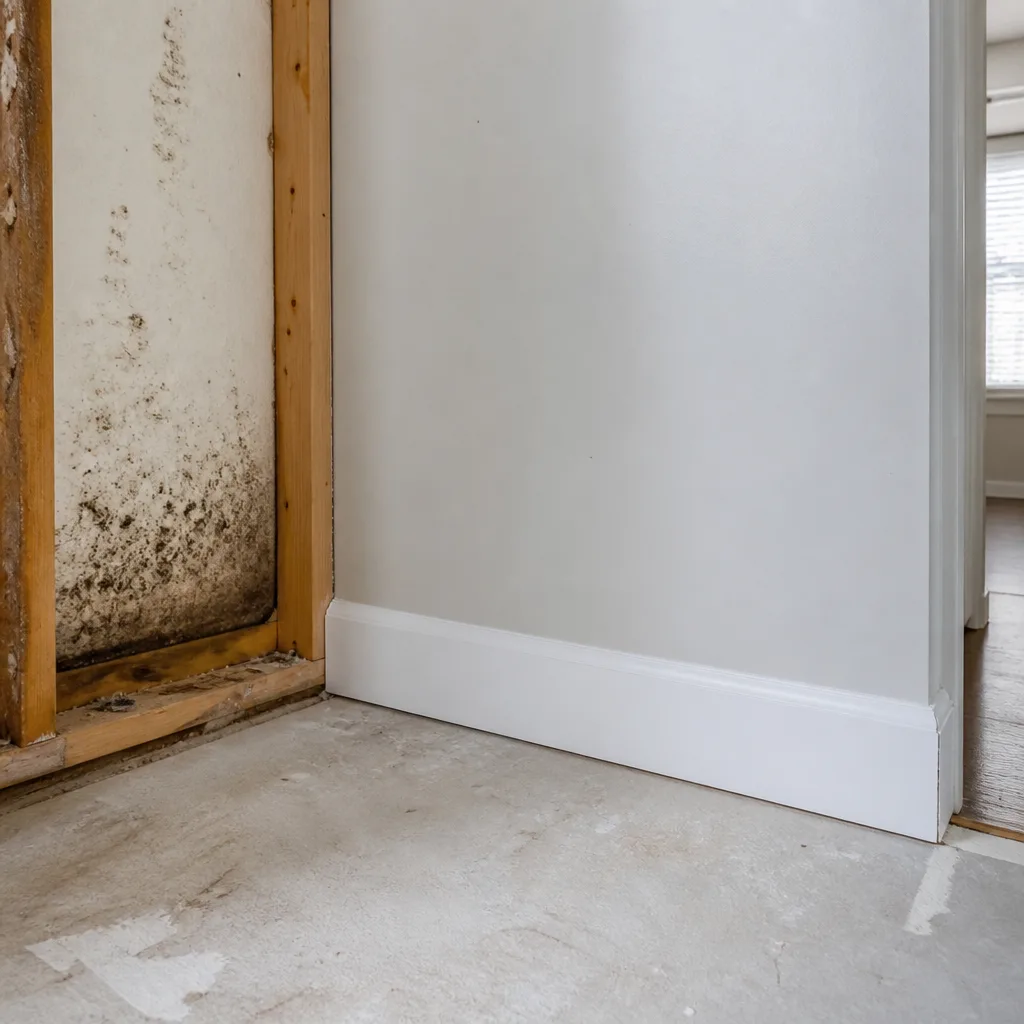
Here’s the mechanism: when warm, dry air hits a wet exterior wall, the surface dries quickly. The moisture content at the drywall face can read normal while the insulation behind it and the stud cavity remain saturated. A contractor who relies on touch or visual inspection will miss this. A contractor with a penetrating moisture meter and a thermal camera won’t.
In our work across Santa Ana neighborhoods - from the older balloon-framed homes in Heninger Park to the slab-on-grade construction in Riverview West - we’ve documented this pattern repeatedly. A homeowner calls because they “smell something musty” three weeks after what seemed like a minor leak. The surface reads dry. The cavity reads 28% moisture content. Mold is already established.
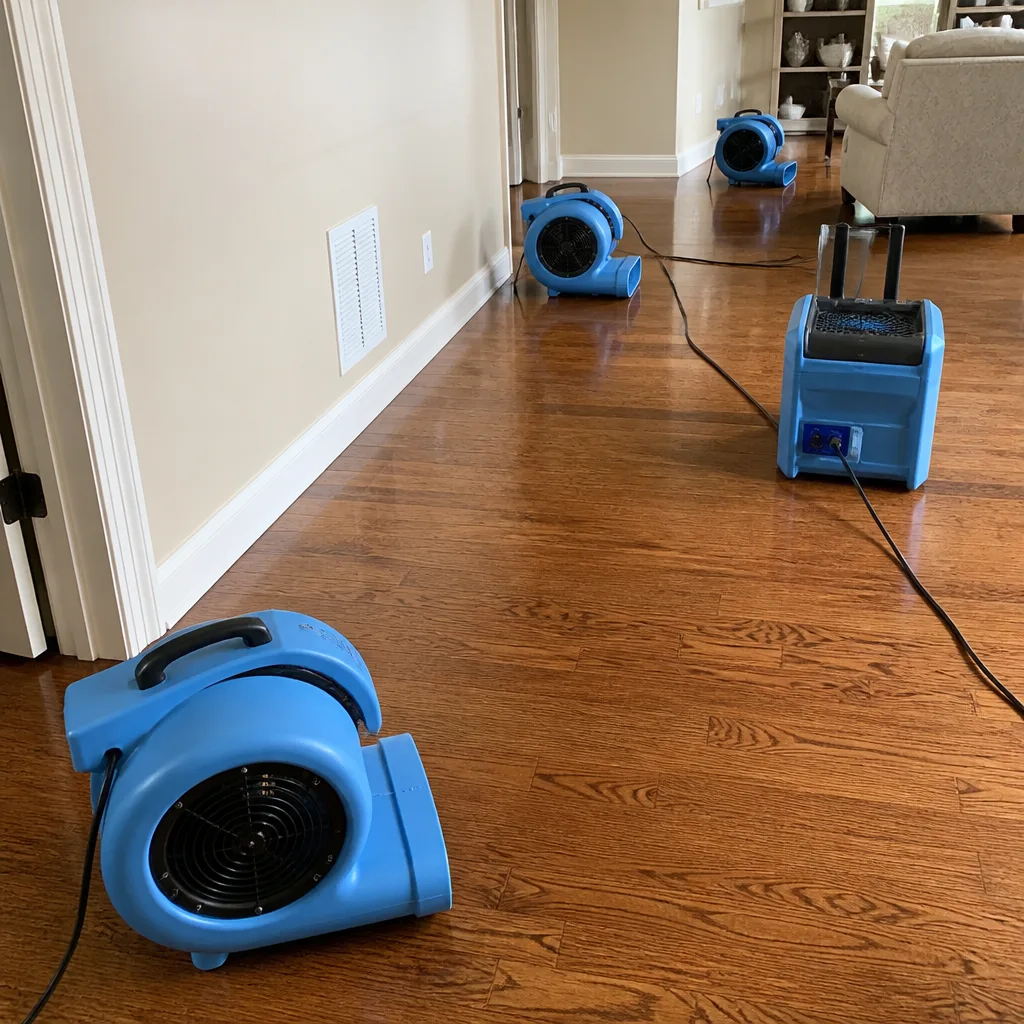
The solution is vapor pressure differential, which is the measurable gap between the vapor pressure in the wet material and the vapor pressure in the surrounding air. Professional drying equipment from Dri-Eaz and Phoenix creates controlled airflow that maintains this differential, pulling moisture from inside the wall to the surface where it can be exhausted. Without daily psychrometric readings, there’s no proof this process happened. Without proof, the adjuster can decline the equipment charges.
Santa Ana’s climate also affects evaporation rates in ways that matter for equipment sizing. In high-humidity coastal zones, a standard refrigerant dehumidifier might extract 50 pints per day. In Santa Ana’s dry conditions, the same unit might extract 80 - but only if the air temperature is maintained above 70°F. Cold air holds less moisture, and in winter months when Santa Ana homes drop to 65°F overnight, equipment output falls unless the drying chamber is actively heated. Our daily logs track this. Competitors who don’t log temperature alongside humidity produce incomplete records that adjusters question.
What a Compliant Drying Log Looks Like
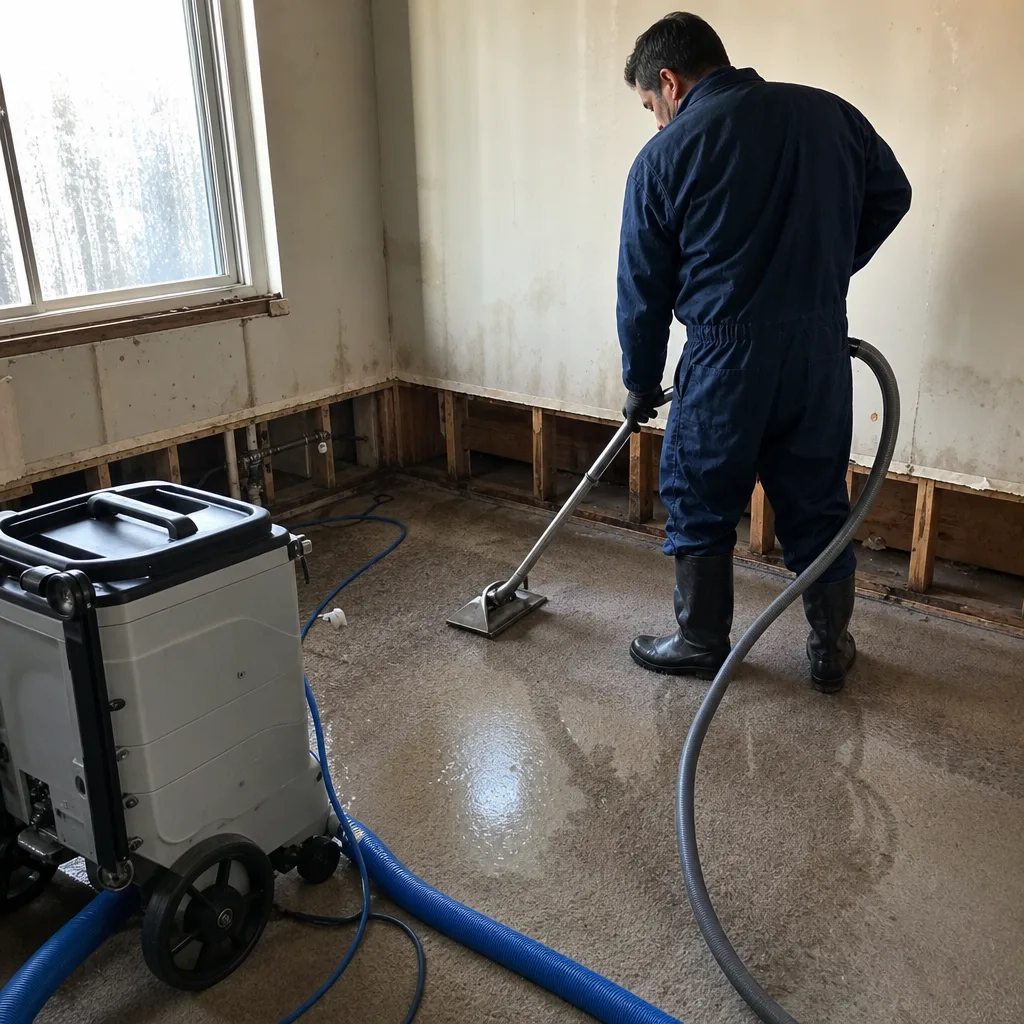
A drying log that satisfies an adjuster is not a checklist with checkmarks. It’s a daily data sheet with six fields minimum, recorded at the same time each day, with the technician’s name and license number on every page.
Standard drying log fields:
- Date and time of reading. Must be consistent - 9:00 AM daily, for example, not “sometime in the morning.”
- Temperature (°F). Measured in the center of the affected room, not at the equipment exhaust.
- Relative humidity (%). The amount of moisture in the air relative to what it could hold at that temperature.
- Specific humidity (grains per pound). The absolute moisture content of the air, which doesn’t change with temperature. This is the number that proves progress.
- Vapor pressure differential (inches of mercury). The force driving moisture from wet materials to the air. A positive differential means drying is occurring. A flat or negative differential means equipment is misapplied or the chamber is compromised.
- Moisture content of affected materials (%). Recorded with a penetrating meter at the same points daily, marked on a room diagram so readings are comparable.
Here’s what an adjuster looks for when reviewing a log:
- Is the drying curve present? Specific humidity should rise in the first 24-48 hours as surface moisture evaporates, then fall steadily as the dehumidifiers capture it. A flat line suggests equipment failure or an open chamber. A spike without explanation suggests an unrecorded water source.
- Are material readings trending down? Wood framing should drop approximately 2-4% moisture content per day in a properly configured drying chamber. Faster drops suggest surface-only drying. Slower drops suggest insufficient equipment or hidden saturation.
- Is tertiary drying documented? Tertiary drying is the final phase where materials approach equilibrium moisture content. This phase requires the most precision and produces the most disputes. A log that stops at “looks dry” without tertiary readings is incomplete.
We use equipment from Injectidry and XPOWER for wall-cavity drying, with hoses inserted through 1-inch holes drilled at baseboard level. The drying log for each Injectidry setup includes airflow rate in cubic feet per minute and the cavity humidity reading from a probe inserted at mid-wall height. Adjusters who see this level of detail rarely challenge equipment time.
Permits, Codes, and Insurance Payouts in Orange County
Not all restoration work requires a permit, but the line between permit-required and permit-exempt work - detailed in our guide to Damage Restoration Permits, Codes & Inspections in CA: What You Need to Know - is where insurance claims get complicated. In Santa Ana, which operates under the California Building Code as adopted by Orange County with local amendments, the distinction matters for your payout.
Structural drying: generally permit-exempt. The placement of drying equipment, the removal of wet carpet or drywall, and the application of antimicrobial treatments typically don’t trigger permit requirements. However, if demolition exposes structural elements - load-bearing studs, shear walls, foundation connections - the work may require an engineer’s letter or a building permit before reconstruction begins.
Electrical or plumbing modifications: permit-required. If water damage requires the relocation of an electrical panel, the replacement of subpanels, or the rerouting of plumbing supply lines, Santa Ana Building & Safety requires permits and inspections. Insurance policies typically cover permit costs as part of “code upgrade” coverage, but only if the permits were actually pulled and the inspections passed. A contractor who skips permits to “save time” leaves the homeowner with non-compliant work that the insurer won’t pay to redo.
Mold remediation: no standalone permit, but documentation requirements apply. Orange County doesn’t issue specific mold remediation permits, but the California Department of Public Health requires that mold abatement follow established protocols with written documentation. More importantly, insurers increasingly require proof that remediation was performed under a written protocol with post-remediation verification testing. Without this, mold-related health claims can be denied.
Fire damage reconstruction: always permitted. Any structural repair after fire damage requires permits in Santa Ana, including replacement of damaged framing, roofing, and electrical systems. The permit history becomes part of the property record and affects future sale value. A contractor who performs fire reconstruction without permits creates a title issue that outlasts the insurance claim.
Our protocol on every Santa Ana job: we identify permit requirements during the initial scope, include permit costs in the written price, and provide the homeowner with permit numbers and inspection sign-offs as part of the final documentation package. This is standard under The Haven Standard, not an add-on service.
Reading Your Certificate of Completion
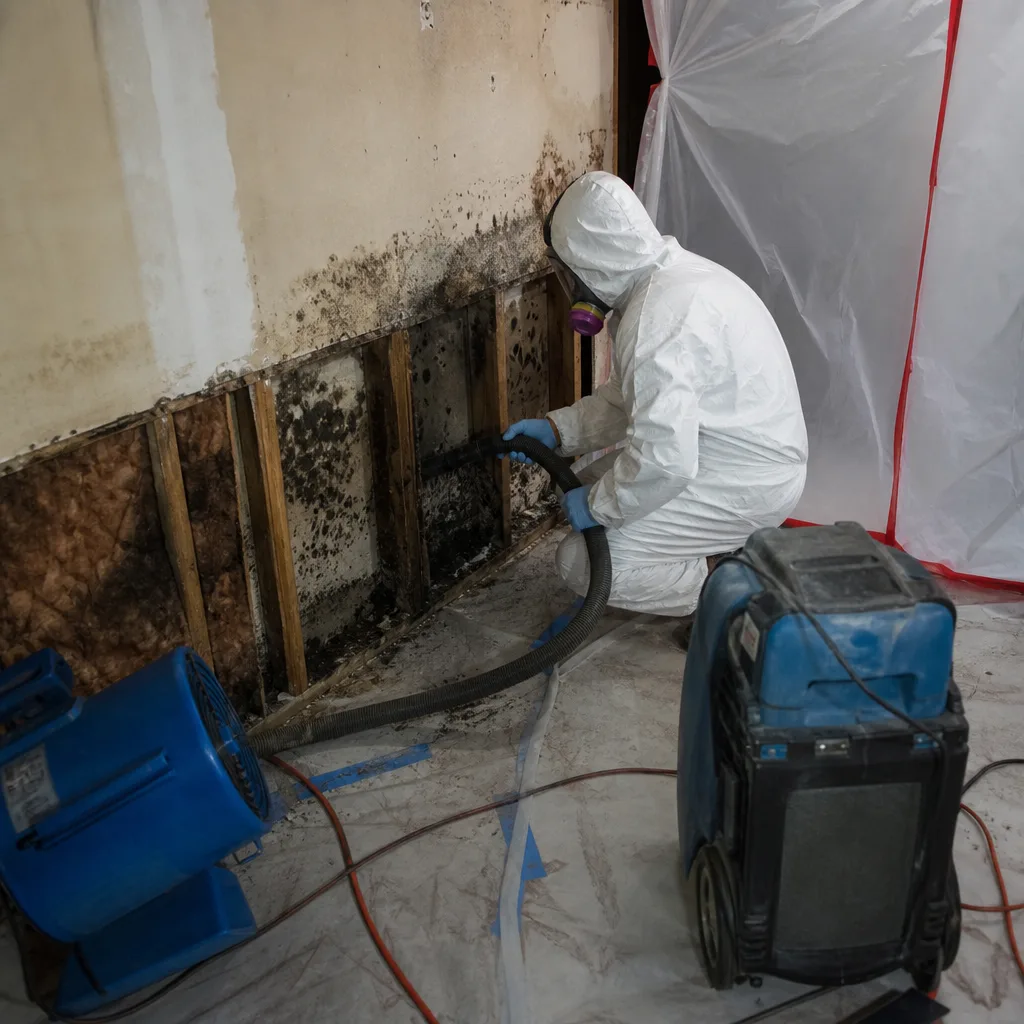
The Certificate of Completion is the document that closes your claim. It should be readable by someone who wasn’t present for the job - because that’s exactly who will read it: the adjuster, the mortgage servicer, and possibly a future buyer’s inspector.
A valid Certificate of Completion includes:
- Property address and claim number. Matched to the insurance file.
- Date range of services. Start date, completion date, and total equipment days.
- Scope summary. A room-by-room list of what was done, cross-referenced to the original written scope.
- Final moisture readings. The last daily log entry for each monitored point, with the dry standard for that material noted alongside.
- Photo record confirmation. A statement that photos were taken on every visit, with the count and date range.
- Equipment list. Serial numbers or asset tags for major equipment, proving what was actually on site.
- Warranty statement. The 365-Day Done Right Promise, with the specific clause reference and the conditions for invoking it.
- Technician signature and license number. A named, accountable individual.
What the Certificate should NOT include: vague language like “restored to pre-loss condition” without measurable benchmarks, promises of “mold-free” status without lab verification, or disclaimers that void the warranty for “conditions beyond our control” without defining those conditions.
Under The Haven Standard, the 365-Day Done Right Promise is a signed guarantee, not a marketing line. If moisture readings rise after completion, if odors return, or if visible mold appears in a treated area within 365 days, we return at no charge. The Certificate states this explicitly, with the invocation procedure: call our live dispatch line, reference the job number, and a technician responds within the same service standard as a new emergency.
Equipment and Standards That Adjusters Recognize
Insurance adjusters see hundreds of restoration invoices. They learn to recognize equipment brands and certification references that indicate professional work versus corner-cutting. Our equipment inventory includes professional-grade drying systems from Dri-Eaz, Phoenix, XPOWER, B-Air, and Injectidry - brands that appear in IICRC training materials and that adjusters expect on documented water losses.
The standards that matter:
- IICRC S500. The Standard and Reference Guide for Professional Water Damage Restoration. This defines the categories of water damage, the classes of destruction by area and depth, and the equipment calculations for each. An invoice that references IICRC S500 Class 3, Category 2 tells the adjuster exactly what was faced and why four air movers per room was appropriate.
- IICRC S520. The Standard for Professional Mold Remediation. This mandates containment, negative air pressure, HEPA filtration, and post-remediation verification. A mold job without S520 documentation is a mold job an adjuster can deny.
- RIA (Restoration Industry Association). The professional association that publishes guidelines on documentation, ethics, and scope writing. Membership and adherence signal that a contractor operates above the “wet vac and a fan” level.
- IFA (Indoor Air Quality Association). Standards for air quality assessment and remediation documentation, particularly relevant for fire and biohazard work where particulate and VOC contamination is the primary damage.
Our technicians are trained to document to these standards on every job, not just the ones where insurance is involved. The habit produces consistent files, and consistent files produce faster approvals. In Santa Ana, where many homes were built between 1950 and 1980 with materials no longer in production, this documentation also protects the homeowner when matching replacement materials become a coverage dispute.
Common Mistakes to Avoid
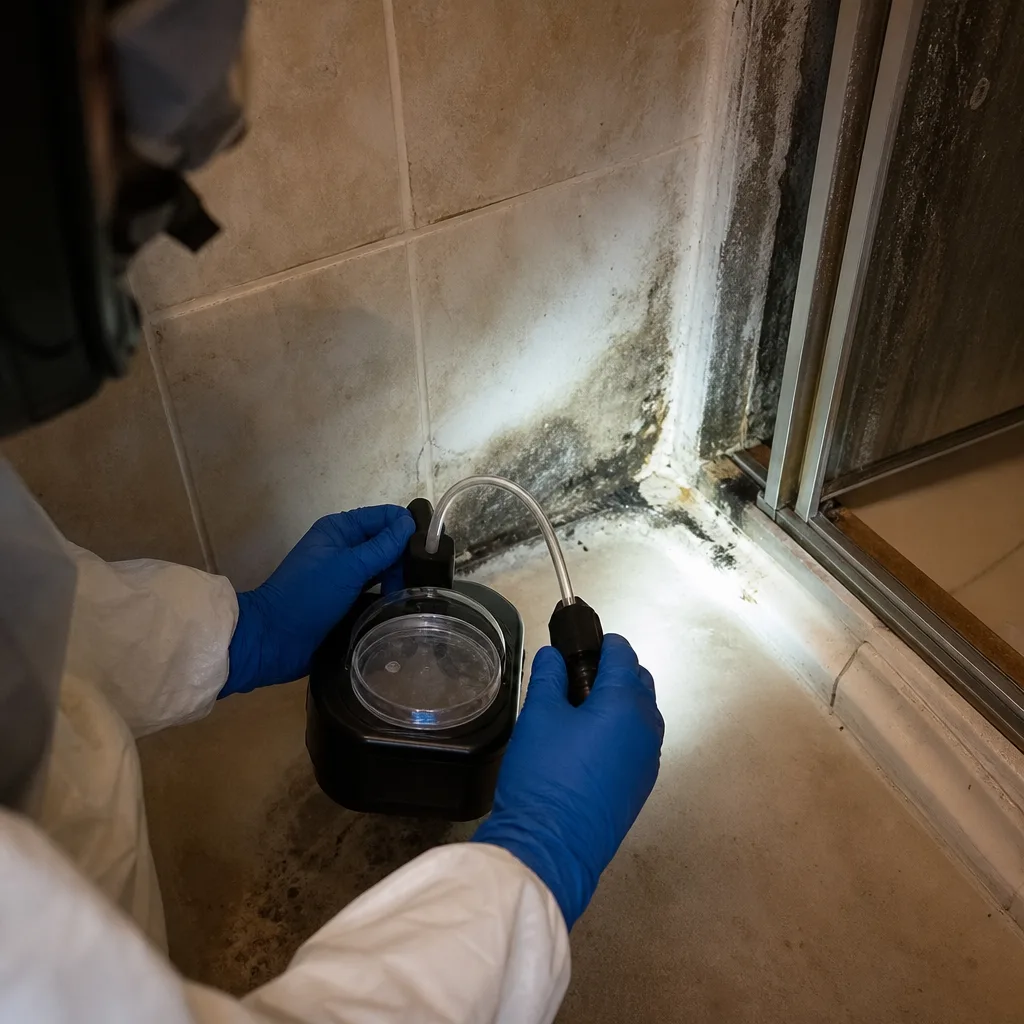
- Starting demolition before documenting moisture readings. Once drywall is removed, there’s no proof it was wet where the invoice claims. Always demand pre-demolition meter readings with photos.
- Accepting a verbal estimate or “authorization to proceed” without a written price. This violates Haven Standard, Clause 1, and it removes your leverage if the final invoice doubles.
- Ignoring Santa Ana’s hard water and its effect on plumbing failures. Santa Ana’s water supply averages 300-400 ppm hardness, accelerating corrosion in copper and galvanized pipes. A restoration contractor who doesn’t note pre-existing corrosion may miss the actual cause of the leak, leaving the homeowner with a repeat loss.
- Skipping the permit for “minor” structural repairs. In Santa Ana, unpermitted work must be disclosed on sale. The savings of skipping a $200 permit can cost thousands in sale price reduction or forced remediation.
- Assuming “dry to the touch” means dry. In Santa Ana’s low-humidity climate, surfaces dry while cavities remain wet. Insist on penetrating meter readings at depth, not surface scans.
- Not requesting the daily drying log until the invoice arrives. By then, any gaps in documentation are your problem. Request the log format before authorizing work.
- Hiring a contractor who won’t provide a Free Second Opinion on a competitor’s estimate. This service exists precisely because estimates vary widely in scope and pricing. A contractor who won’t review a competitor’s quote may be unwilling to have their own scrutinized.
When to Call a Professional
Call immediately when water has affected multiple rooms, when the source is Category 2 or 3 (gray or black water), when you smell mustiness without visible mold, or when any structural element is compromised. These conditions worsen with time, and the documentation clock starts when you discover them, not when you call.
For fire damage, professional intervention is required before you re-enter the structure - smoke residues are acidic and continue damaging surfaces until neutralized. For biohazard situations, including sewage backups and crime scene contamination, professional handling is required by California health codes and most insurance policies.
DryMark Restoration Santa Ana offers free estimates in Santa Ana. Our live dispatch line is answered 24 hours a day, 7 days a week - no voicemail, no next-business-day callbacks while water is still moving. Call (657) 300-9903 for a written scope and price before any work begins.
Frequently Asked Questions
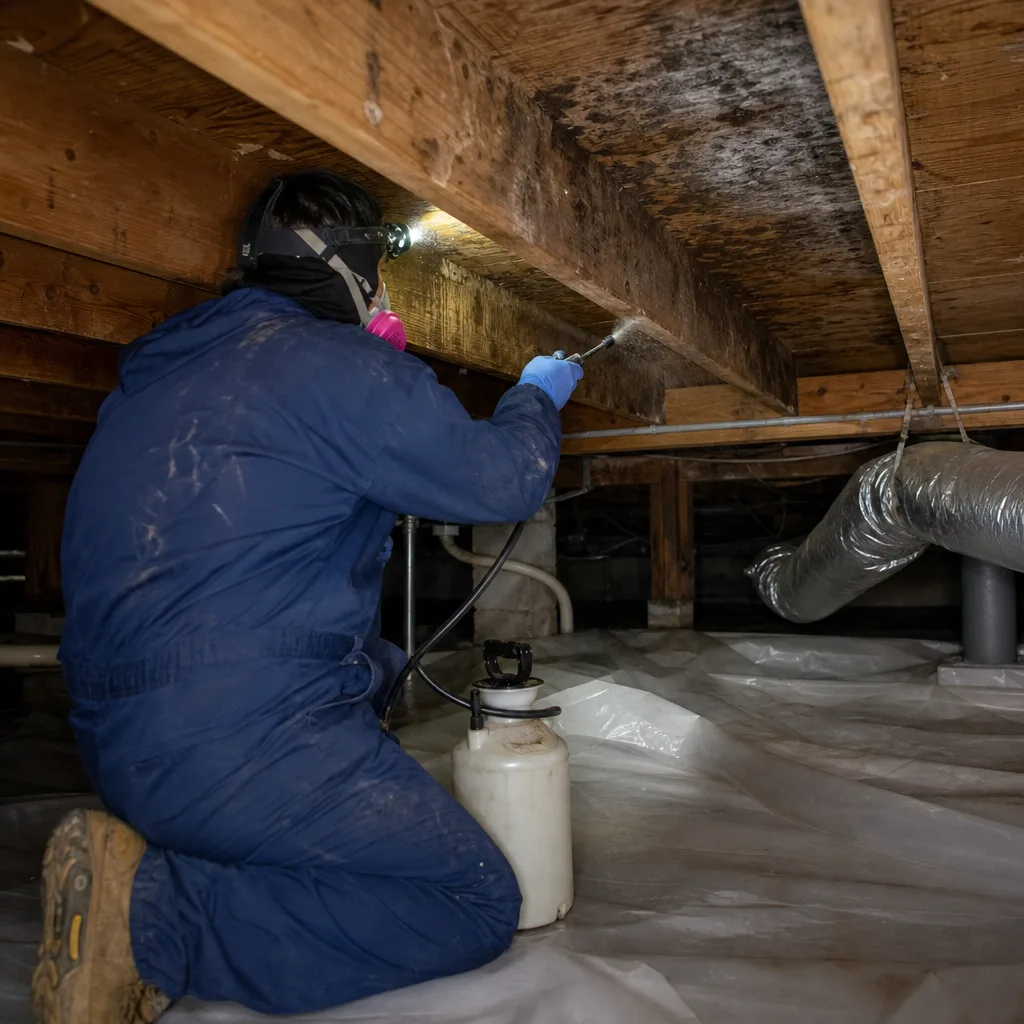
Water damage restoration in Santa Ana typically ranges from $1,200 for a contained Class 1 loss in a single room to $8,500+ for a Class 3 whole-house event with structural drying and reconstruction. For a detailed breakdown, see our Damage Restoration Cost Breakdown: The Santa Ana Homeowner’s Reference for 2026. The critical factor is the written scope delivered before work begins, which prevents the scope-creep that drives invoices 40% above initial estimates. Call (657) 300-9903 for a written price - estimates are free.
Insurance covers restoration costs when the damage is sudden and accidental, the cause is documented, and the work is performed under a written scope with daily drying logs and photo records. The 1 in 4 claims that are denied or underpaid fail on documentation, not damage severity. We coordinate directly with adjusters and provide the file format they expect. Call (657) 300-9903 to discuss your specific policy and claim status.
For active water damage, our live dispatch answers immediately and routes the nearest available technician. Response time varies by current demand and your location within Santa Ana, but emergency water losses receive priority dispatch. Reconstruction and non-emergency work is scheduled after written scope approval, not rushed. Call (657) 300-9903 for current availability.
Structural drying and cosmetic repairs generally don’t require permits, but any electrical, plumbing, or structural modification does. Santa Ana Building & Safety requires permits for load-bearing wall repair, electrical panel relocation, and plumbing rerouting. We identify permit needs during the initial scope and include costs in the written price. Skipping permits can void insurance coverage for code-upgrade provisions.
Mitigation is the emergency work that stops damage from spreading: water extraction, drying, demolition of unsalvageable materials, and antimicrobial application. Reconstruction is the rebuild that returns the property to pre-loss condition: new drywall, flooring, paint, fixtures. Insurance policies often apply separate deductibles or coverage limits to each phase. Our written scope separates these clearly so you understand what’s covered and what your out-of-pocket will be.
A legitimate drying log shows daily readings at consistent times, includes all six psychrometric fields, trends downward over time, and is signed by a named technician with a license number. Ask to see a sample log before authorizing work. We provide sample documentation on request and explain every field. If a contractor can’t produce a sample, they may not produce one for your job either.
The Bottom Line
Damage restoration in Santa Ana succeeds or fails on documentation. The homeowner who receives a full payout is the one whose contractor proved the damage existed, proved it was dried properly, and proved the work was necessary - all in a format an adjuster can verify without calling anyone. The Haven Standard exists to make this the default, not the exception: written price before work begins, photo record on every visit, daily drying logs with psychrometric data, and a 365-Day Done Right Promise backed by a signed guarantee. Anything less leaves money on the table.
Written by Alicia Brennan, Owner at DryMark Restoration Santa Ana, serving Santa Ana since 2011.