
Last updated September 23, 2026
Free visual inspection and a written scope of work before any mitigation begins - photos, moisture readings, and drying logs go in your claim file
The scope we write is the scope we bill. Anything new gets shown to you, in writing, before we touch it.
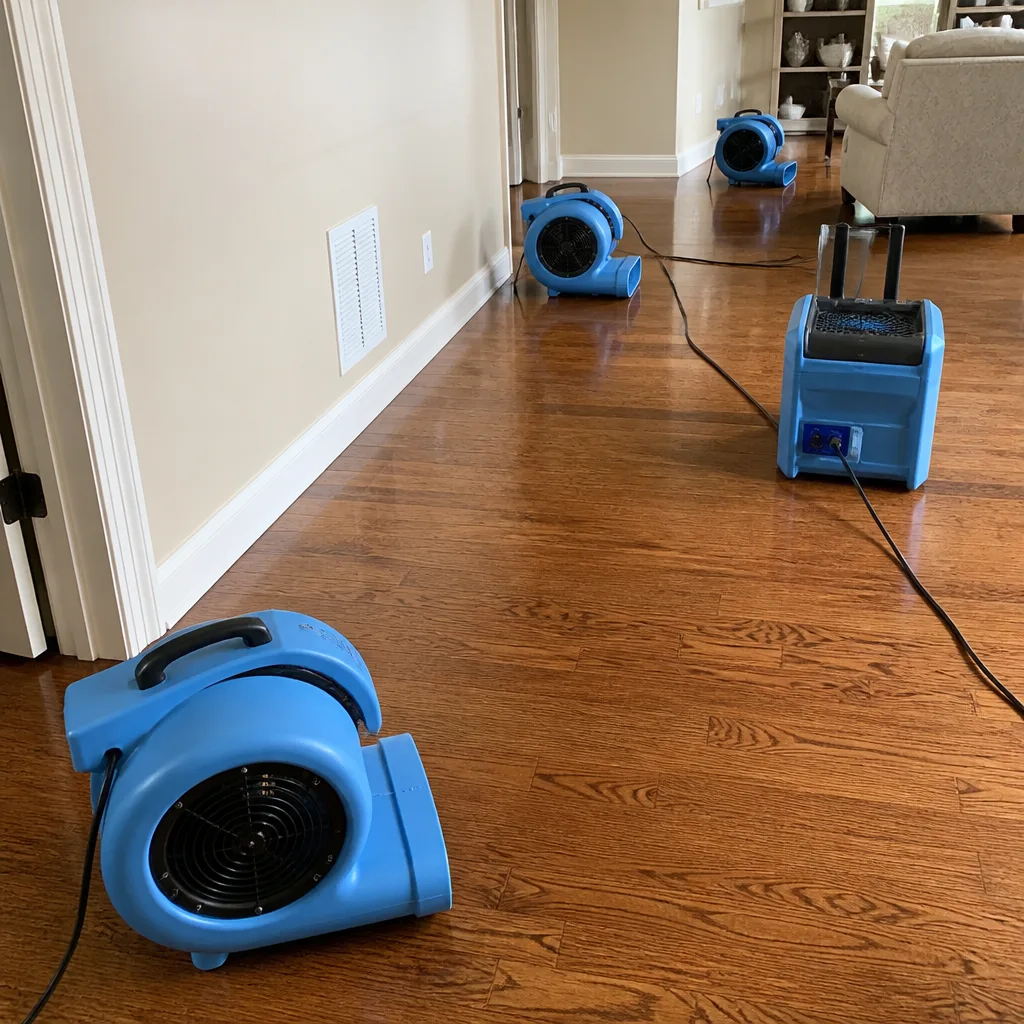
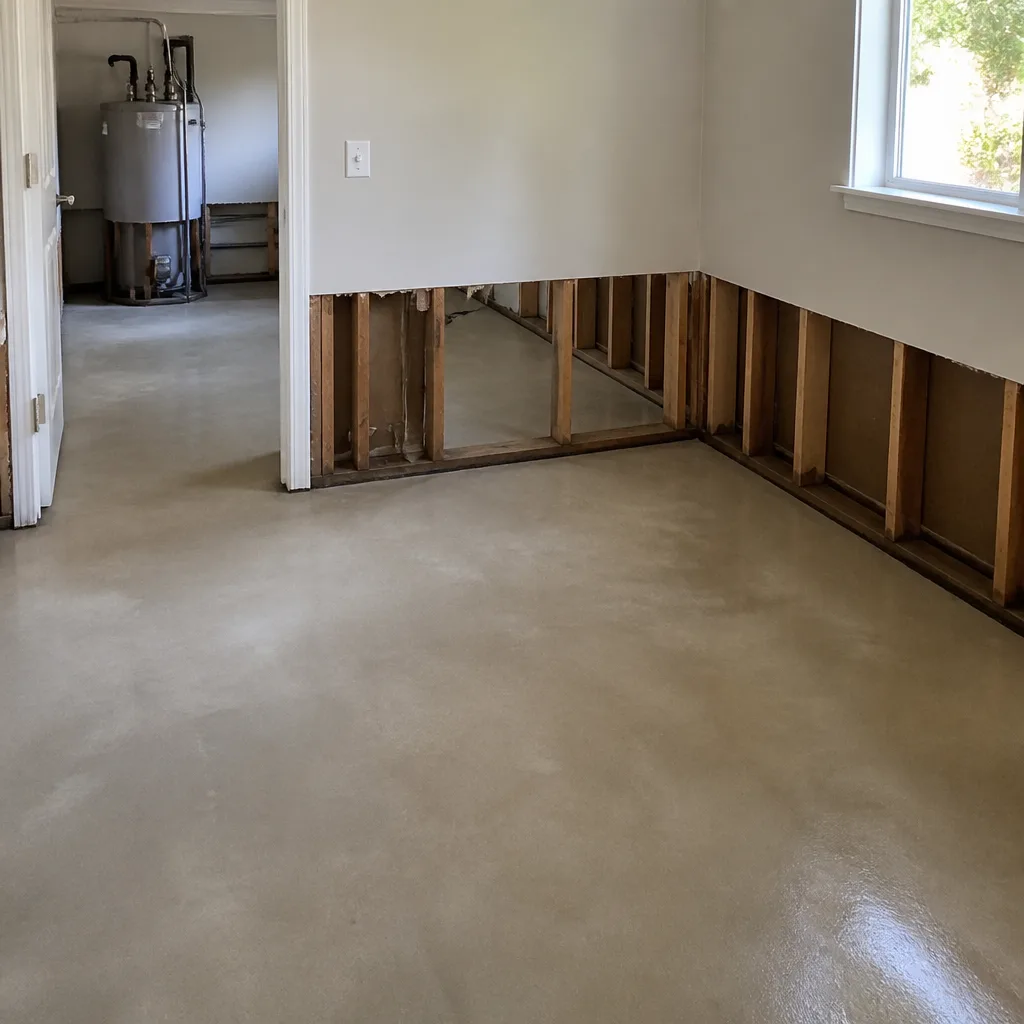
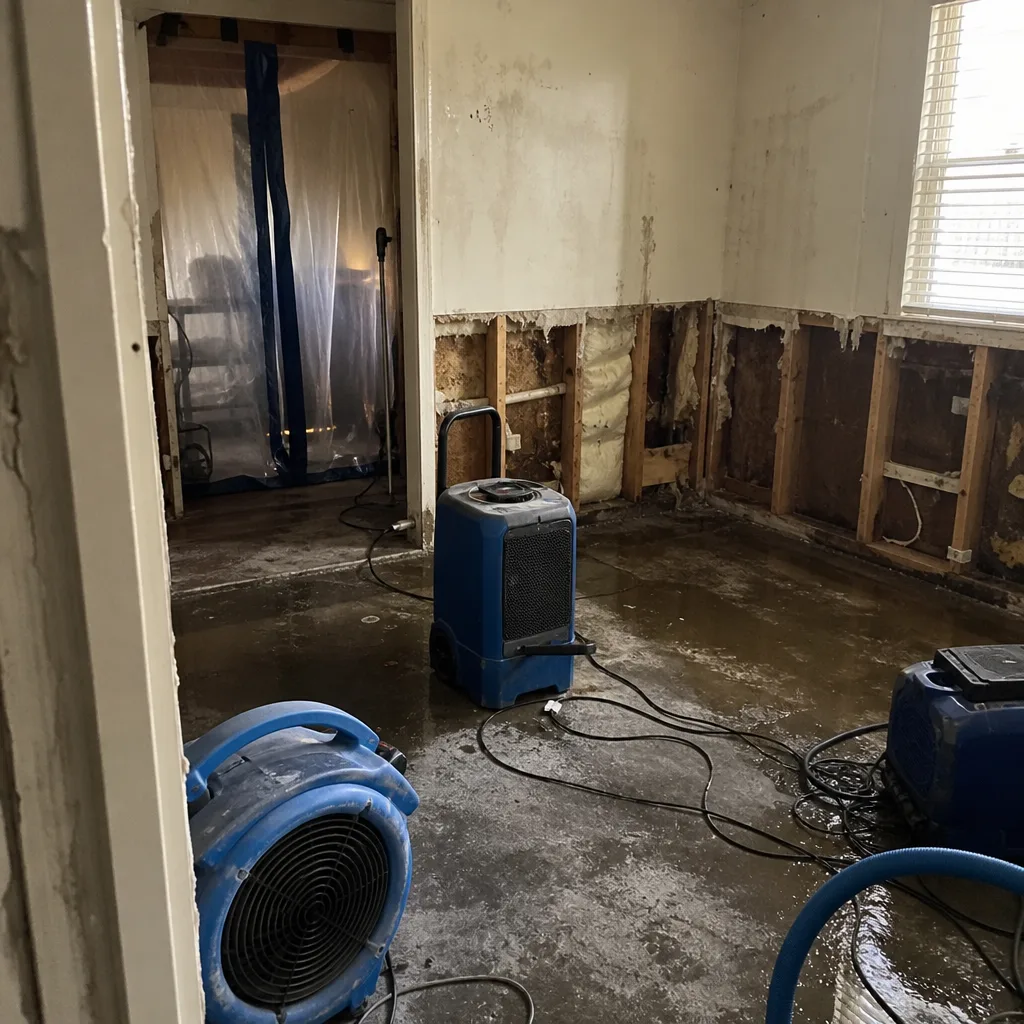 Before
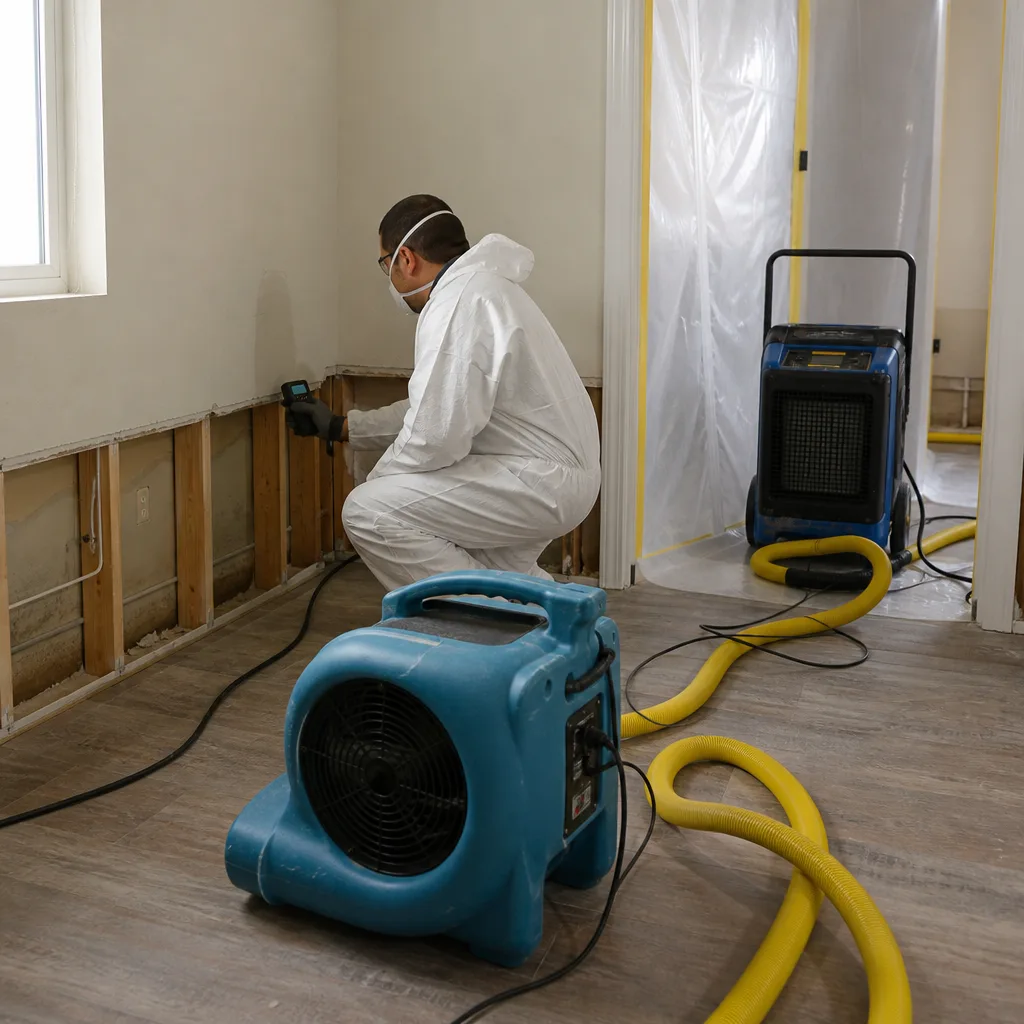 After
After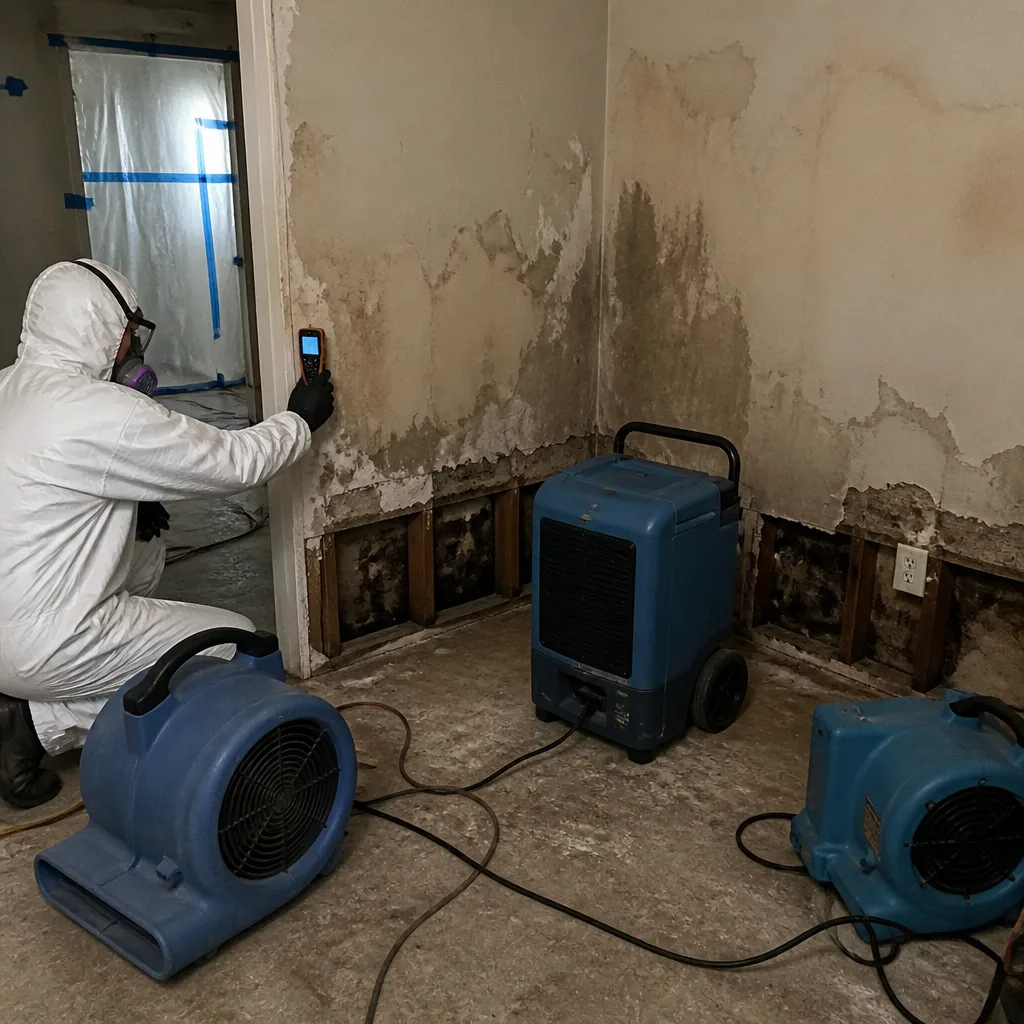 Before
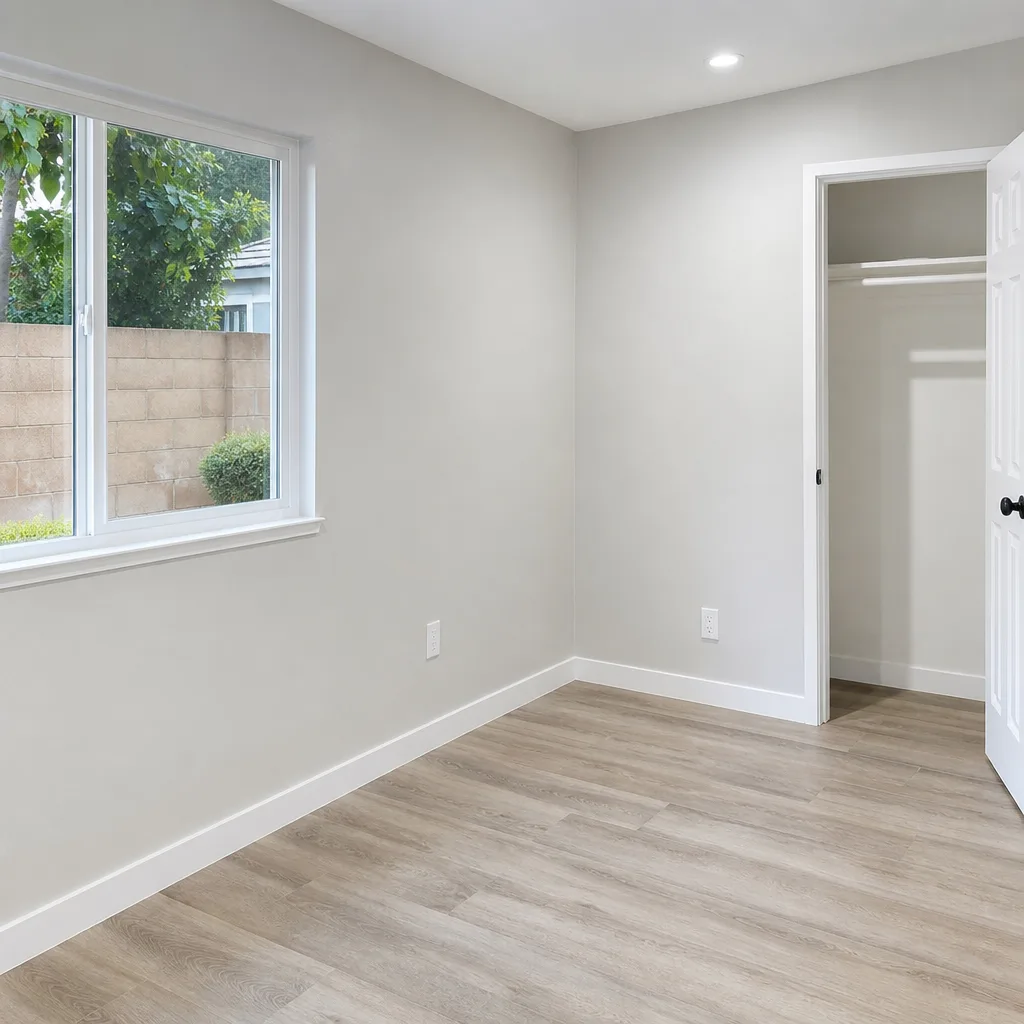 After
After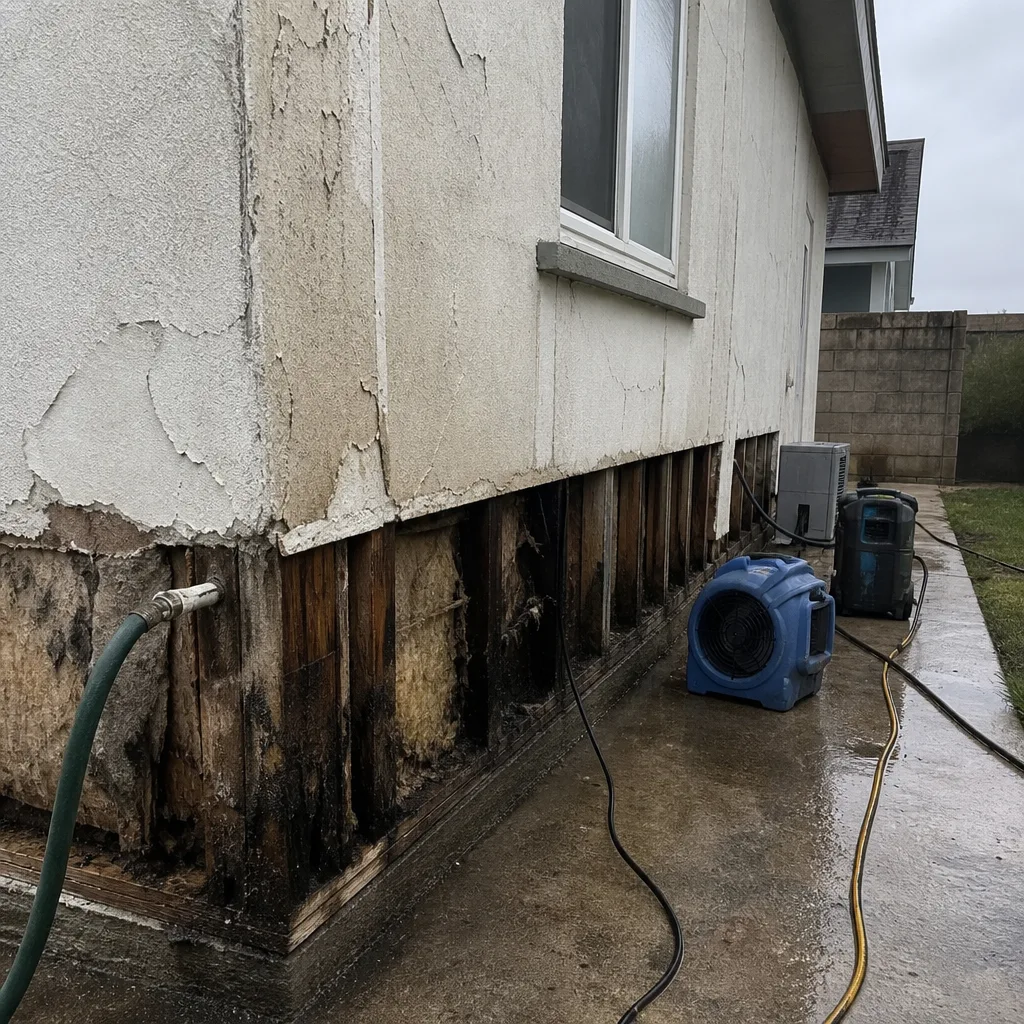 Before
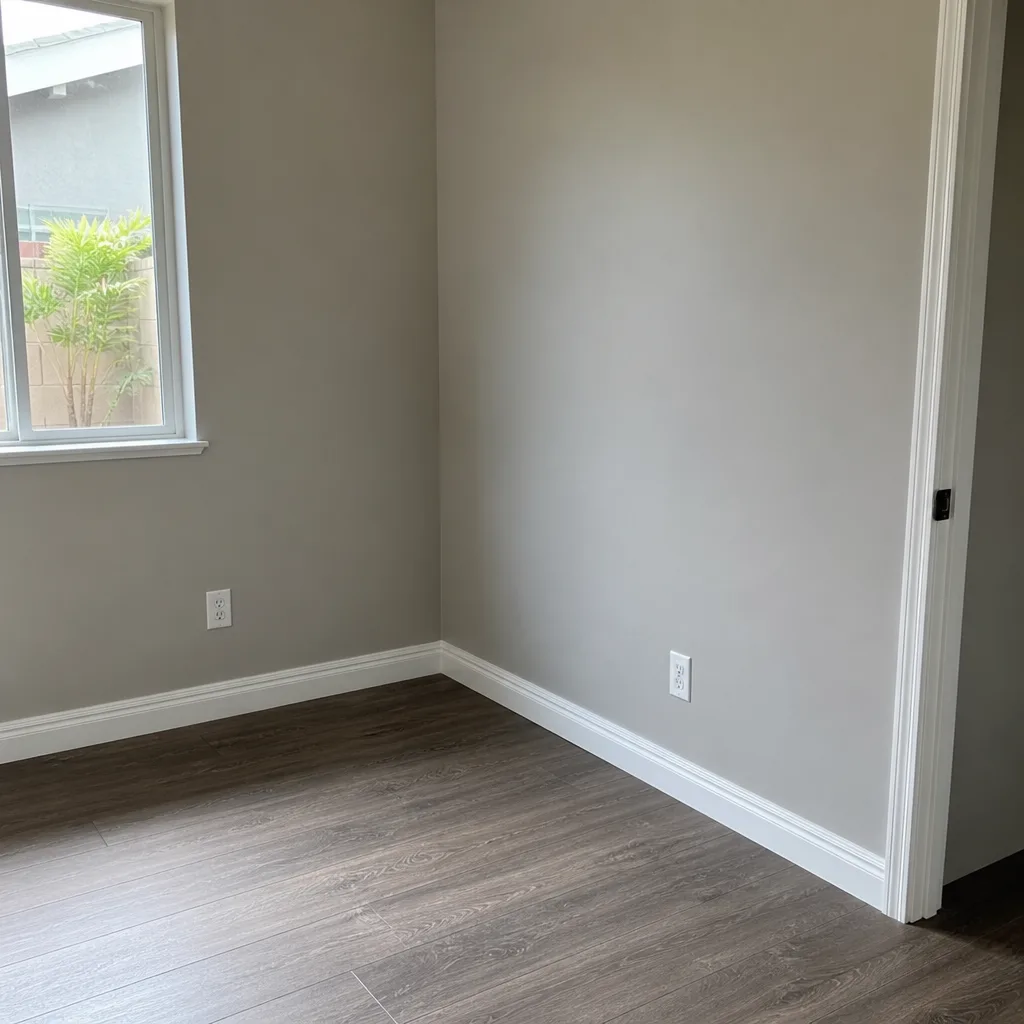 After
AfterDIY vs Professional Damage Restoration: The Santa Ana Homeowner’s Decision Guide
California courts have upheld insurer denials where homeowners attempted DIY water damage mitigation but could not produce moisture readings, drying logs, or photo documentation. The work itself wasn’t defective. The absent evidence was. In Santa Ana’s warm, dry climate, many homeowners assume a Shop-Vac and open windows will handle most water intrusions. That assumption has cost policyholders tens of thousands in uncovered secondary damage. This guide draws the measurable line between what you can legally and financially handle yourself, and where professional documentation becomes the only path to a paid claim-complementing our step-by-step guide on hiring a damage restoration contractor in Santa Ana.
Quick Answer
DIY damage restoration is legally defensible for Category 1 water damage under 50 square feet with no structural cavity involvement, provided you document time-stamped photos and daily moisture readings. For Category 2 or 3 water, any fire or smoke damage, mold contamination exceeding 10 square feet, or any situation requiring cavity drying behind walls or under floors, professional restoration with IICRC-documented drying logs is required for insurance coverage and code compliance in Santa Ana.
Table of Contents
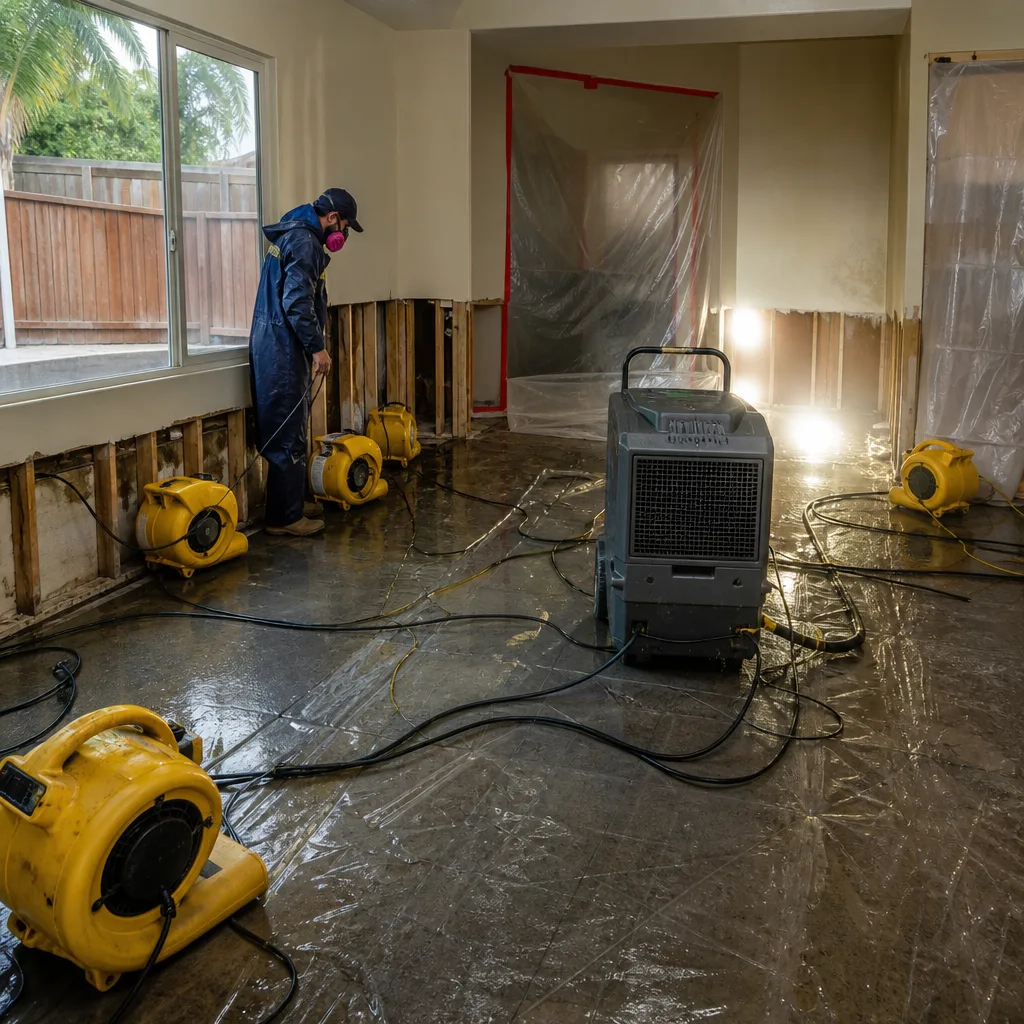
- The Water Damage Categories That Determine Your DIY Rights
- The Documentation Gap: Why DIY Work Gets Claims Denied
- Equipment Reality: What Homeowners Cannot Access or Deploy Correctly
- The 48-72 Hour Window in Santa Ana’s Climate
- Calculating the Real Cost: Beyond Contractor Fees vs. Supply Costs
- The Mold Remediation Threshold: Where DIY Becomes Liability
- Fire and Smoke Damage: No Defensible DIY Path
- Common Mistakes to Avoid
- When to Call a Professional
- Frequently Asked Questions
- The Bottom Line
BeforeAfterThe Water Damage Categories That Determine Your DIY Rights
The IICRC S500 standard divides water damage into three categories. Your insurance policy references these categories explicitly, and your DIY rights disappear at precise thresholds within each.
Category 1: Clean Water
This is water from a broken supply line, overflowing sink, or rainwater intrusion before it contacts soil or building materials. It originates from a sanitary source and presents no substantial risk from dermal, ingestion, or inhalation exposure. For Category 1 water damage, DIY mitigation is legally defensible if all of the following conditions are met:
- The affected area is under 50 contiguous square feet
- No water has migrated into wall cavities, under flooring, or into subfloors
- The water has not been present for more than 24 hours
- You can establish and maintain airflow across 100% of affected surfaces
- You document every step with time-stamped photos and daily moisture readings
Even here, the defensibility is narrow. In Santa Ana’s older neighborhoods like Floral Park and West Floral Park, homes built before 1980 often have plaster and lath walls with no vapor barrier. Water wicks horizontally through these assemblies at rates homeowners consistently underestimate. We’ve measured moisture migration extending 8-12 feet from the visible water line in these wall types, with no surface indication of the spread.
Category 2: Gray Water
Gray water contains significant contamination and has the potential to cause discomfort or sickness if contacted or consumed. Sources include dishwasher discharge, washing machine overflow, or sump pump failures. The IICRC S500 requires professional cleaning or removal of all affected porous materials. DIY mitigation of Category 2 water is not defensible for insurance purposes. The contamination level demands antimicrobial treatment, and most homeowner’s policies require professional documentation of that treatment for coverage of any secondary damage.
Category 3: Black Water
Black water contains pathogenic, toxigenic, or other harmful agents. Sources include sewage backup, seawater flooding, or any water entering from ground level during a storm. Category 3 water demands full professional remediation per IICRC S500 and EPA guidelines. Attempting DIY mitigation of Category 3 water voids most insurance coverage for related health claims and exposes the homeowner to liability if occupants or subsequent buyers develop illness. In Santa Ana, where seasonal heavy rains can overwhelm aging sewer connections in the downtown core and surrounding barrios, we’ve responded to multiple situations where homeowners attempted shop-vac cleanup of sewage intrusion, only to face five-figure remediation costs when mold and bacterial contamination spread through HVAC systems.
| Category | DIY Defensible? | Documentation Required | Typical Santa Ana Source |
|---|---|---|---|
| Category 1 (Clean) | Yes, under 50 sq ft, no cavity involvement, <24 hrs | Time-stamped photos, daily moisture readings, written action log | Supply line break, rainwater intrusion |
| Category 2 (Gray) | No | Professional antimicrobial treatment documentation | Dishwasher overflow, washing machine discharge |
| Category 3 (Black) | No | Professional remediation with hazardous waste disposal records | Sewage backup, storm flooding |
The Documentation Gap: Why DIY Work Gets Claims Denied
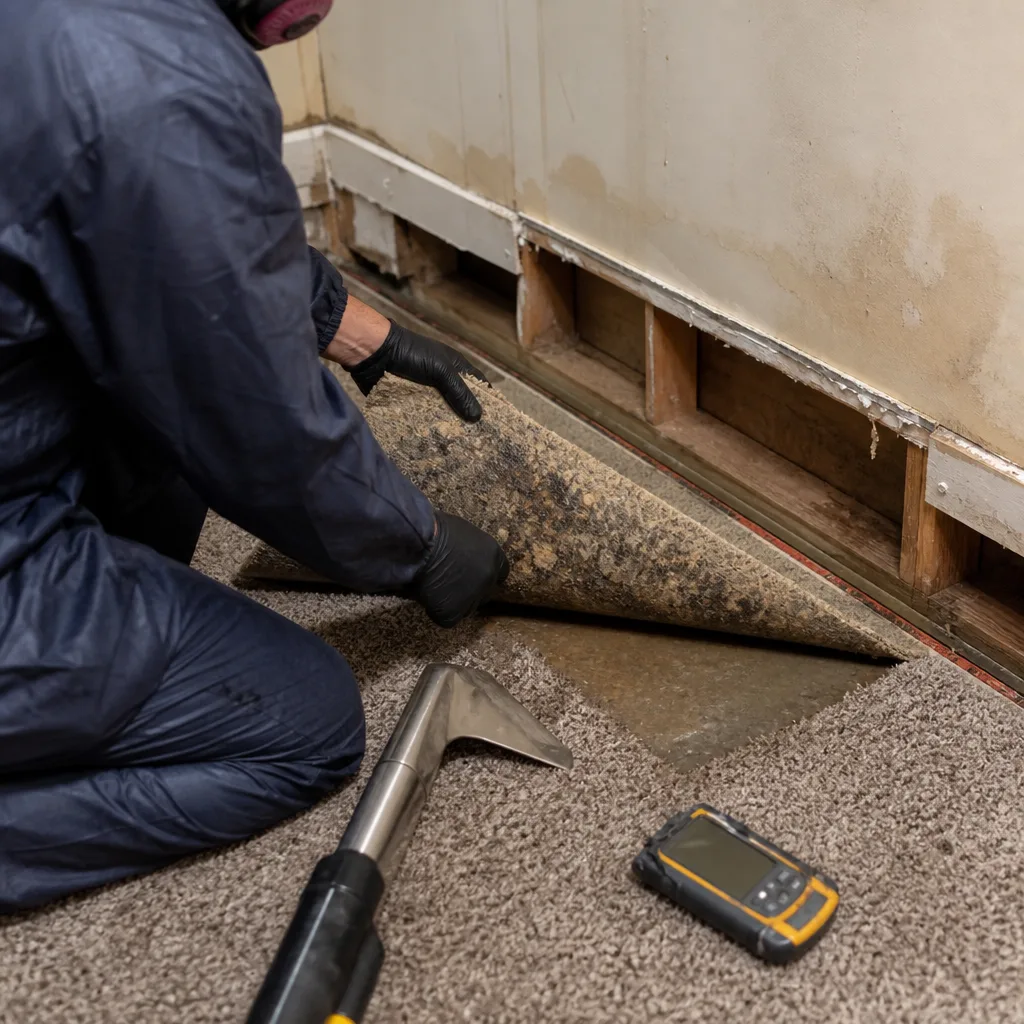
The California Department of Insurance has not published specific DIY restoration guidelines, but case law and adjuster practice have established clear expectations. In Stankovich v. State Farm and similar cases, courts have upheld denials where homeowners could not produce documentation proving their mitigation efforts met industry standards. The documentation gap is not about whether you did good work. It’s about whether you can prove it.
Here’s what adjusters expect to see, and what the average DIY documentation fails to include:
- Time-stamped photographic record: Photos of the initial condition, each phase of mitigation, and final dry standard verification. Not photos on your phone with approximate dates. Time-stamped, geotagged, with visible measurement references.
- Daily moisture readings by specific location: Not “the wall felt dry.” Calibrated pin or pinless meter readings, by room and wall section, recorded daily until materials return to within 2-4 points of established dry standard. The dry standard must be established from an unaffected area of the same structure, not a generic table.
- Psychrometric data: Temperature, relative humidity, and specific humidity readings for each affected space, recorded daily. This data proves you maintained conditions conducive to drying. Psychrometrics is the study of air and its properties; without these numbers, you cannot prove the air in the space was capable of absorbing evaporated moisture.
- Written scope of work performed: A clear account of what was done, when, by whom, with what equipment. This scope must reference material classifications by trade name (e.g., “removed 12 linear feet of 5/8″ Type X gypsum wallboard, R-13 kraft-faced fiberglass insulation, and 3/4″ CDX plywood subfloor at north wall, master bedroom”).
- Equipment deployment log: Make, model, and serial numbers of drying equipment; placement locations; CFM ratings; dehumidifier pint capacity; start and stop times.
At DryMark Restoration Santa Ana home, our standard deliverable on every job includes all five elements. Our daily drying logs are formatted to IICRC, RIA, and IFA standards, with moisture readings mapped by room and elevation. When an adjuster receives our documentation, the claim processes without dispute in most cases. When a homeowner submits phone photos and a handwritten timeline, the burden shifts: the adjuster must verify that DIY methods met standard, and most will deny rather than investigate.
The Haven Standard, Clause 1 requires a written price before work begins. This clause exists because documentation starts at first contact. The written scope we deliver before any equipment is deployed becomes the baseline against which all subsequent documentation is measured. A homeowner performing DIY work has no comparable baseline, which creates interpretive gaps adjusters exploit.
Equipment Reality: What Homeowners Cannot Access or Deploy Correctly
Consumer-grade equipment available for rent at Santa Ana hardware stores is not equivalent to professional restoration equipment. The gap is measurable and matters for drying outcomes.
Dehumidification: LGR vs. Consumer Units
Low-grain refrigerant (LGR) dehumidifiers, such as the Dri-Eaz Revolution or Phoenix R200, remove moisture from air that has already been dried below the threshold where consumer units become ineffective. An LGR unit can achieve grain depression below 40 grains per pound, while a consumer dehumidifier stalls around 55-60 grains. In practical terms: LGR units continue extracting moisture from wall cavities and subfloors after consumer units have stopped working. The grain depression is the difference between the actual moisture content of the air and the moisture content the air could hold at saturation; lower numbers mean drier air, faster evaporation from wet materials.
Rental LGR units cost $150-$250 per day in the Santa Ana market. A typical residential water loss requires 3-5 days of dehumidification. Most homeowners rent one unit for one room and assume the job is done.
Air Movement: Axial Fans vs. Box Fans
Professional axial air movers, such as the XPOWER P-230AT or B-Air VP-33, deliver focused airflow at velocities that create vapor pressure differential across wet surfaces. This differential, the difference in water vapor concentration between the wet material and the surrounding air, is what drives evaporation. A box fan moves air around a room. An axial air mover strips boundary layer moisture from surfaces and directs it toward dehumidification intake. The CFM (cubic feet per minute) rating is only part of the specification; focused velocity at the surface matters more.
Thermal Imaging for Cavity Moisture
FLIR thermal imaging cameras detect temperature differentials that indicate moisture behind walls, under floors, and in ceiling assemblies. A wall can read dry on a pin meter at surface level while containing saturated insulation and framing 6 inches inside. We’ve documented cases in Santa Ana’s Park Santiago neighborhood where homeowners replaced visible drywall after a supply line break, only to discover six months later that the wall cavity had remained wet, producing hidden mold growth that required full gutting of the assembly. Thermal imaging at the initial assessment would have revealed the cavity moisture; without it, there is no reliable detection method.
Calibrated Moisture Meters
Pin meters and pinless meters require calibration against known standards. A meter reading 12% on oak flooring may indicate dryness, while the same reading on Douglas fir subfloor indicates significant remaining moisture. Professional meters allow species correction and depth penetration adjustment. The $40 moisture meters sold at retail do not.
Injectidry Systems for Cavity Drying
When water enters wall cavities, surface drying is insufficient. Injectidry systems use negative air pressure and directed airflow through small injection ports to dry inside wall assemblies without full removal. No homeowner-accessible equivalent exists. In Santa Ana’s condo market, where many buildings have shared walls and HOA restrictions on demolition scope, cavity drying without full gutting is often the only viable path. Attempting DIY mitigation without this capability means either leaving cavities wet or removing more material than necessary, with corresponding cost and permit implications.
The 48-72 Hour Window in Santa Ana’s Climate
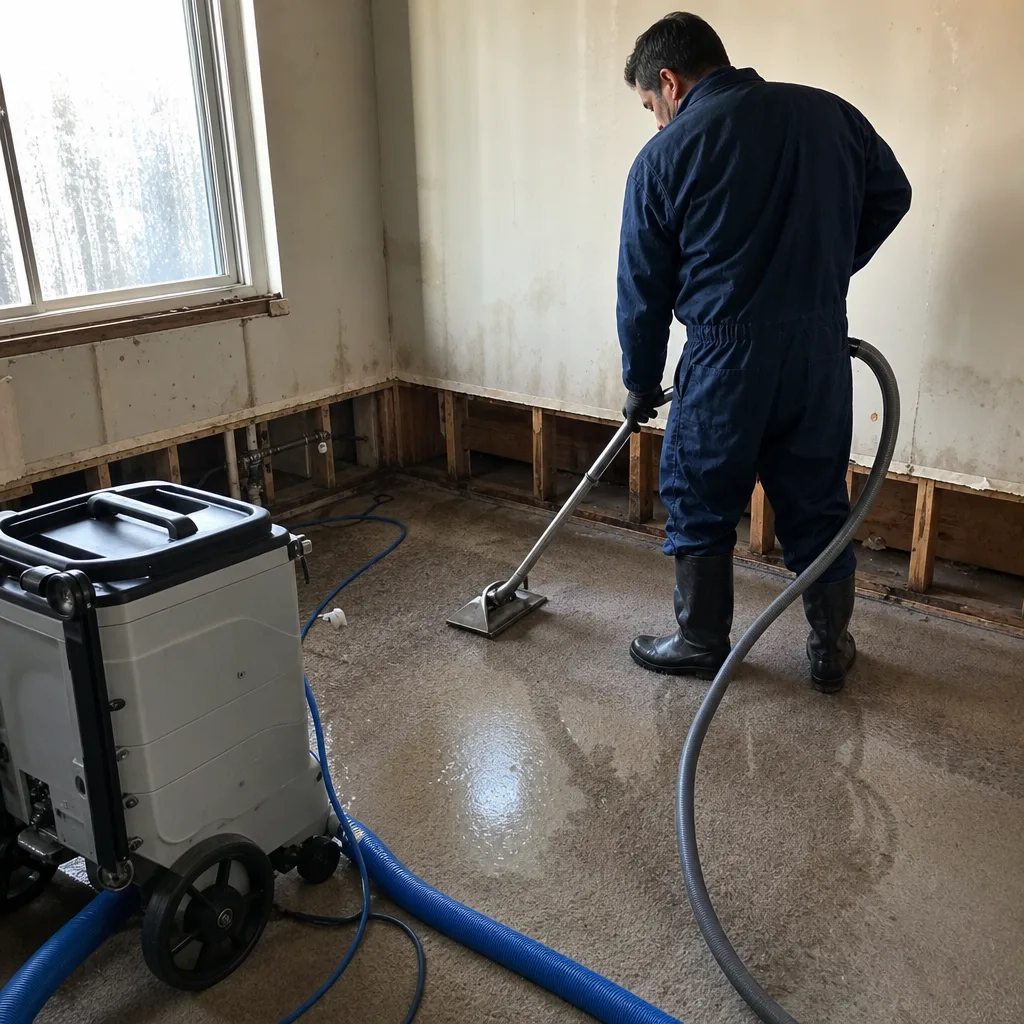
Santa Ana’s climate creates a deceptive drying environment that makes year-round seasonal care essential. Average annual humidity is low, Santa Ana winds drive rapid surface evaporation, and homeowners often conclude that “everything dried out fine” while missing trapped moisture in building assemblies. This surface dryness illusion is the single most expensive DIY mistake we encounter.
The critical timeline is not surface drying. It’s the window for microbial growth initiation in building materials.
| Time Since Water Intrusion | Biological Activity | DIY Viability |
|---|---|---|
| 0-24 hours | Bacterial amplification begins; mold spores present but not yet colonizing | Category 1 only, with immediate documentation |
| 24-48 hours | Mold colonization initiates on organic materials at >60% moisture content | Professional assessment strongly advised; cavity drying likely required |
| 48-72 hours | Visible mold growth possible; mycotoxin production may begin | DIY mitigation no longer defensible; professional remediation required for insurance |
| 72+ hours | Established mold contamination; structural damage to wood and gypsum | Full professional remediation; DIY voids coverage |
Santa Ana’s specific climate factors accelerate certain risks while masking others:
- Santa Ana wind events: These hot, dry winds can reduce surface moisture readings to apparently dry levels within 12-24 hours, while cavity moisture remains elevated. We’ve measured 18% moisture content at drywall surface and 68% in same-cavity insulation during Santa Ana wind conditions.
- Coastal influence in southwest Santa Ana: Neighborhoods near Centennial Park and the Santa Ana River experience higher baseline humidity than the city’s northeast quadrant, extending drying times by 20-30% for equivalent water losses.
- Aging infrastructure in historic districts: Homes in the Downtown Santa Ana Historic District and surrounding areas often have unventilated crawl spaces and plaster wall assemblies that retain moisture far longer than modern construction. The 48-72 hour window compresses to 24-36 hours in these structures.
The practical implication: by the time a Santa Ana homeowner has rented equipment, read instructions, and begun work, the window for defensible DIY mitigation on Category 1 water has often closed. Professional response times in the Santa Ana market average 60-90 minutes for emergency calls. The documentation clock starts at water intrusion, not at first mitigation action.
Calculating the Real Cost: Beyond Contractor Fees vs. Supply Costs
The naive cost comparison multiplies rental equipment fees by days and compares to a contractor’s estimate. The accurate comparison includes four additional factors most homeowners omit.
Factor 1: Claim Underpayment or Denial
Insurance policies contain “duty to mitigate” clauses requiring reasonable steps to prevent further damage. They do not require professional mitigation for Category 1 water. However, they do require documentation that mitigation was effective. When DIY documentation is insufficient, adjusters apply “unverified mitigation” reductions, typically 30-50% of the claimed amount, or deny secondary damage claims entirely. A $3,000 DIY mitigation that produces a $15,000 uncovered mold remediation is not a savings.
Factor 2: Mold Remediation Callbacks
Incomplete drying produces mold. Mold remediation in Santa Ana’s market runs $15-$30 per square foot for professional service, with minimum charges of $2,500-$5,000 for contained areas. The average DIY water mitigation we are called to correct has produced secondary mold contamination requiring 3-5 times the original professional mitigation would have cost.
Factor 3: Unpermitted Repair Liability
Santa Ana requires permits for structural repairs, electrical work, and plumbing modifications following water damage. DIY repairs without permits create title issues on sale, insurance coverage gaps, and personal liability if subsequent damage occurs. The City of Santa Ana Building Division inspects permitted restoration work; unpermitted work is the homeowner’s ongoing liability.
Factor 4: Equipment Rental True Cost
Professional-grade equipment rental in Santa Ana:
- LGR dehumidifier: $150-$250/day
- Axial air mover: $35-$50/day per unit (typically 3-6 needed)
- Thermal imaging camera: $75-$150/day
- Calibrated moisture meter: $50-$75/day
- Injectidry cavity drying system: $200-$350/day
A typical residential water loss requires 3-5 days of equipment. The rental cost for equivalent capability approaches $2,000-$4,000, before labor, materials, or documentation time. Our Water Damage Restoration in Santa Ana service provides equipment, labor, documentation, and claim support as a single scope with written pricing under Haven Standard, Clause 1.
The real cost comparison for a 200 square foot Category 1 water loss in Santa Ana:
| Cost Element | DIY Approach | Professional (DryMark Restoration Santa Ana) |
|---|---|---|
| Equipment rental (3 days) | $800-$1,500 | Included in scope |
| Materials (drywall, insulation, flooring) | $400-$800 | Included in scope |
| Documentation time (your labor at $0) | 8-12 hours | Included in scope |
| Claim processing support | None | Included in scope |
| Risk of uncovered secondary damage | 30-50% claim reduction possible | 365-Day Done Right Promise covers |
| Total comparable cost | $1,200-$2,300 + uncovered risk | Written price before work begins |
The professional scope is not always more expensive. When it is, the difference is typically the cost of documentation and risk transfer. For most Santa Ana homeowners carrying mortgages and dependent on insurance coverage, that transfer is the purpose of the policy.
The Mold Remediation Threshold: Where DIY Becomes Liability
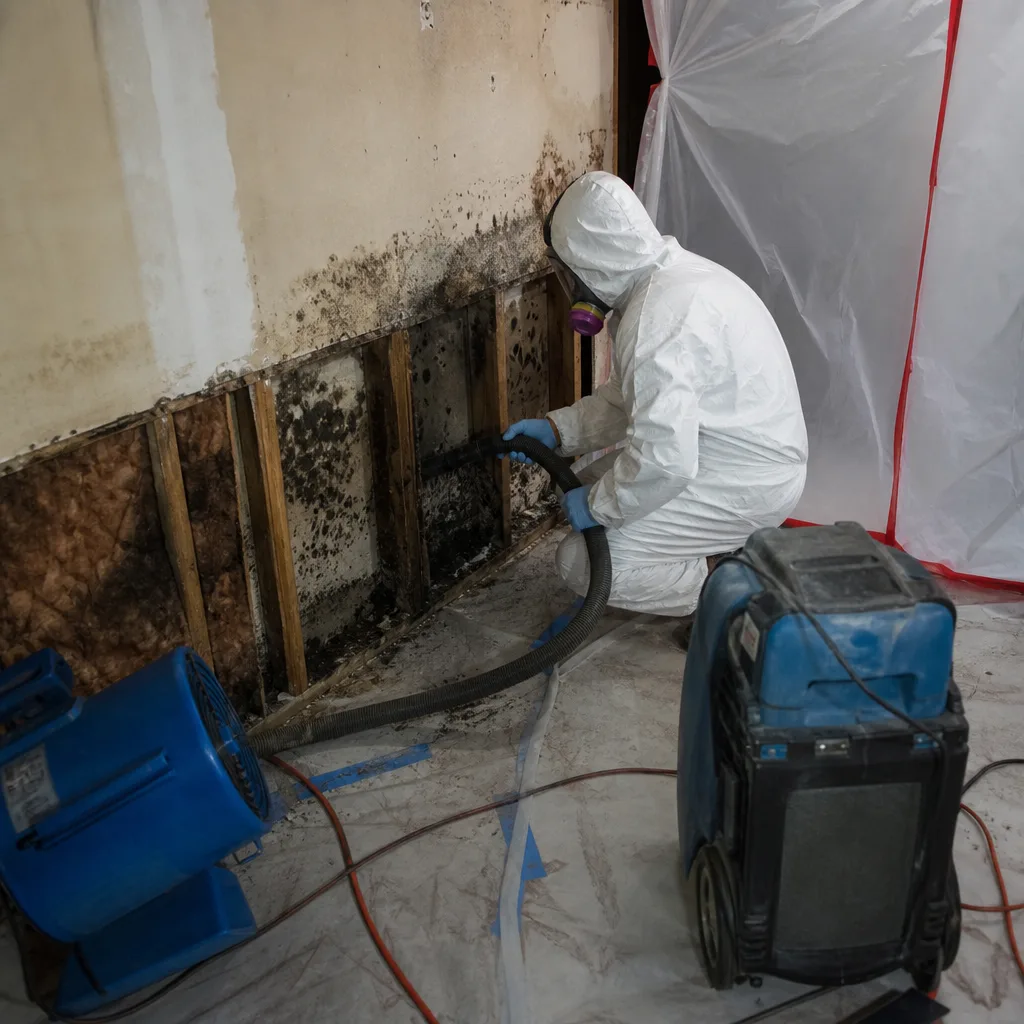
California Health and Safety Code and IICRC S520 establish specific thresholds for professional mold remediation. The DIY boundary is smaller than most homeowners assume.
The 10 Square Foot Rule
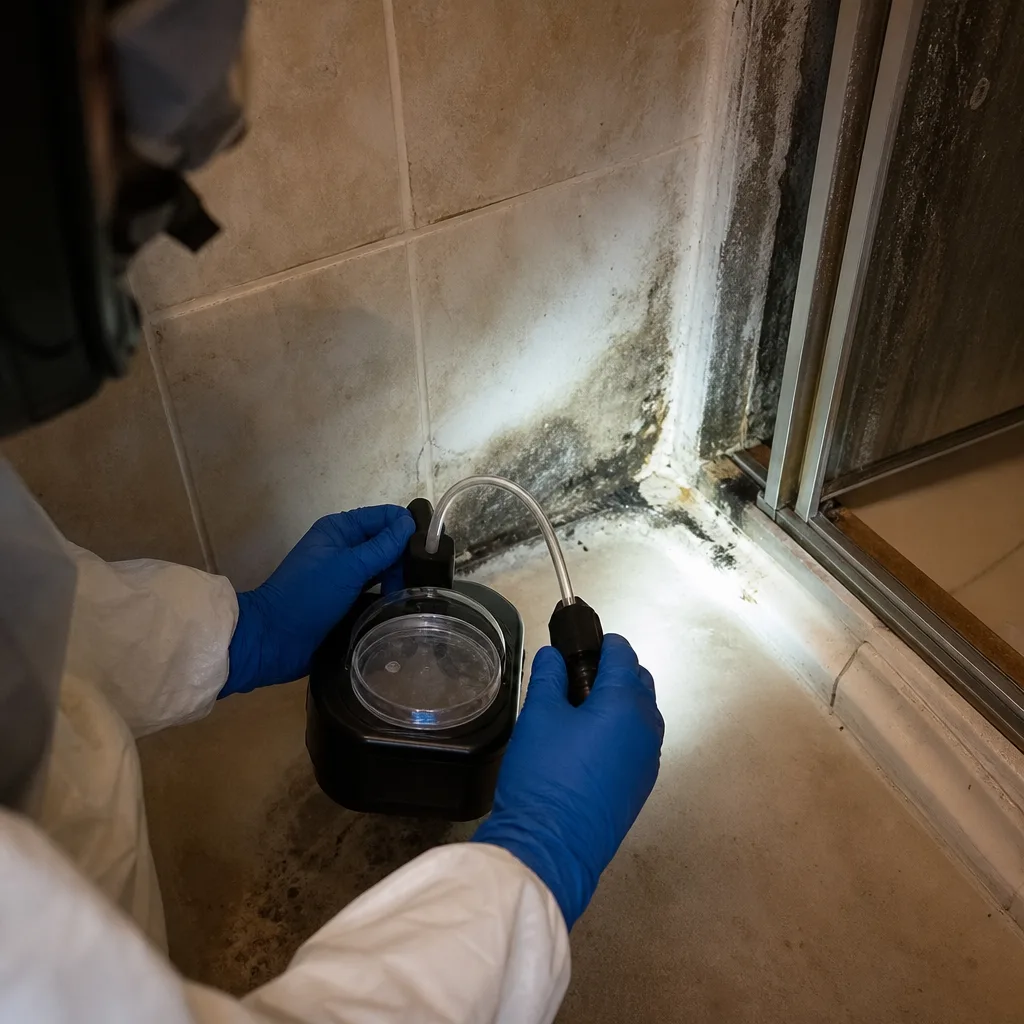
Contiguous mold growth exceeding 10 square feet requires professional remediation under IICRC S520. This is not a suggestion; it’s the threshold where containment, negative air pressure, and HEPA filtration become mandatory for worker and occupant safety. A single sheet of 4×8 drywall has 32 square feet of surface. Visible mold on one side of a bathroom wall often exceeds 10 square feet when both sides and adjacent framing are considered.
Hidden Mold Discovery
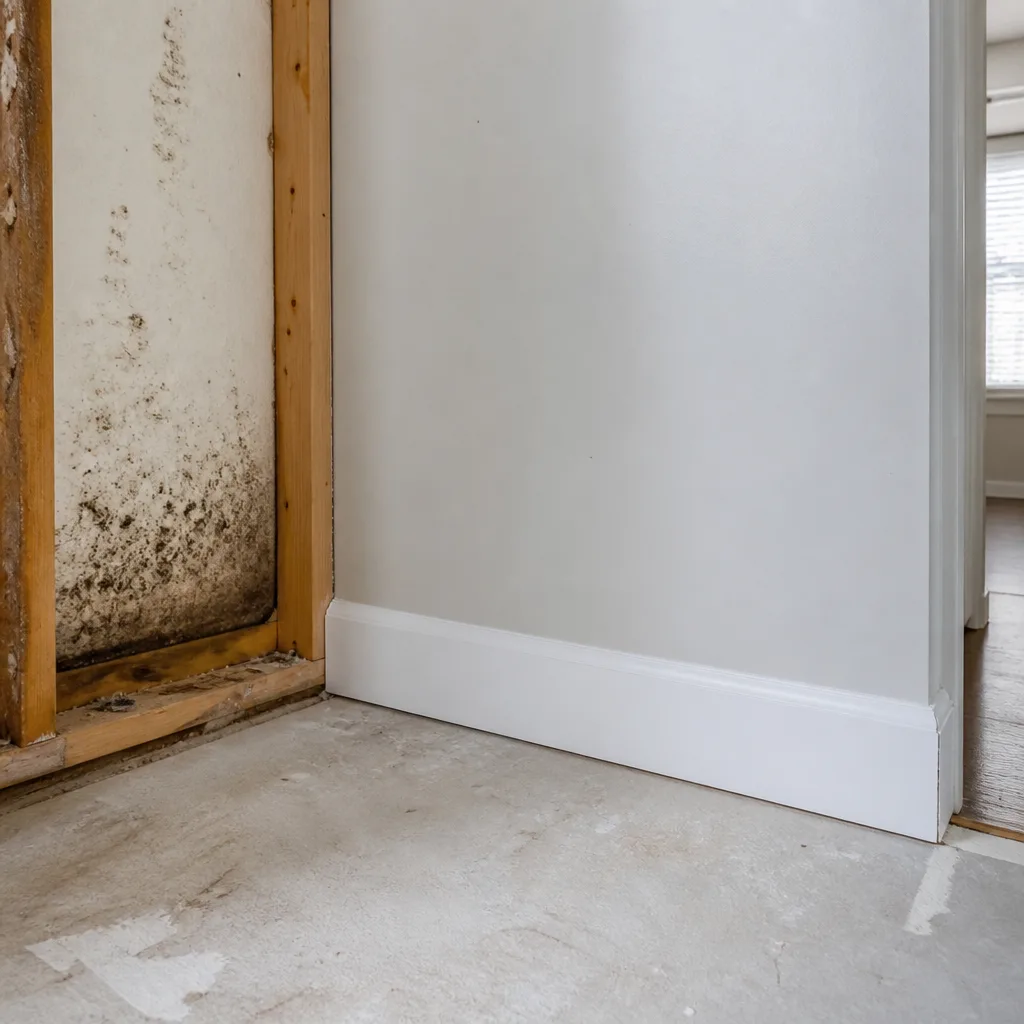
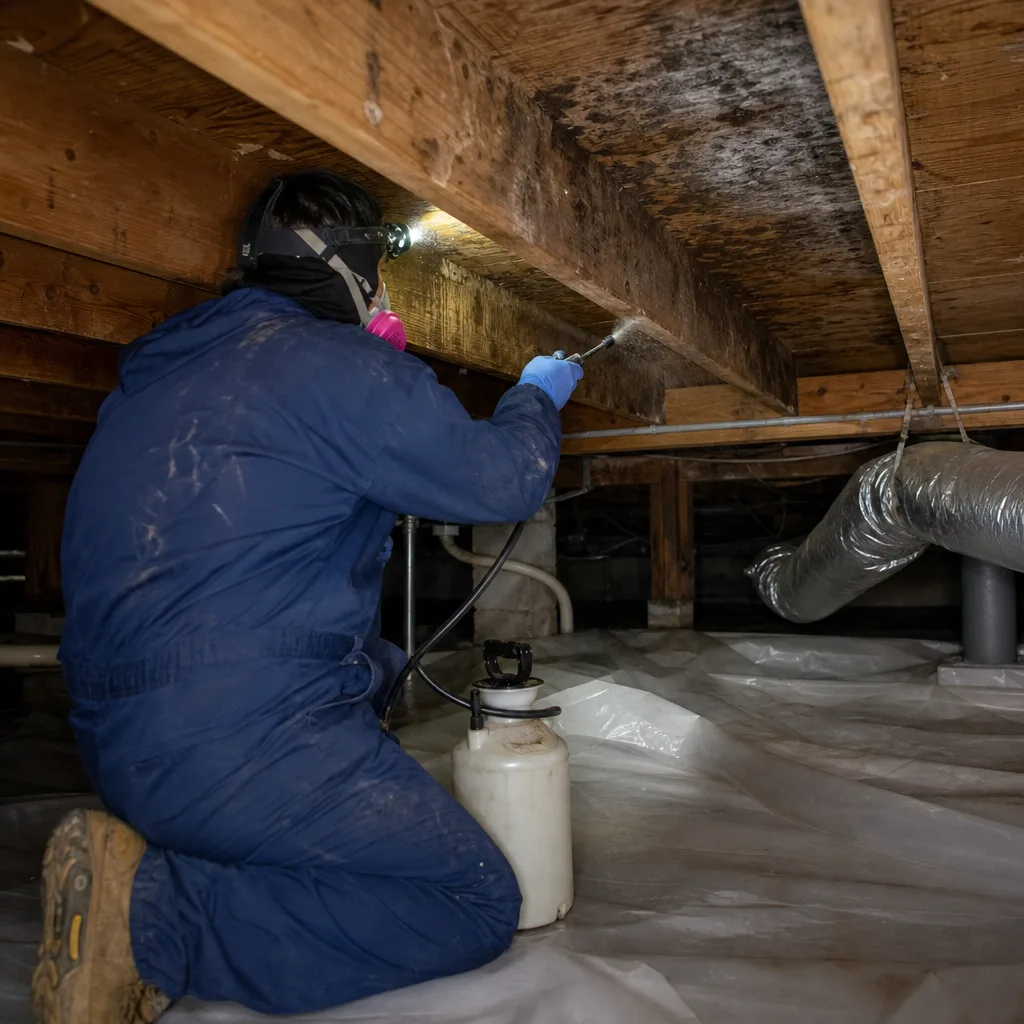
DIY water mitigation frequently discovers mold during the process. At that point, the homeowner faces a choice: stop work and call a professional, or continue and potentially spread contamination. We’ve responded to Santa Ana homes where homeowners removed water-damaged drywall, discovered mold, and continued demolition without containment, distributing spores through the HVAC system to unaffected areas. The resulting whole-house remediation cost 10-15 times the original water loss would have.
Santa Ana’s Specific Mold Risks
Santa Ana’s combination of warm temperatures, occasional high humidity events, and aging housing stock creates conditions favorable to Aspergillus, Penicillium, and Stachybotrys species. The city’s flat terrain and clay-heavy soils in some areas produce slab moisture issues that mimic water damage and complicate drying. In the Logan and Lacy neighborhoods, we’ve documented chronic slab moisture producing repeated mold recurrence in homes where DIY drying addressed surface water but not the underlying source.
For mold concerns, our Mold Remediation in Santa Ana service provides assessment, containment, removal, and post-remediation verification with documentation to IICRC S520 standards.
Fire and Smoke Damage: No Defensible DIY Path
Unlike water damage, where limited DIY mitigation has legal standing, fire and smoke damage offers no defensible DIY restoration path. The reasons are structural, chemical, and regulatory.
Structural Assessment Requirement
Even minor fires compromise structural elements in ways not visible to untrained inspection. Heat exposure degrades steel tensile strength, weakens concrete through spalling, and chars wood beyond visible surfaces. Santa Ana’s building code requires structural evaluation by a licensed professional for any fire involving structural elements. DIY restoration without this evaluation voids occupancy permits and creates liability if subsequent structural failure occurs.
Smoke Residue Chemistry
Smoke residues vary by burned materials and require specific cleaning protocols. Protein fires from kitchen incidents produce nearly invisible residues that corrode metals and etch glass. Synthetic fires produce acidic residues that continue damaging surfaces until professionally neutralized. The wrong cleaning agent sets residues permanently. Homeowners attempting DIY smoke cleaning typically select products based on retail marketing rather than residue chemistry, causing irreversible damage to surfaces and contents.
Odor Removal: Not a Surface Problem
Smoke odor penetrates porous materials at the molecular level. Thermal fogging, ozone treatment, and hydroxyl generation are required for effective odor removal. These are not consumer technologies. Surface cleaning, air fresheners, and consumer ozone generators do not achieve the concentrations or penetration required.
Insurance and Fire Damage
Fire damage claims are among the most scrutinized by insurers. Documentation requirements exceed water damage standards. Contents inventory must be itemized with pre-loss condition, age, and replacement cost. Structural repairs require permit and inspection compliance. Professional restoration companies maintain relationships with specialized contents cleaners, textile restoration firms, and structural engineers that no homeowner can replicate.
Our Fire & Smoke Damage Restoration in Santa Ana service coordinates these specialists under a single documented scope with direct insurance billing.
Common Mistakes to Avoid
- Renting equipment without understanding capacity requirements: A single dehumidifier rated for 1,500 square feet will not dry a 1,500 square foot water loss. Capacity ratings assume ideal conditions and do not account for air mover pairing, temperature, or source of moisture. Most Santa Ana homeowners under-size by 50-70%.
- Using bleach on mold: Bleach does not penetrate porous materials and can provide moisture that accelerates regrowth. It also produces toxic chloramine fumes when combined with ammonia-containing cleaning products, a common household error.
- Removing wet drywall without checking for asbestos: Santa Ana homes built before 1980 may contain asbestos in joint compound, texture coatings, or flooring. Disturbing these materials without testing and abatement creates federal and state liability exposure.
- Documenting with phone photos lacking measurement references: A photo of wet carpet proves nothing about extent. Photos must include measurement tools, room identifiers, and date verification. Adjusters discard photos without these elements.
- Assuming surface dryness equals assembly dryness: The most expensive mistake in Santa Ana’s climate. Surface dryness in Santa Ana wind conditions is not predictive of cavity moisture content.
- Delaying professional assessment to “see if DIY works”: Every day of delay extends drying time, increases microbial risk, and reduces insurance defensibility. The documentation clock starts at water intrusion.
- Ignoring permit requirements for repairs: Santa Ana requires permits for electrical, plumbing, and structural repairs. Unpermitted work must be disclosed on sale and may require retroactive permitting at higher cost.
When to Call a Professional
Call a professional restoration company when: water damage exceeds 50 square feet or involves wall, floor, or ceiling cavities; water is Category 2 or 3; mold growth exceeds 10 square feet or is discovered during water damage mitigation; any fire or smoke damage has occurred; sewage backup or storm flooding is involved; structural elements show charring, warping, or compromise; or you need documentation that will satisfy an insurance adjuster. For ongoing protection, see our water damage restoration maintenance checklist for Santa Ana homeowners.
DryMark Restoration Santa Ana offers free estimates in Santa Ana, with more guides & resources available on our blog. Our response team includes background-checked, uniformed technicians with documented credentials, deployed with professional-grade equipment from Dri-Eaz, Phoenix, and XPOWER. Every job receives a written price before work begins under Haven Standard, Clause 1, with photo documentation on every visit and the 365-Day Done Right Promise backed by The Haven Standard. Call (657) 300-9903 for assessment.
Frequently Asked Questions
Professional water damage restoration in Santa Ana typically ranges from $1,500 for contained Category 1 losses under 100 square feet to $8,000-$15,000 for whole-room Category 2 or 3 losses with cavity drying requirements. Costs depend on water category, affected square footage, material types, and whether mold remediation is required. DryMark Restoration Santa Ana provides a written price before any work begins under Haven Standard, Clause 1. Call (657) 300-9903 for a free estimate.
Insurance may cover DIY mitigation if you produce documentation meeting IICRC standards: time-stamped photos, daily moisture readings by location, psychrometric data, and a written scope. Most homeowners lack the equipment to generate this documentation. Without it, adjusters apply “unverified mitigation” reductions of 30-50% or deny secondary damage claims. Professional restoration with documented drying logs eliminates this risk.
DryMark Restoration Santa Ana maintains live phone coverage 24 hours a day, 7 days a week with no voicemail on emergency lines. Our average response time in Santa Ana is 60-90 minutes for emergency water damage calls. For fire and smoke damage, immediate response is critical to prevent acid residue etching and corrosion; same-day assessment is standard.
Contiguous mold growth under 10 square feet on non-porous surfaces can be addressed with detergent and water followed by thorough drying. Growth exceeding 10 square feet, growth on porous materials, or growth discovered during water damage mitigation requires professional remediation under IICRC S520 for insurance defensibility and occupant safety. Hidden mold in wall cavities is not addressable with surface cleaning.
At DryMark Restoration Santa Ana, we coordinate directly with your adjuster, providing documented photo records, daily drying logs, and written scopes formatted to insurance standards. Our documentation is designed to turn restoration invoices into payable claims without dispute. We also offer a Free Second Opinion on any competitor’s written estimate at no charge.
You receive: a written scope of work performed with material specifications; a photo record from every site visit with time stamps; daily moisture and psychrometric readings until dry standard is achieved; equipment deployment logs; and a signed 365-Day Done Right Promise under The Haven Standard. This documentation package is designed for insurance submission and personal records.
The Bottom Line
The DIY versus professional restoration decision is not primarily about skill or cost. It’s about documentation defensibility and risk transfer. For Category 1 water under 50 square feet with no cavity involvement, DIY mitigation is legally possible but requires equipment and documentation most homeowners do not possess. For all other water categories, any fire or smoke damage, and mold exceeding 10 square feet, professional restoration is required for insurance coverage, code compliance, and personal liability protection. In Santa Ana’s climate, the 48-72 hour microbial growth window compresses the decision timeline. The documentation that protects your claim begins at water intrusion, not when you call for help.
Written by Alicia Brennan, Owner at DryMark Restoration Santa Ana, serving Santa Ana since 2011.