
Last updated September 23, 2026
Free visual inspection and a written scope of work before any mitigation begins - photos, moisture readings, and drying logs go in your claim file
The scope we write is the scope we bill. Anything new gets shown to you, in writing, before we touch it.
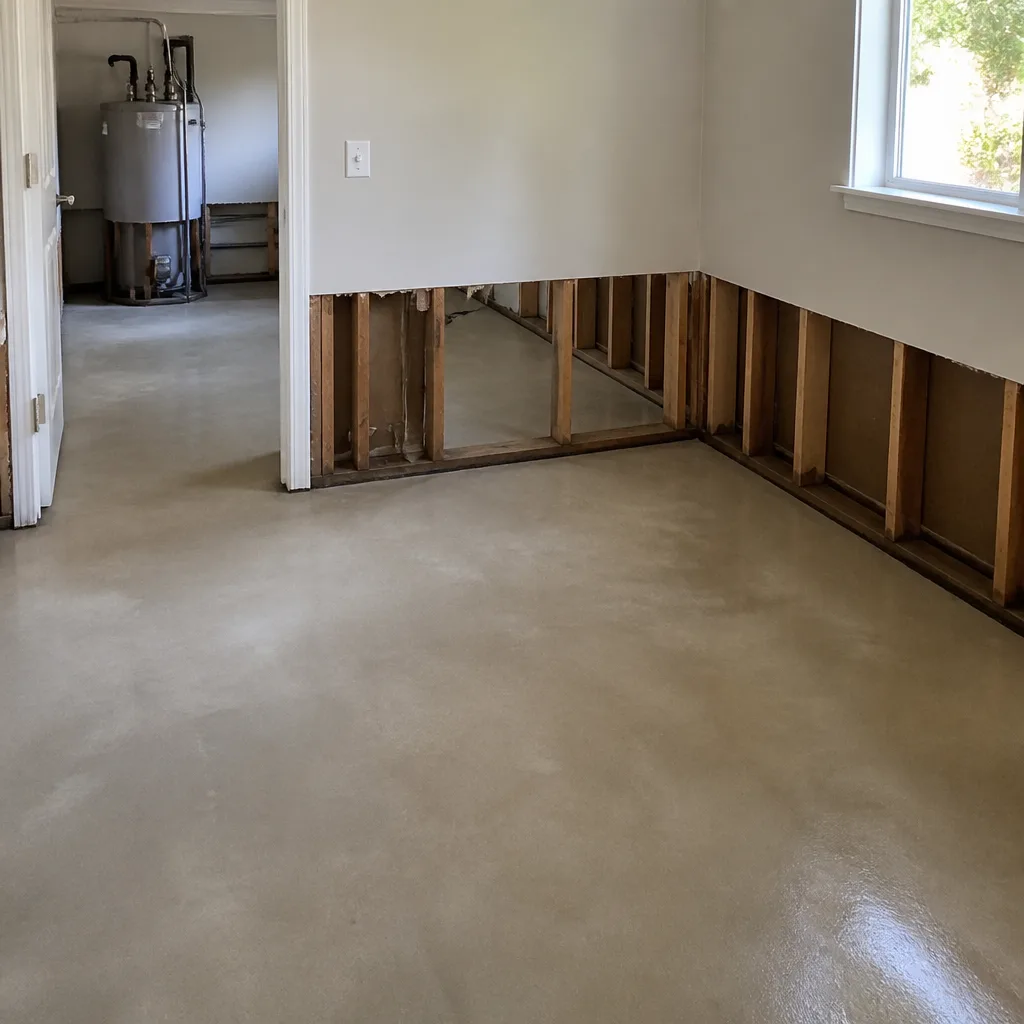
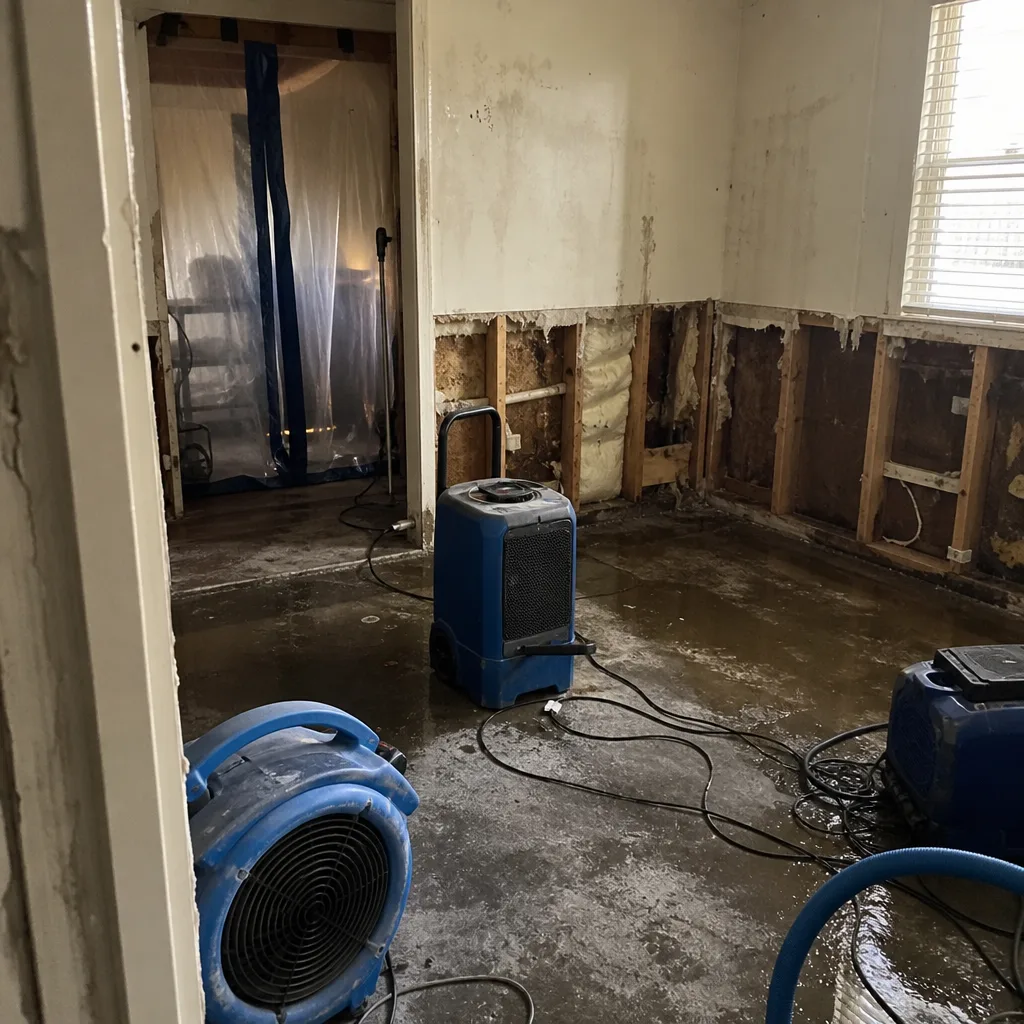 Before
 After
After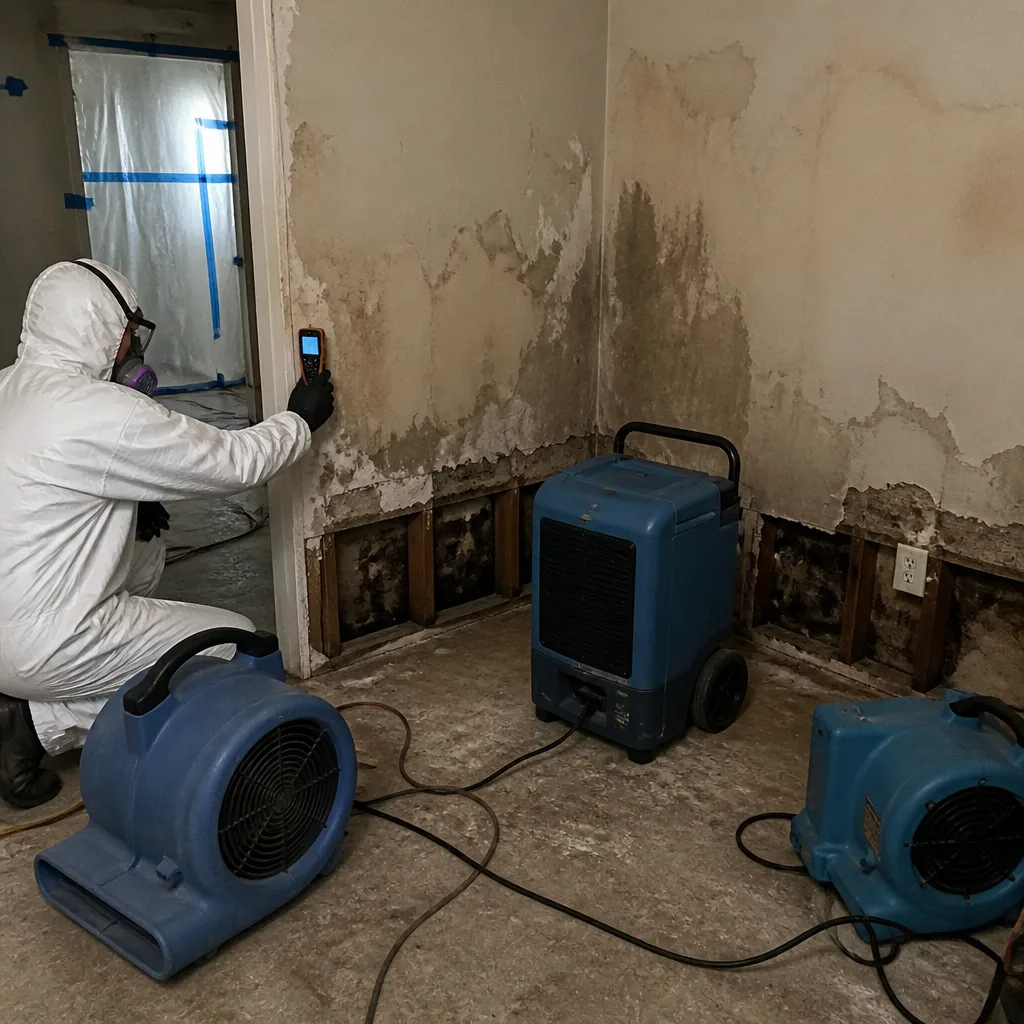 Before
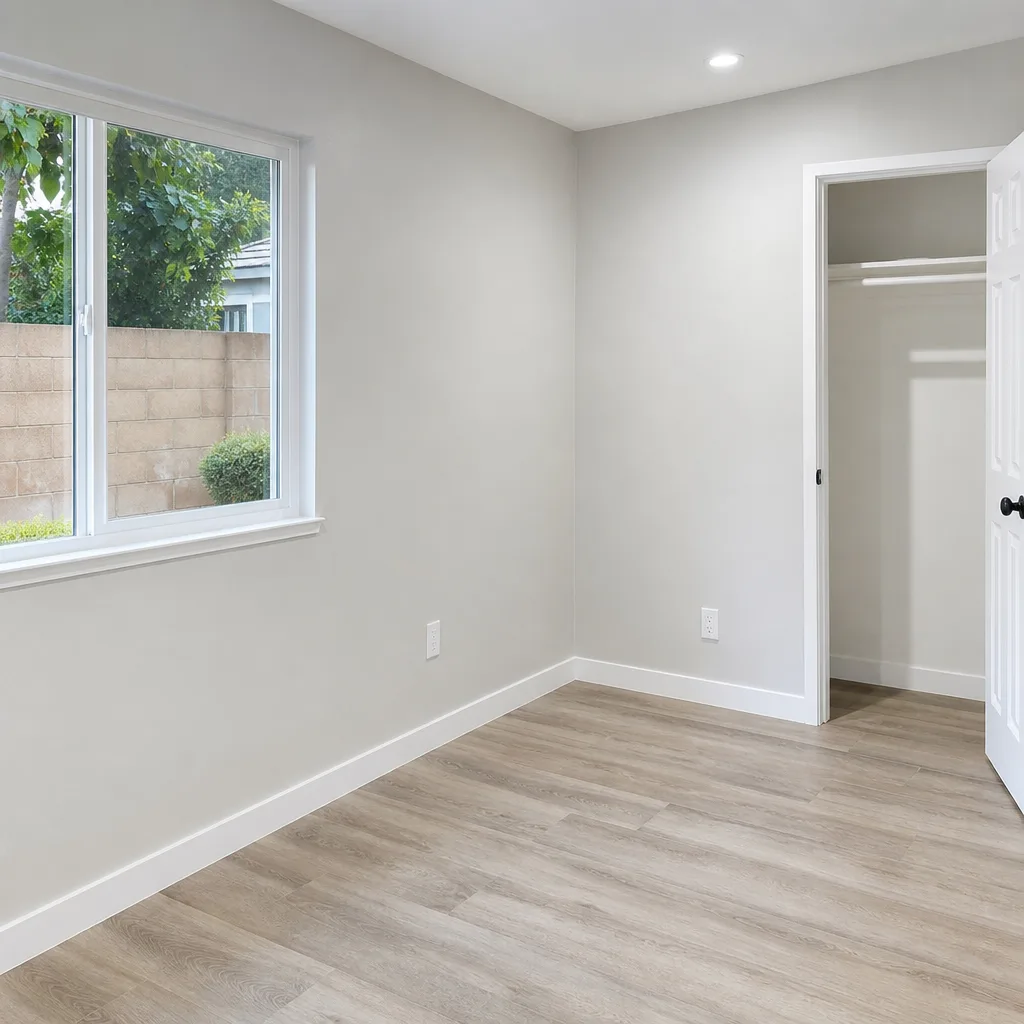 After
After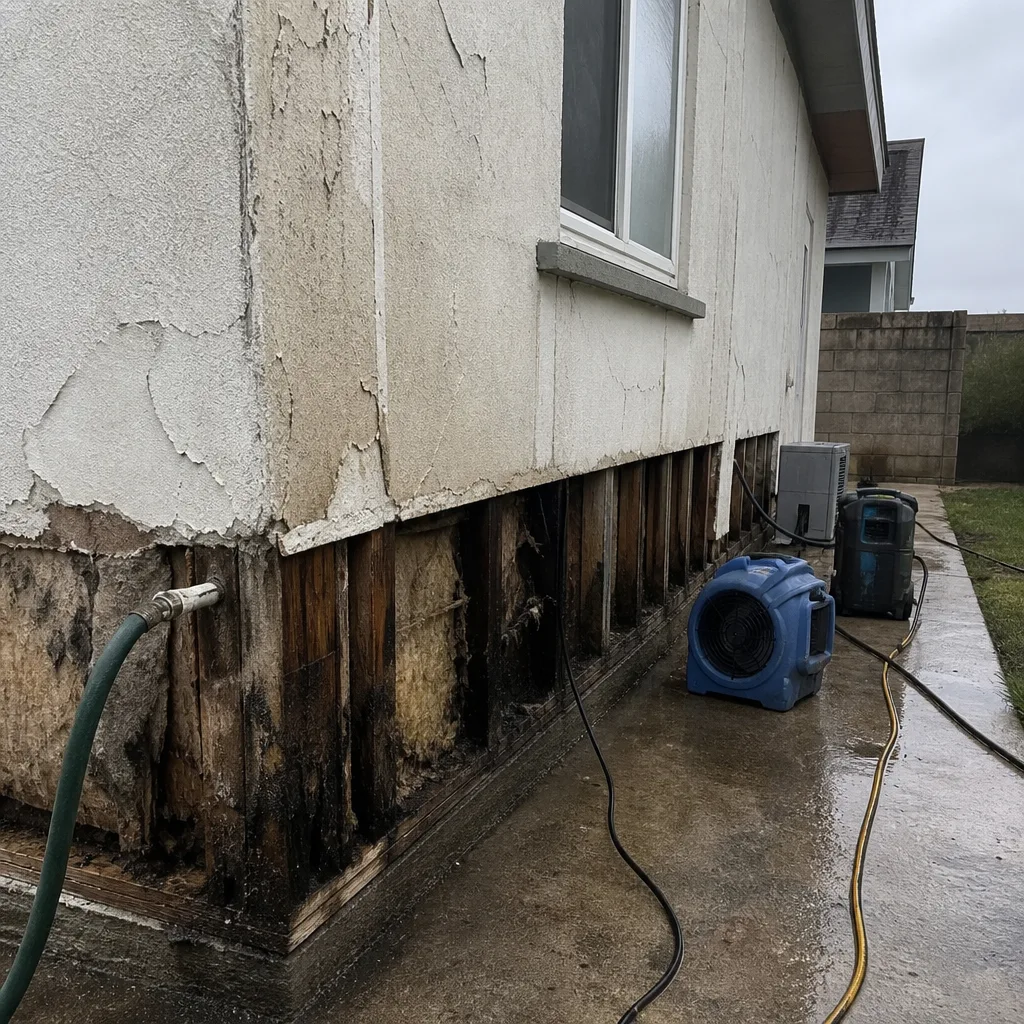 Before
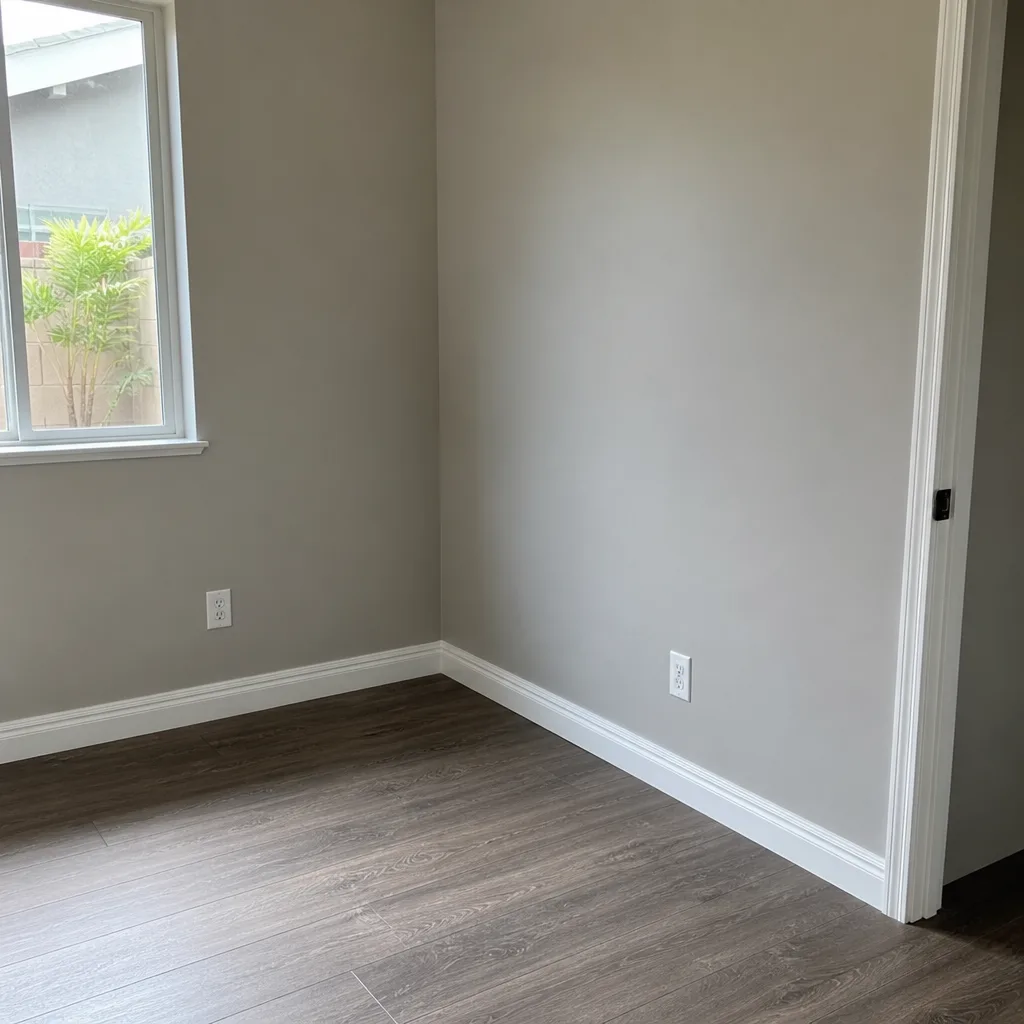 After
AfterHow to Hire a Damage Restoration Contractor in Santa Ana: A Step-by-Step Guide
In California, a contractor can hold a valid C-10 or B license and still produce restoration documentation so incomplete that your insurer legally owes you nothing. Licensing tells you almost nothing about documentation quality. We’ve reviewed competitor files from Santa Ana jobs where the homeowner paid out of pocket because the drying log was a single page with no psychrometric data, no equipment placement map, and no daily moisture readings. This complete guide to damage restoration in Santa Ana gives homeowners the exact questions, documents, and red flags that separate evidence-grade restoration from reassurance-grade sales. You’ll learn what to request before anyone touches your wall, how to verify real IICRC compliance, and why a contractor’s photo documentation process matters more than their truck wrap.
Quick Answer
To hire a damage restoration contractor in Santa Ana, request three documents before work begins: a written scope of loss, an itemized estimate using Xactimate line items, and a signed authorization form. Verify IICRC S500 or S520 certification by asking for the specific certificate number and checking it against the IICRC online registry. Avoid any contractor who offers verbal-only pricing, claims they’ll “bill your insurance directly” without a written assignment of benefits, or cannot show you a sample drying log from a previous job.
Table of Contents
- Why License Checks Fail Most Santa Ana Homeowners
- The Three Documents to Demand Before Work Begins
- How to Verify IICRC Compliance as a Concrete Standard
- Red Flags in Post-Disaster Contractor Canvassing
- Evaluating Photo Documentation on Day 1
- What a Real Workmanship Warranty Specifies in Writing
- Cost Expectations for Restoration Work in Santa Ana
- Common Mistakes to Avoid
- When to Call a Professional
- Frequently Asked Questions
- The Bottom Line
BeforeAfterWhy License Checks Fail Most Santa Ana Homeowners
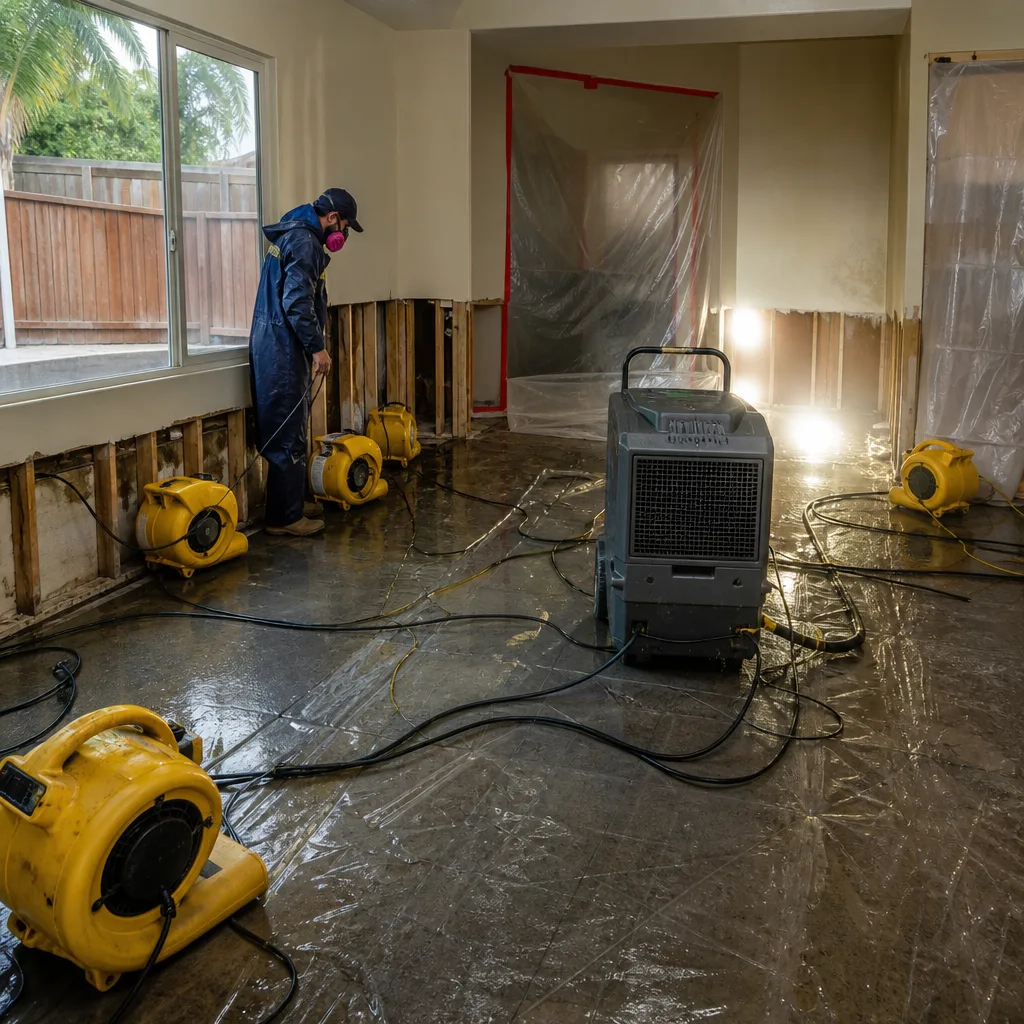
Checking a contractor’s license on the CSLB website takes ninety seconds. Most Santa Ana homeowners do this and stop. The license confirms the contractor passed a trade exam and carries minimum insurance. It says nothing about whether that contractor documents water damage in a way your adjuster will accept.
We’ve seen licensed contractors in the Santa Ana market produce drying logs with no vapor pressure differential readings, no dehumidifier capacity calculations, and no daily atmospheric data. The homeowner’s claim was denied because the insurer could not verify that drying was actually achieved. The contractor was licensed. The work was performed. The homeowner paid twelve thousand dollars out of pocket.
The gap is documentation. California’s insurance code does not require contractors to produce IICRC-compliant drying logs. It requires them to hold a license. Your policy, however, almost certainly requires “reasonable proof of loss” - and a three-line invoice with a lump-sum drying charge does not meet that standard.
What actually protects you: a contractor whose standard deliverables include daily moisture readings, photo documentation on every visit, and a written scope signed before work begins. These are not extras. They are the difference between a claim that processes and a claim that stalls.
In Santa Ana specifically, the combination of older housing stock in neighborhoods like Logan and French Park with the city’s clay-heavy soil creates unique moisture migration patterns. A licensed contractor who has not documented drying in these conditions may miss capillary wicking through concrete slab foundations, a common source of secondary damage that insurers dispute when undocumented.
The Three Documents to Demand Before Work Begins
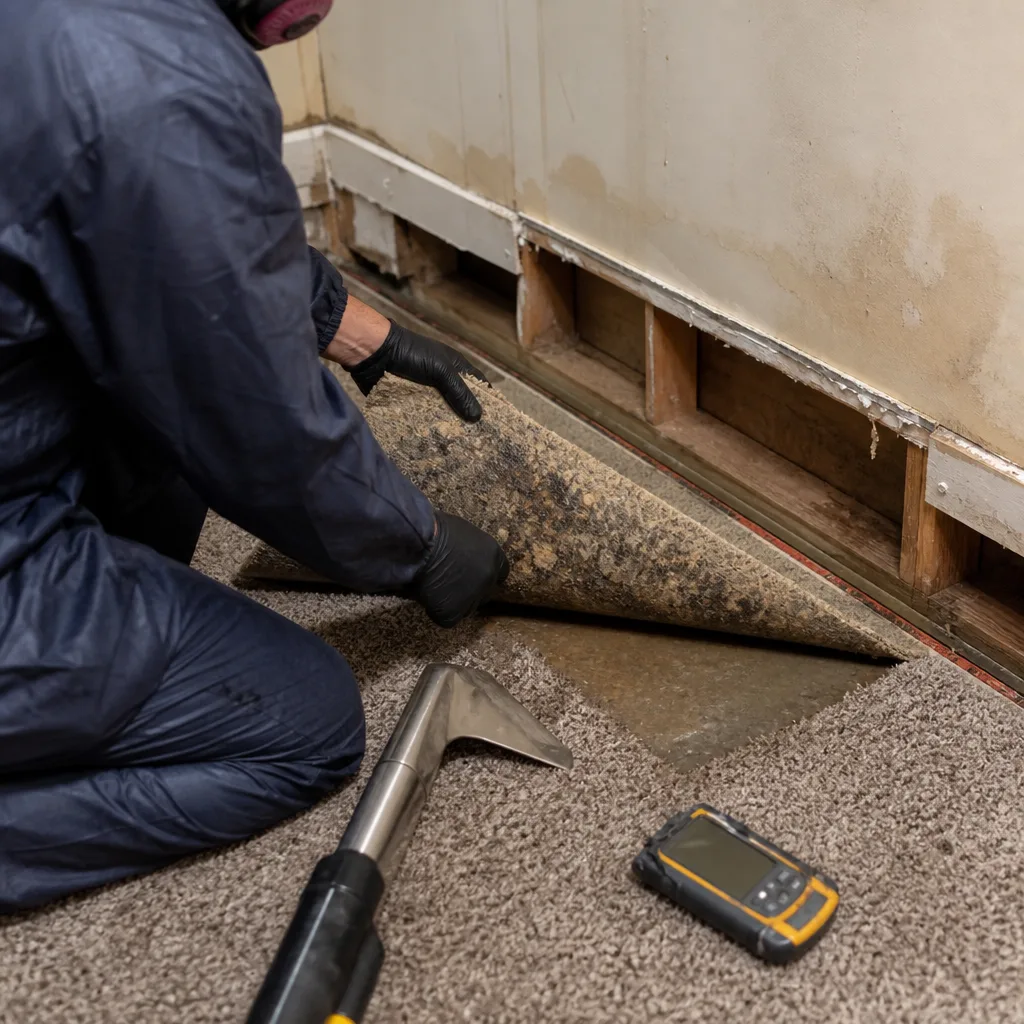
Haven Standard, Clause 1: written price before work begins. This is not a marketing position. It is a structural requirement for claimable restoration. Here are the three documents that satisfy it.
1. Written Scope of Loss
This document defines what is damaged, where the damage extends, and what must be done to return the structure to pre-loss condition. A proper scope for a Santa Ana water damage job should specify:
- Affected rooms by name and square footage
- Material classifications (Category 1, 2, or 3 water; Class 1-4 moisture intrusion)
- Structural elements requiring removal versus in-place drying
- Anticipated drying duration based on psychrometric targets
Without this scope, you have no baseline to dispute additional charges. The contractor can expand the job indefinitely, and your insurer can deny anything not explicitly included.
2. Itemized Estimate Using Xactimate Line Items
Xactimate is the pricing database used by most insurance adjusters in California. An estimate built from Xactimate line items speaks the same language as your adjuster’s software. This matters because:
- Line-item estimates reduce negotiation time from weeks to days
- Each line carries a unit price, quantity, and labor calculation that can be verified
- Adjusters recognize the format and process it faster than narrative estimates
A contractor who submits a single-page lump sum is asking your adjuster to trust their math without showing the work. Adjusters are not paid to trust. They are paid to verify.
3. Signed Authorization Form
This form should specify exactly what you are authorizing, at what price, and under what conditions. It should not include open-ended language like “additional work as needed” without a change-order process. It should state:
- The maximum authorized expenditure before additional written approval is required
- Your right to approve any scope changes in writing
- How overages will be documented and communicated
- Whether you are assigning insurance benefits directly to the contractor
If a contractor in Santa Ana will not provide these three documents before starting work, that is not a negotiation point. It is a disqualifier. We have declined jobs where homeowners asked us to begin immediately and document later. Haven Standard, Clause 1 does not bend.
How to Verify IICRC Compliance as a Concrete Standard
IICRC certification is cited on nearly every restoration website in Orange County. Few homeowners know how to verify it, and fewer still know what compliance actually requires beyond the certificate on the wall.
Step 1: Verify the Certificate Number
Ask for the technician’s IICRC certification number and the date of issue. Check it at iicrc.org. A valid number returns a name, certification type, and expiration date. If the contractor deflects or claims “the office has that,” pause. Certification travels with the individual, not the company.
Step 2: Ask What Standard Governs Your Job Type
Different damage types fall under different IICRC standards:
- Water damage: IICRC S500, Standard and Reference Guide for Professional Water Damage Restoration
- Mold remediation: IICRC S520, Standard and Reference Guide for Professional Mold Remediation
- Fire and smoke: IICRC S700, Standard and Reference Guide for Professional Fire and Smoke Damage Restoration
A contractor who cannot name the relevant standard for your job has not read it.
Step 3: Request the Drying Protocol
For water damage, IICRC S500 requires a documented drying protocol that specifies:
- Target moisture content for each affected material type
- Equipment capacity calculations based on cubic footage and Class of water intrusion
- Frequency of moisture monitoring (typically every 24 hours)
- Psychrometric targets: specific humidity, vapor pressure, and dew point differentials
- Criteria for demobilization - the exact readings that justify removing equipment
Psychrometric data measures how much moisture the air can hold and how fast it will absorb water from wet materials. Without these readings, a contractor is guessing when drying is complete. Guessing produces callbacks, microbial growth, and denied supplemental claims.
In Santa Ana’s climate, where marine layer humidity can spike morning readings even during dry seasons, local atmospheric conditions must factor into equipment selection. A protocol written for Phoenix will not work here. Ask how the contractor adjusts for coastal Orange County humidity patterns.
We document to IICRC, RIA, and IFA standards on every job. Our drying logs include daily atmospheric readings, material-specific moisture content, and equipment performance data. This is not extra service. It is the minimum standard for claimable work.
Red Flags in Post-Disaster Contractor Canvassing
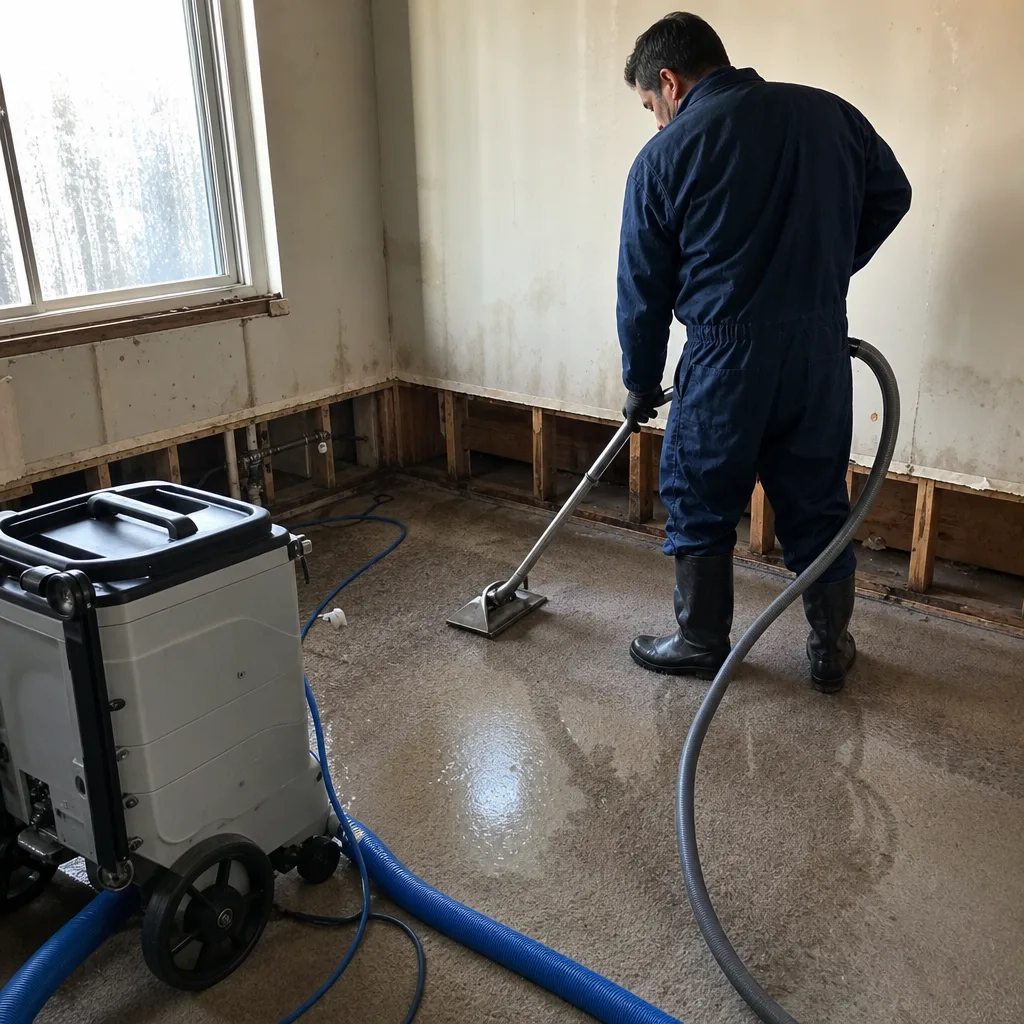
Santa Ana’s density and aging housing stock make it a predictable target for post-disaster canvassing. After major water main breaks, Santa Ana River flooding, or regional fire events, contractors appear who were not in this market the week before.
The “We’ll Bill Your Insurance Directly” Pitch
This phrase sounds like convenience. It often masks a scheme called an Assignment of Benefits (AOB) that transfers your policy rights to the contractor. In California, AOB abuse has led to inflated claims, denied coverage, and homeowners left with uncovered balances. A legitimate contractor can work with your insurer without taking control of your policy. We coordinate directly with adjusters daily while the homeowner retains all policy rights.
Verbal-Only Pricing
Any contractor who gives a price verbally and promises to “write it up later” is violating the most basic documentation standard. Verbal estimates are unenforceable, unclaimable, and usually low enough to secure a signature before the real price emerges. Haven Standard, Clause 1 exists to end this practice.
Storm Chaser Identification
Legitimate Santa Ana restoration contractors have local references, local license addresses, and equipment stored within Orange County. Ask:
- What is your local warehouse address? (Verify it exists.)
- Can you provide three Santa Ana references from the last six months?
- What is your CSLB license number, and is the business address in Orange County?
Out-of-area contractors may perform adequate work, but if documentation fails and your claim is denied, they are harder to locate and sue. Local presence correlates with accountability.
Pressure to Sign Immediately
“We need to start tonight or mold will grow.” Mold growth timelines are measurable, not theatrical. Category 1 water in a climate-controlled structure typically allows 24-72 hours before microbial colonization becomes likely. Category 3 water requires faster response, but even then, thirty minutes to review documents is reasonable. Any contractor who cannot wait for you to read what you are signing is not selling documentation. They are selling urgency.
Evaluating Photo Documentation on Day 1
Photo documentation is where most restoration contractors fail silently. They take photos. They do not produce a photo record - a structured, dated, annotated set of images that tells the story of the loss from arrival to completion.
What to Request Before Signing
Ask to see a sample photo record from a previous job. Not a marketing photo. A documentation sample. A proper record includes:
- Establishing shots: Wide-angle photos of each affected room showing the full context
- Detail shots: Close-ups of damage with a measurement reference (ruler, moisture meter display)
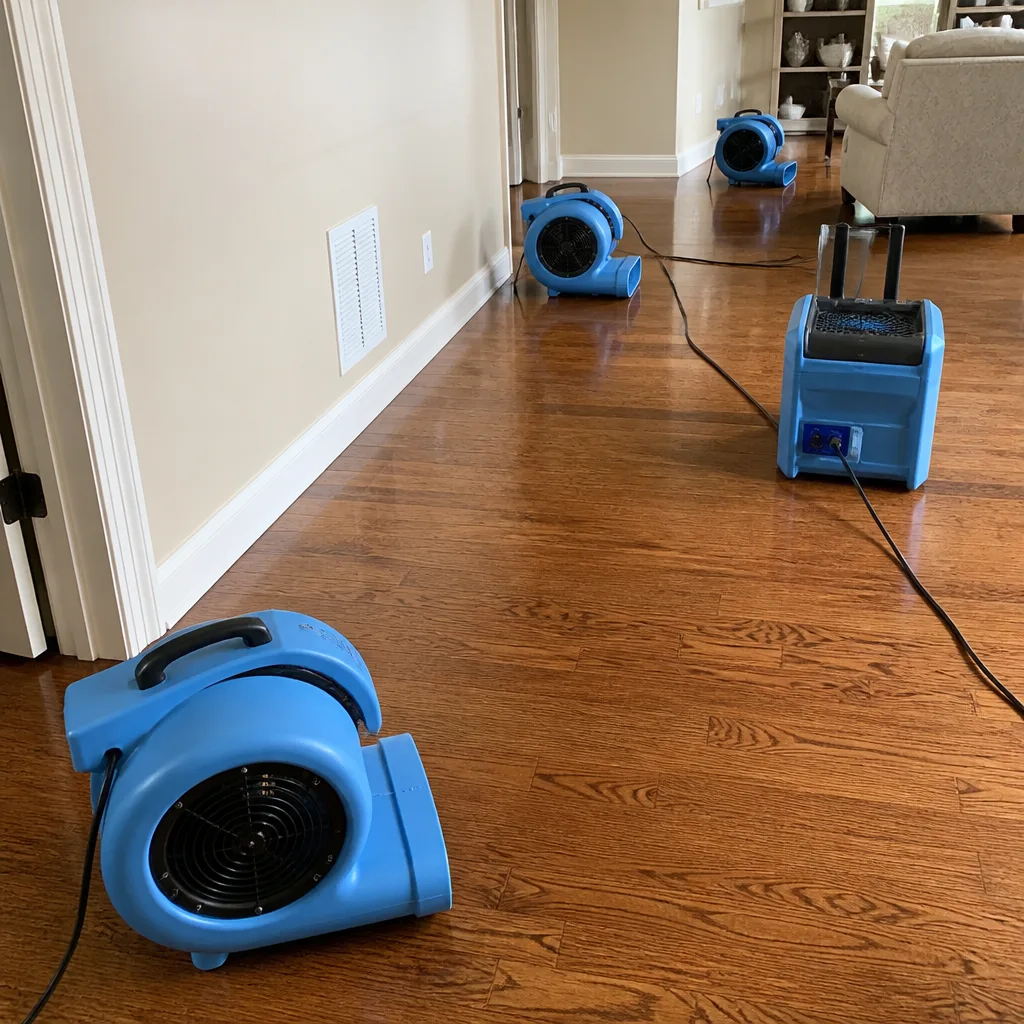
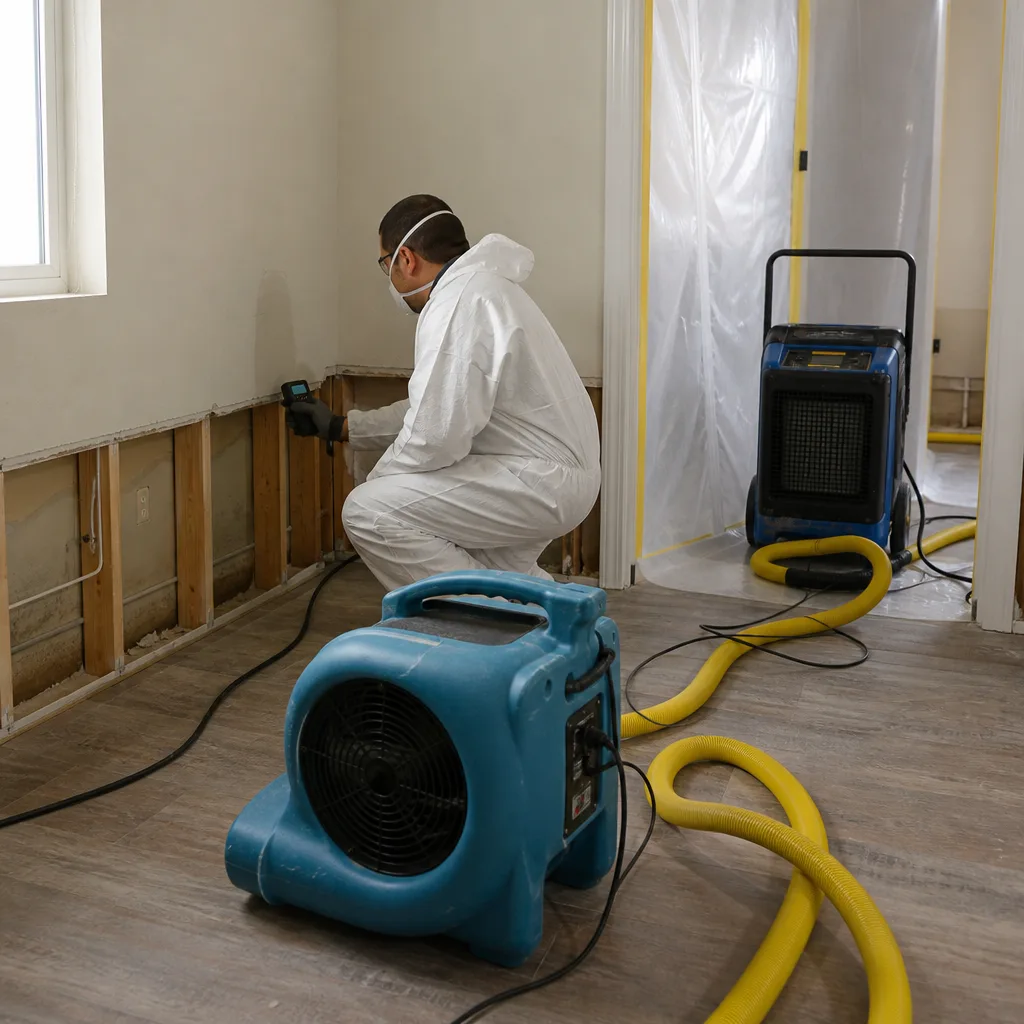
- Equipment placement shots: Each dehumidifier, air mover, and Injectidry system positioned with date stamp
- Moisture reading shots: Meter displays showing date, time, and reading value
- Progression shots: Same angles on subsequent visits showing drying progress
- Completion shots: Final readings and restored condition
Each photo should carry metadata: date, time, technician name, and job number. Without metadata, photos are just images. With metadata, they are evidence.
Why This Matters for Your Claim
Insurance adjusters are trained to look for “pre-existing damage” exclusions. A photo record that begins with establishing shots of undamaged adjacent areas protects you from claims that the damage existed before the loss event. In Santa Ana’s older neighborhoods, where prior repairs and settling cracks are common, this documentation is often the difference between full coverage and a partial denial.
We provide a documented photo record on every visit as a standard deliverable, never an upsell. Our technicians are trained to shoot in sequence: establish, measure, place equipment, record readings. The result is a file that adjusters recognize as professional documentation, not after-the-fact justification.
What a Real Workmanship Warranty Specifies in Writing
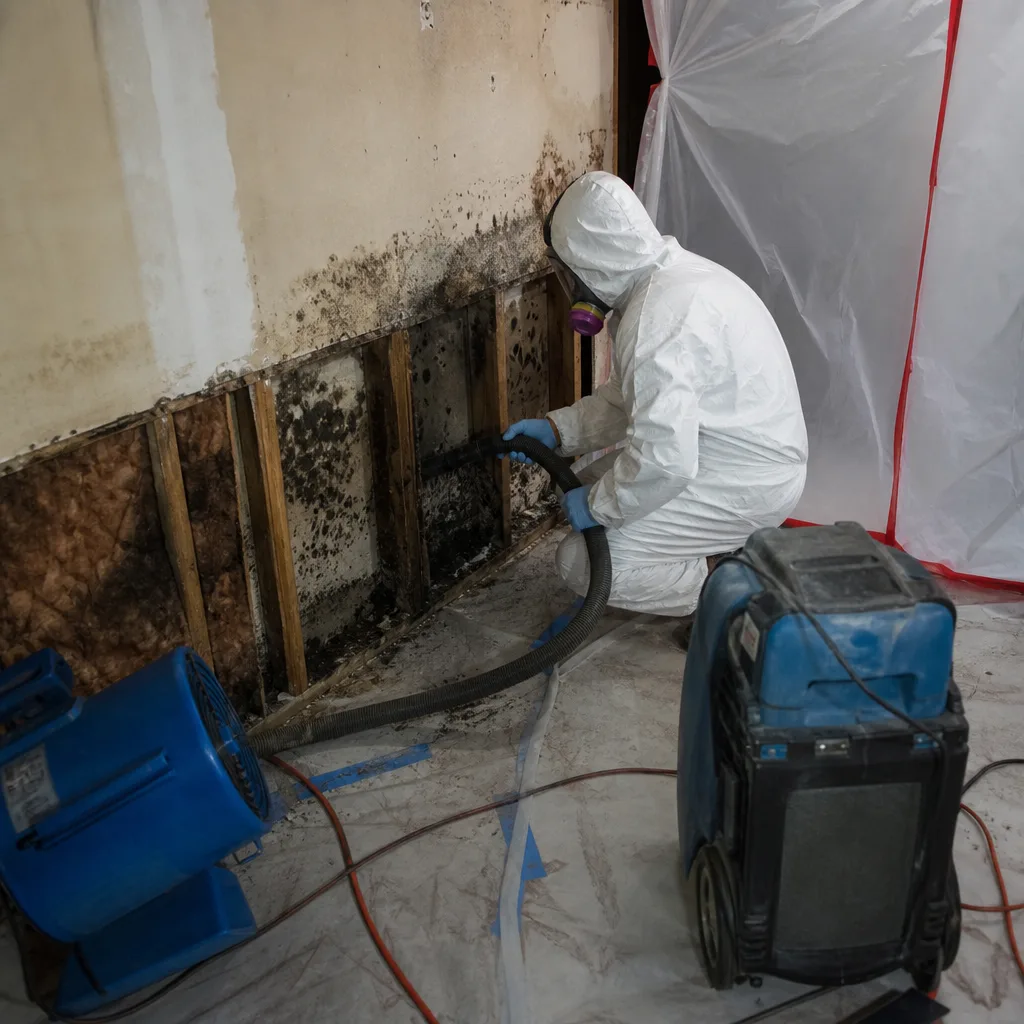
Most restoration warranties in California are verbal assurances or one-line website claims. They specify nothing. They cover nothing. When a problem emerges six months later, the homeowner learns that “satisfaction guaranteed” has no legal meaning.
The Vague Warranty: What to Reject
Phrases that signal an unenforceable warranty:
- “Satisfaction guaranteed” - no measurable standard
- “Done right or we’ll make it right” - no definition of “right,” no time limit, no process
- “Lifetime warranty” - on what component? Against what failure mode? For the life of what?
- “We’ll stand behind our work” - legally meaningless
The Specific Warranty: What to Demand
A warranty worth the paper it is printed on specifies:
- Duration: Exact number of days or years
- Covered components: Structural drying, reconstruction work, materials, or all three
- Failure modes covered: Re-wetting, mold recurrence, odor return, material failure
- Response process: How to report, how soon the contractor will inspect, how disputes are resolved
- Exclusions: New water intrusion, homeowner modifications, third-party damage
- Transferability: Whether the warranty stays with the property if sold
Our 365-Day Done Right Promise, backed by The Haven Standard, is a signed guarantee on every job. It specifies that if any covered failure occurs within 365 days, we return to inspect within 48 hours and correct the deficiency at no charge. It is not a marketing line. It is a document with a claim process.
California law does not require restoration contractors to provide written warranties. The absence of one is legal. It is also a signal that the contractor expects no future relationship with you.
Cost Expectations for Restoration Work in Santa Ana
Restoration pricing in Orange County follows regional cost data, but Santa Ana’s specific market conditions affect what homeowners should expect. The table below shows typical ranges for common services based on Xactimate pricing for the 92701-92708 ZIP code area.
| Service Type | Typical Range | What Affects Price |
|---|---|---|
| Water damage inspection and assessment | $150 - $400 | After-hours emergency response, number of affected rooms |
| Water extraction and initial drying setup | $800 - $2,500 | Category of water, square footage, required equipment count |
| Structural drying (per day, equipment rental) | $75 - $150 per dehumidifier; $25 - $50 per air mover | Duration, equipment type (refrigerant vs. desiccant dehumidification) |
| Mold remediation, contained area | $15 - $30 per square foot | Containment complexity, HVAC involvement, post-remediation verification testing |
| Fire and smoke damage restoration | $4,500 - $25,000+ | Extent of structural damage, contents cleaning requirements, odor elimination complexity |
| Sewage cleanup (Category 3 water) | $7 - $15 per square foot | Porous material removal requirements, antimicrobial treatment, disposal fees |
| Reconstruction and build-back | Varies by scope | Material matching requirements, permit needs, code upgrade triggers |
These ranges reflect Santa Ana’s position in the Orange County market - higher than inland Empire pricing, lower than coastal Newport Beach or Laguna Beach rates. Actual costs depend on job-specific conditions documented in the written scope.
Critical point: any contractor who provides a firm price without inspecting the loss is either guessing or planning to change-order later. A written price before work begins requires an on-site assessment. We provide free assessments in Santa Ana with no obligation. The written price that follows is binding for the documented scope.
Common Mistakes to Avoid
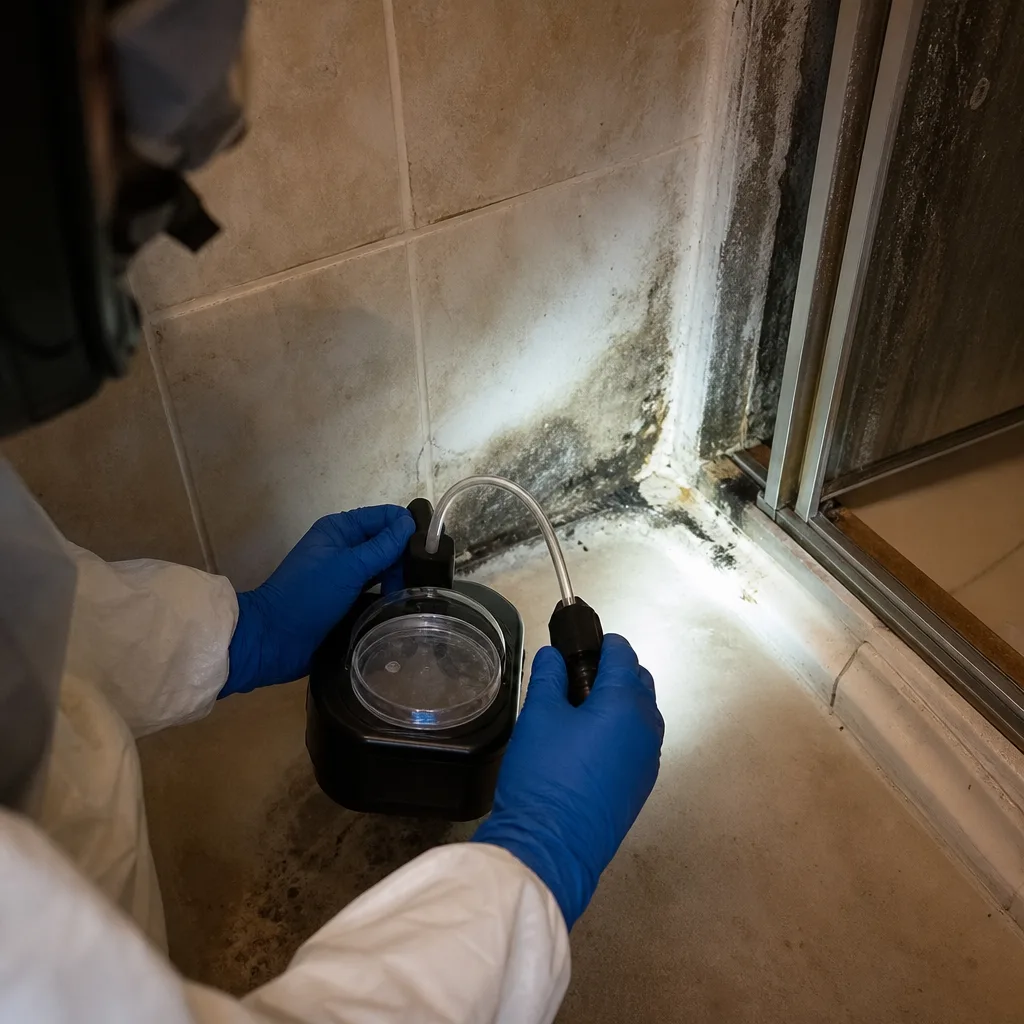
- Hiring based on response speed alone. A contractor who arrives in twenty minutes but produces no documentation may cost more than one who arrives in two hours with a complete file. Speed matters for mitigation; documentation matters for your claim.
- Accepting “insurance approved” as a credential. There is no California state program that approves restoration contractors for insurance work. This phrase means nothing. Verify actual credentials: IICRC certification, CSLB license, and documented compliance with S500 or S520.
- Signing a direction to pay without understanding it. This document gives the contractor direct payment from your insurer. It is not inherently fraudulent, but it removes your leverage if work is incomplete or documentation is poor. Read before signing.
- Neglecting to document pre-existing conditions. In Santa Ana’s historic neighborhoods, original plaster, lathe construction, and prior repairs are common. Photograph everything before the contractor arrives. Your photos are your evidence if the insurer claims damage predated the loss.
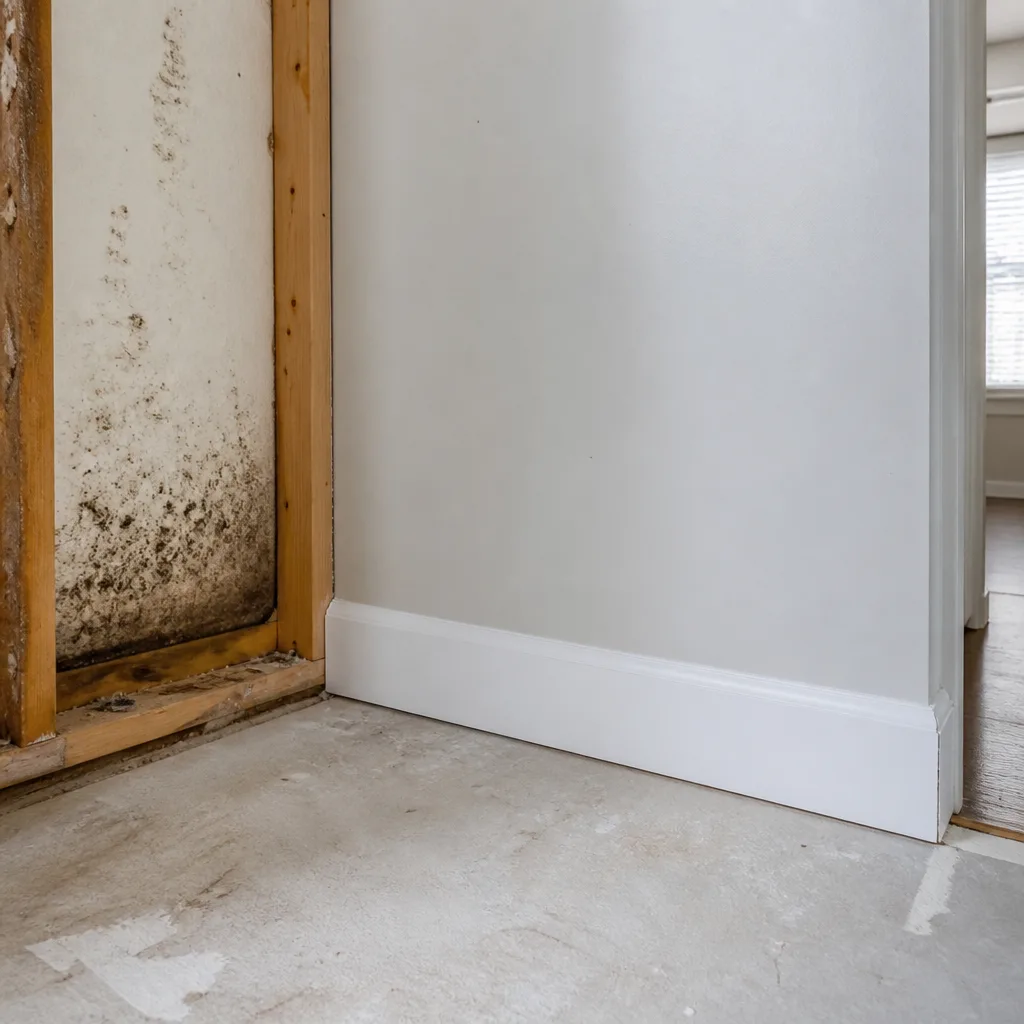
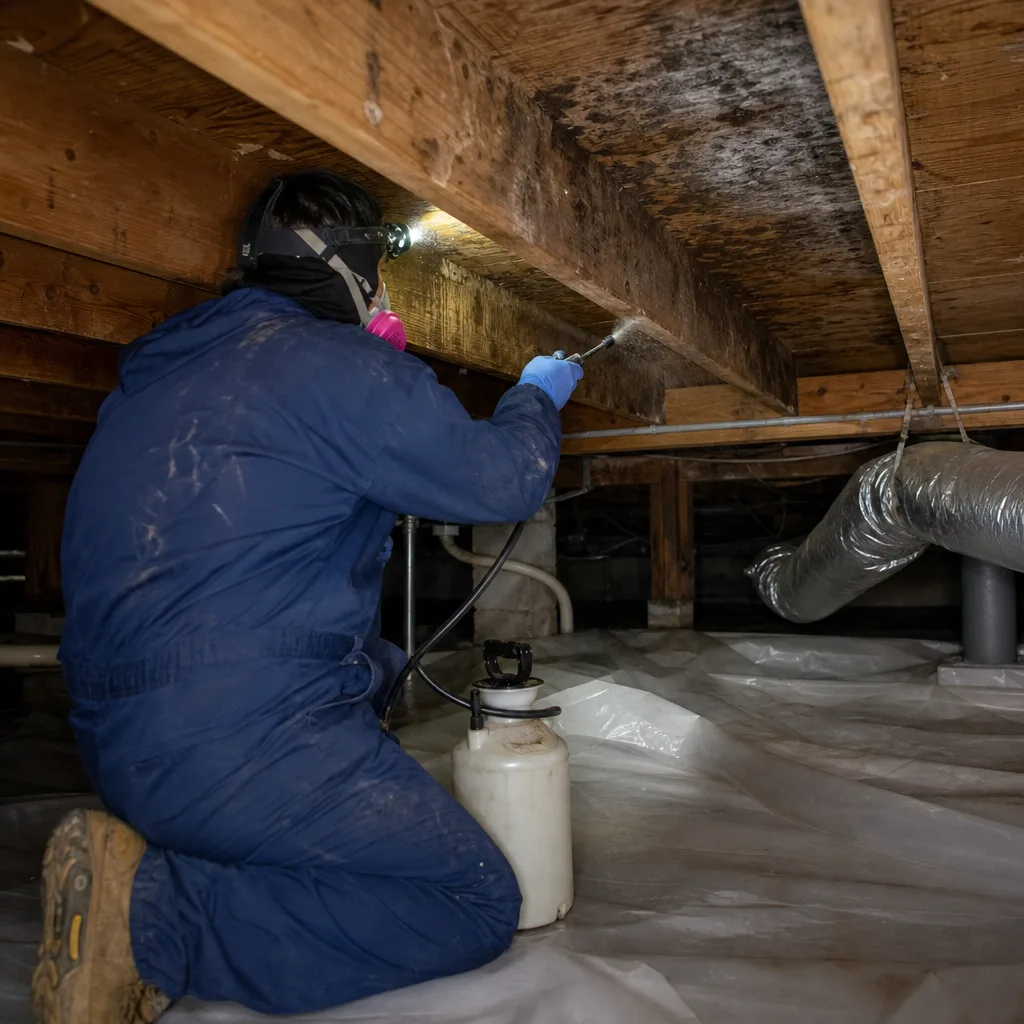
- Assuming all mold requires full remediation. Visible mold growth under ten square feet in a single room may be addressable without full containment protocol under IICRC S520 guidance. Contractors who quote full containment for every spot are not following the standard; they are maximizing revenue. Ask for the specific S520 section that governs their recommended approach.
- Failing to verify that reconstruction is included in the scope. Some contractors dry the structure and leave. Others dry and rebuild. The estimate should specify where restoration ends and reconstruction begins, and whether the same contractor handles both or you are coordinating a second vendor.
- Not requesting a free second opinion on a competitor’s estimate. If another contractor has provided a written estimate, we will review it at no charge. A second opinion costs nothing and often reveals scope gaps or inflated line items.
When to Call a Professional
Call a professional restoration contractor when water has affected finished surfaces, when mold growth exceeds ten square feet, when fire or smoke damage has occurred, or when sewage contamination is present. These scenarios require controlled demolition, specialized drying equipment, and documentation that supports insurance claims. For more guides & resources, see our blog.
For water damage specifically, professional intervention is warranted when moisture has penetrated beyond surface materials into subfloors, wall cavities, or insulation. Surface drying with household fans will not address vapor pressure differentials in these concealed spaces, and undetected moisture produces secondary damage that insurers may classify as maintenance-related and deny.
In Santa Ana, the combination of slab-on-grade construction common in postwar neighborhoods and the city’s seasonal humidity variations creates conditions where moisture migrates horizontally through concrete and vertically through wall systems. Professional-grade drying systems from Dri-Eaz, Phoenix, and Injectidry, with documented daily moisture logs, are required to establish that drying goals were achieved.
Water Damage Restoration in Santa Ana from DryMark Restoration Santa Ana includes free assessments with written scope and pricing before any work begins. We answer live 24 hours a day, 7 days a week at (657) 300-9903.
Frequently Asked Questions
Search the contractor’s license number at cslb.ca.gov. Verify the classification matches the work - water damage restoration typically requires a B General Building or C-10 Electrical license if electrical systems are affected. Check that the license status is “Active” and that the business address is in California. License verification takes ninety seconds and confirms only legal authorization to contract, not documentation quality or claim support capability.
Most standard homeowners policies cover sudden and accidental water damage from sources like burst pipes or appliance failures. They typically exclude gradual leaks, flooding from external sources (unless you carry separate flood insurance), and damage from maintenance neglect. Coverage depends on documentation: your insurer will require proof that the damage was sudden, that mitigation was prompt, and that drying was completed to industry standards. Call (657) 300-9903 for a free assessment - we coordinate directly with adjusters and document every step for claim support.
For emergency water damage, established Santa Ana contractors typically arrive within 1-2 hours for active leaks and flooding. Response time depends on current call volume, traffic conditions on the 5 or 55 freeways, and whether the loss requires after-hours dispatch. Reconstruction work is scheduled, not emergency-dispatched. Any contractor promising immediate arrival for non-emergency reconstruction is either underworked or misrepresenting their capacity.
Xactimate is the insurance industry’s standard pricing database for property claims. Estimates built from Xactimate line items use the same unit prices, labor calculations, and material costs that your adjuster’s software employs. This alignment reduces negotiation friction and accelerates claim payment. Contractors who do not use Xactimate are asking your adjuster to manually reconcile their pricing, which delays payment and increases dispute likelihood.
The answer depends on affected square footage, material type, and HVAC system involvement. IICRC S520 distinguishes between mold remediation (containment, negative air pressure, removal) and mold cleaning (surface treatment without containment). Areas under ten square feet on non-porous surfaces may not require full containment. Areas exceeding that threshold, or any growth involving HVAC systems or concealed cavities, require remediation protocol. A contractor who recommends full containment for every visible spot without measuring or classifying is not following the standard. We assess and classify before recommending scope.
You retain responsibility for your claim, but a documentation-focused contractor can handle most adjuster coordination. We provide direct adjuster communication as a standard service, including photo documentation, drying logs, and Xactimate estimates formatted for adjuster software. You remain the policyholder and must approve the scope and authorize work. The contractor should never control your policy or payment without explicit written assignment. Call (657) 300-9903 to discuss how we coordinate documentation for your specific claim.
The Bottom Line
The contractor you hire in Santa Ana will determine whether your restoration invoice becomes a paid claim or a disputed debt. License verification is step one, not step done. The decisive factors are documentation quality - written scope, Xactimate estimate, signed authorization before work begins - and the contractor’s willingness to show you evidence of past performance before you commit.
Ask for the three documents. Verify the IICRC certificate number. Request a sample photo record. Read the warranty for specific coverage, not reassuring language. Reject verbal pricing, pressure to sign, and any contractor who cannot explain how Santa Ana’s climate and construction patterns affect your drying protocol.
These standards are not excessive. They are the minimum for claimable restoration. We built our company on them in 2011 because we had seen what sloppy documentation costs homeowners. The Haven Standard applies to every job we perform, with no exceptions.
Written by Alicia Brennan, Owner at DryMark Restoration Santa Ana, serving Santa Ana since 2011.